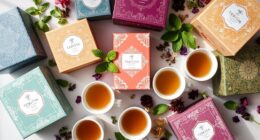
When comparing Indian teas to others, you’ll notice their boldness and robustness stand out, thanks to unique regional influences. Indian teas like Darjeeling offer delicate floral and fruity notes, while Nilgiri provides brisk, citrusy flavors. Their complex processing and diverse terroirs create layered tastes that are hard to find elsewhere. Unlike mass-produced options, Indian teas have distinctive character and depth. Keep exploring, and you’ll discover what truly makes these teas special among global varieties.
Key Takeaways
- Indian teas are known for their bold, robust flavors due to diverse regional cultivation and traditional processing techniques.
- Compared to other global teas, Indian varieties often have higher caffeine content and layered, complex taste profiles.
- The unique terroir of Indian regions like Assam, Darjeeling, and Nilgiri creates distinctive flavor characteristics not easily replicated elsewhere.
- Indian teas typically exhibit strong aroma and full-bodied strength, contrasting with the lighter, more delicate profiles of teas like Japanese or Chinese varieties.
- Heritage and craftsmanship in Indian tea production contribute to a rich, diverse palette that sets it apart from mass-produced or less regionally influenced teas.

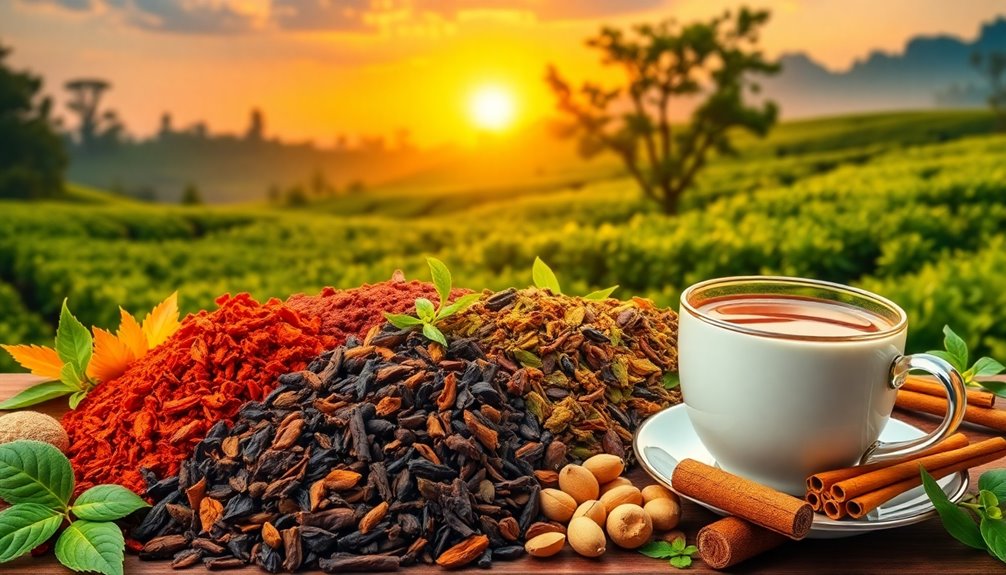
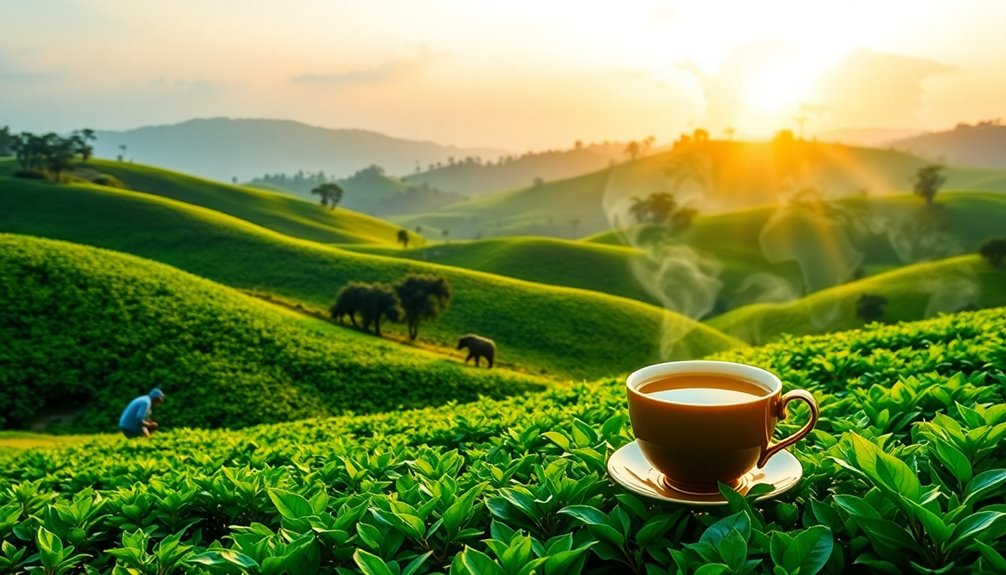
Indian tea, renowned for its bold flavors and robust aroma, stands out among other global teas. When you explore the world of tea, you’ll notice that India’s unique approach to tea cultivation plays a significant role in shaping its distinctive character. The diverse climates and terrains across regions like Assam, Darjeeling, and Nilgiri influence how tea is grown, harvested, and processed. This variety results in a wide range of flavor profiles that set Indian teas apart from their counterparts. For example, Assam tea offers a full-bodied, malty taste with a strong, invigorating presence, making it perfect for breakfast blends. Darjeeling, often called the “champagne of teas,” provides a lighter, floral, and fruity experience, with subtle complexities that appeal to connoisseurs. Nilgiri teas, on the other hand, tend to have a brisk, citrusy quality, balancing freshness with a hint of sweetness. These regional differences in tea cultivation contribute to the rich tapestry of flavors that define Indian teas.
As you compare Indian tea to others around the world, you’ll find that the cultivation methods have a direct impact on flavor profiles. Indian tea farmers often use traditional techniques combined with modern innovations to enhance quality and consistency. The elevation, soil composition, and climate all influence the final product, resulting in teas with character and depth. Unlike some teas produced in more uniform environments, Indian teas display a remarkable complexity rooted in their terroir. When you sip Indian tea, you often notice a boldness and robustness that can’t be easily replicated elsewhere, especially in mass-produced varieties. This strength is not just in the caffeine content but also in the layered flavors that develop through careful processing. Whether it’s the briskness of Nilgiri or the floral notes of Darjeeling, each tea embodies the essence of its region’s unique environment. Understanding terroir helps explain why Indian teas have such distinctive qualities.
In essence, the distinction in flavor profiles among Indian teas is a reflection of the country’s rich tea cultivation heritage. The careful selection of tea leaves, combined with traditional processing methods, results in teas that are both complex and memorable. When you compare Indian teas to others, you’ll appreciate how the combination of climate, terrain, and craftsmanship creates a product that is bold, aromatic, and full of character. This depth of flavor makes Indian tea not just a beverage but an experience—one that invites you to explore its nuances and appreciate the artistry behind each cup. So, whether you prefer the malty embrace of Assam or the delicate elegance of Darjeeling, Indian tea offers a diverse palette that truly stands apart in the global tea landscape.
Frequently Asked Questions
How Does Indian Tea Processing Differ From Other Tea-Producing Countries?
Indian tea processing differs from other countries mainly in its unique tea cultivation techniques and harvesting methods. You’ll notice that Indian farmers often pluck top-quality leaves by hand, ensuring better flavor. Post-harvest, the leaves undergo distinct withering, rolling, and fermentation processes, which give Indian teas their characteristic boldness and aroma. These traditional methods, combined with regional climate conditions, create a distinct flavor profile compared to teas from other regions.
What Are the Health Benefits Unique to Indian Teas?
You benefit from Indian teas’ unique Ayurvedic properties, which may help improve digestion, boost immunity, and reduce stress. These teas often have higher antioxidant levels due to traditional processing methods, supporting your overall health and fighting free radicals. Drinking Indian tea can also promote mental clarity and balance, thanks to its holistic approach rooted in Ayurveda. Embrace these health benefits by enjoying a warm cup of authentic Indian tea daily.
Which Indian Tea Varieties Are Most Popular Worldwide?
Indian teas are like vibrant mosaics, each piece shining brightly worldwide. You’ll find that Assam and Darjeeling are the most popular, cherished for their bold and delicate flavors, often showcased in special tea blends. Their tea packaging highlights the rich heritage and quality, making them favorites among tea enthusiasts. Whether in tea blends or as standalone brews, these varieties captivate drinkers across the globe, offering a taste of India’s diverse tea culture.
How Does Climate Influence Indian Tea Flavor Compared to Other Regions?
You’ll notice that India’s climate markedly influences its tea flavor. The altitude effect means high-altitude regions produce teas with a delicate, nuanced taste, unlike the bolder flavors of lowland teas. The monsoon influence adds unique freshness and brightness to Indian teas, especially in regions like Assam and Darjeeling. These climatic factors create distinctive profiles that set Indian teas apart from those grown in other regions with different weather patterns and altitudes.
Are Indian Teas More Sustainable Than Teas From Other Countries?
Indian teas are often more sustainable than teas from other countries because they prioritize eco-friendly cultivation and sustainable practices. You’ll find many Indian tea plantations adopting water conservation, organic farming, and fair labor standards. These sustainability practices help reduce environmental impact and support local communities. By choosing Indian tea, you contribute to environmentally conscious cultivation, making it a better choice for eco-minded consumers like you who care about sustainable and ethical sourcing.
Conclusion
As you savor a cup of Indian tea, you realize it’s more than just flavor—it’s a journey through vibrant landscapes and rich traditions. But what if the next sip reveals a new secret from another tea’s distant land? Will you find a taste that surprises you even more? The world of tea is endless, filled with stories waiting to unfold. So, next time you brew, ask yourself—what’s the next great discovery in your cup?