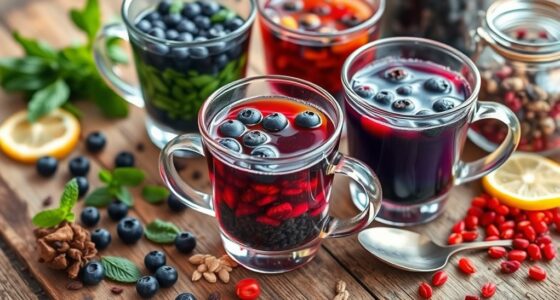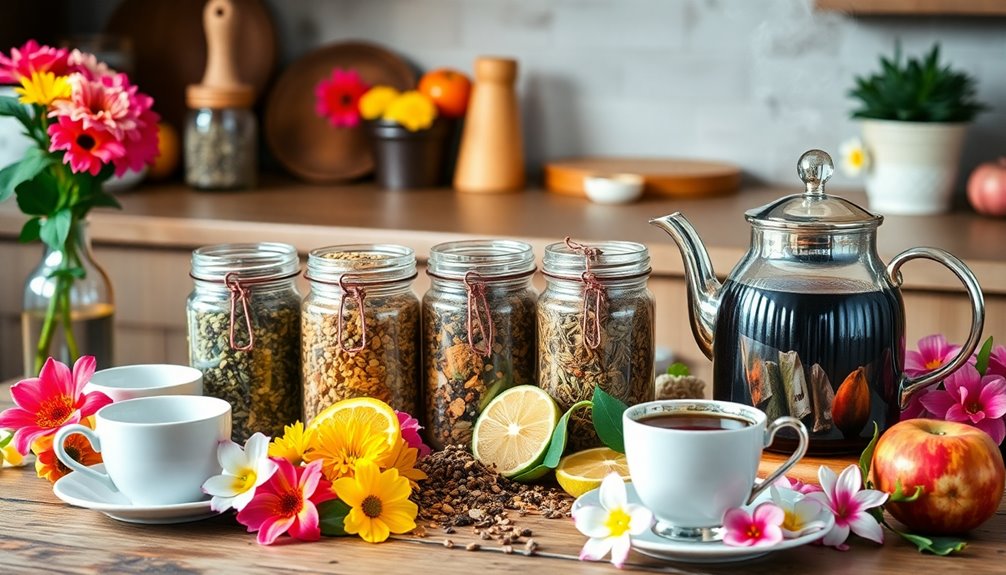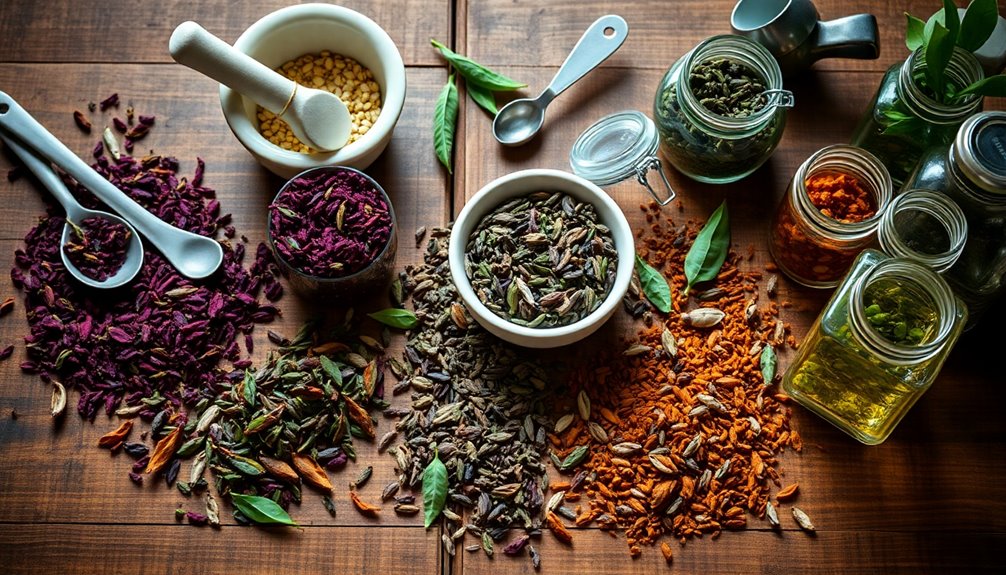

The history and evolution of homemade tea blends show how cultures from ancient China to Europe have shaped your favorite drinks. Early herbal infusions laid the groundwork, then trade routes introduced spices and flavors, influencing regional styles. Over time, people personalized blends with herbs, flowers, and spices for taste and health benefits. Modern innovations continue this tradition, blending ancient techniques with creative ideas. To see how these influences came together, you’ll discover more about this rich, evolving story.
Key Takeaways
- Homemade tea blends originate from ancient herbal practices in China, incorporating herbs, spices, and flowers.
- Tea spreading via trade routes like the Silk Road introduced diverse ingredients and regional flavors.
- European colonial influence transformed tea blending into a refined craft with citrus, herbs, and sweeteners.
- Modern blends combine traditional techniques with new ingredients like dried berries and floral extracts.
- Tea blending reflects cultural exchange, preserving traditions while embracing innovation over centuries.
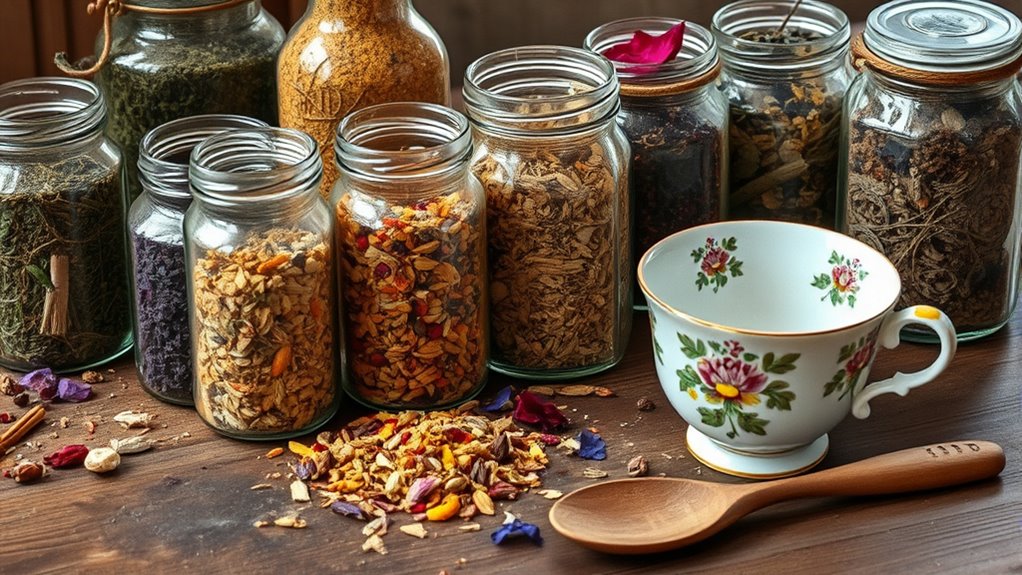
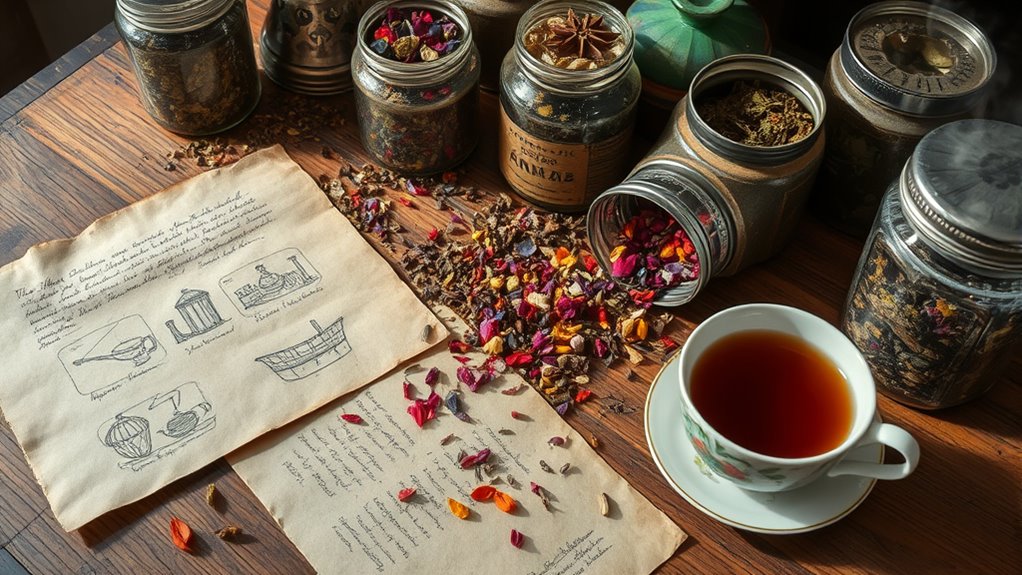
Have you ever wondered how homemade tea blends have developed over time? The history of tea blending is a fascinating journey shaped by a rich tapestry of cultural influences and a desire to create unique tea flavor combinations. When you consider the origins, you’ll find that different civilizations brought their own tastes and traditions to the art of tea making. In ancient China, for example, blends often included herbs, flowers, and spices that reflected local ingredients and herbal medicine practices. These early combinations laid the foundation for the diverse tea flavors we enjoy today. As tea spread along trade routes, particularly through the Silk Road, it encountered new cultures and ingredients, inspiring further experimentation. The influence of Persia, India, and Southeast Asia introduced aromatic spices like cardamom, saffron, and ginger, which became integral to regional tea blends. Each culture’s approach to tea reflects its unique palate and available resources, shaping a global mosaic of flavor profiles.
In Europe, especially during the colonial era, tea became a luxury commodity, and innovative blending gained popularity among aristocrats and merchants. You might notice that the European approach often involved adding citrus, herbs, and sweeteners to create more complex and refined flavors. This period marked the beginning of formalized tea blending as a craft, with each region developing its signature styles influenced by local tastes and trade dynamics. Over time, the art of creating homemade tea blends evolved from simple herbal infusions to sophisticated combinations that balance aroma, taste, and health benefits. People started to experiment with ingredients like lavender, mint, chamomile, and fruit peels, resulting in a broad spectrum of flavors tailored to personal preference and cultural traditions. Understanding the importance of financial management] can also help tea blenders allocate resources efficiently to improve their craft and expand their collections.
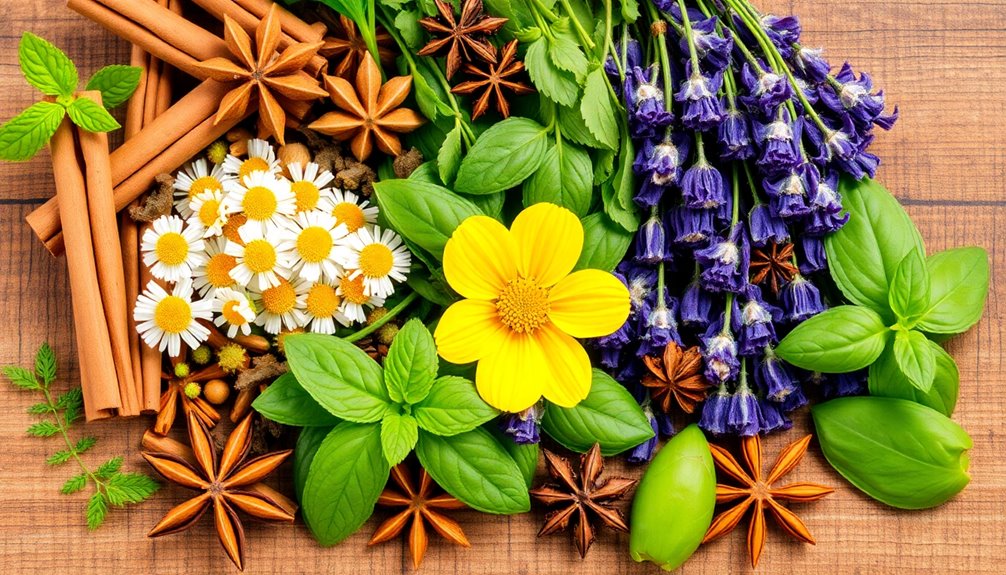
Today, the evolution continues as tea lovers worldwide craft their own blends, blending heritage with innovation. The modern tea enthusiast draws inspiration from ancient techniques but also incorporates contemporary ingredients like dried berries, spices, and even floral extracts. Cultural influences remain central, as different communities preserve traditional recipes while embracing new tastes and health trends. Whether you’re blending a calming chamomile and lavender or a spicy chai with cinnamon and cloves, you’re participating in a centuries-old tradition that’s constantly evolving. Your homemade tea blends are a reflection of cultural exchange, historical development, and personal creativity. As you experiment, you connect with a global history of tea that’s been shaped by countless influences, making every cup a small piece of a larger story.
Frequently Asked Questions
What Are the Health Benefits of Homemade Tea Blends?
When you make homemade tea blends, you can enjoy numerous health benefits, like enhanced antioxidant properties that help fight free radicals and boost your immune system. Additionally, these blends often promote stress relief, calming your mind and reducing anxiety. By customizing ingredients, you guarantee you’re drinking tea that supports your well-being, providing a soothing, health-boosting experience tailored to your needs.
How Can I Store Homemade Tea Blends Properly?
Storing homemade tea blends properly is essential to preserve their flavor and potency—it’s like guarding a treasure chest! Keep your blends in airtight containers, preventing air from stealing their aroma. Store them in a cool, dark place away from sunlight and humidity, which can degrade quality. Always label your containers, and you’ll enjoy fresh, vibrant tea whenever you brew, making every cup a delightful experience.
Which Herbs Are Best for Customizing Tea Flavors?
You should choose herbs like chamomile, mint, or lemongrass for customizing tea flavors, as they blend well with various teas. Focus on herb pairing to create harmonious combinations and balance flavors through flavor balancing techniques. Experiment with small amounts first, adjusting until you find your perfect mix. This approach guarantees your homemade tea blends are flavorful, invigorating, and uniquely tailored to your taste preferences.
Can Homemade Tea Blends Be Used for Medicinal Purposes?
Yes, you can use homemade tea blends for medicinal purposes, but it’s essential to understand herbal synergy and flavor enhancement. While some herbs may soothe your stomach or boost your immunity, others might cause adverse reactions if misused. Your health depends on careful selection and moderation. Think of your blend as both comfort and medicine—carefully crafted to support your well-being while delighting your senses.
How Do Cultural Influences Shape Tea Blending Traditions?
Cultural influences shape your tea blending traditions through cultural fusion and regional customs. You incorporate unique herbs, spices, and flavors from different cultures, creating blends that reflect local tastes and history. Regional traditions guide your choice of ingredients and preparation methods, making each blend a personal expression of cultural identity. By blending elements from various cultures, you develop innovative teas that honor tradition while embracing diversity.
Conclusion
As you sip on your homemade tea blend, remember you’re savoring a centuries-old tradition woven with stories, secrets, and passion. Each leaf and spice is a brushstroke on a vibrant canvas of history, inviting you to connect with generations past. Your brew isn’t just a drink—it’s a warm, fragrant whisper of evolution and craftsmanship. So, embrace your creation, and let its comforting aroma carry you through time’s gentle, swirling embrace.