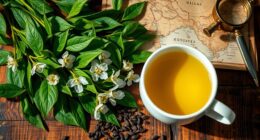
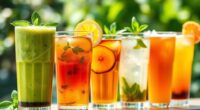
Explore the rich world of homemade tea blends inspired by cultures around the globe. Incorporate herbs like lavender and hibiscus from the Middle East, matcha and yuzu from Japan, or lemongrass and ginger from Southeast Asia to create vibrant, meaningful infusions. Focus on mindfulness and honoring traditions, blending ingredients that reflect cultural stories and customs. If you keep exploring, you’ll discover exciting ways to elevate your tea experience with unique global twists.
Key Takeaways
- Incorporate herbs like hibiscus and lemongrass from Middle Eastern and Southeast Asian traditions for vibrant, flavorful blends.
- Use ceremonial techniques such as mindful steeping and high-quality leaves to elevate the tea experience across cultures.
- Combine traditional ingredients like rose petals or ginger with local teas to create unique, culturally inspired infusions.
- Experiment with unconventional pairings, blending herbs and spices from different regions to craft personalized global-inspired teas.
- Emphasize cultural symbolism and rituals in blending, fostering mindfulness and a deeper connection to diverse tea traditions.
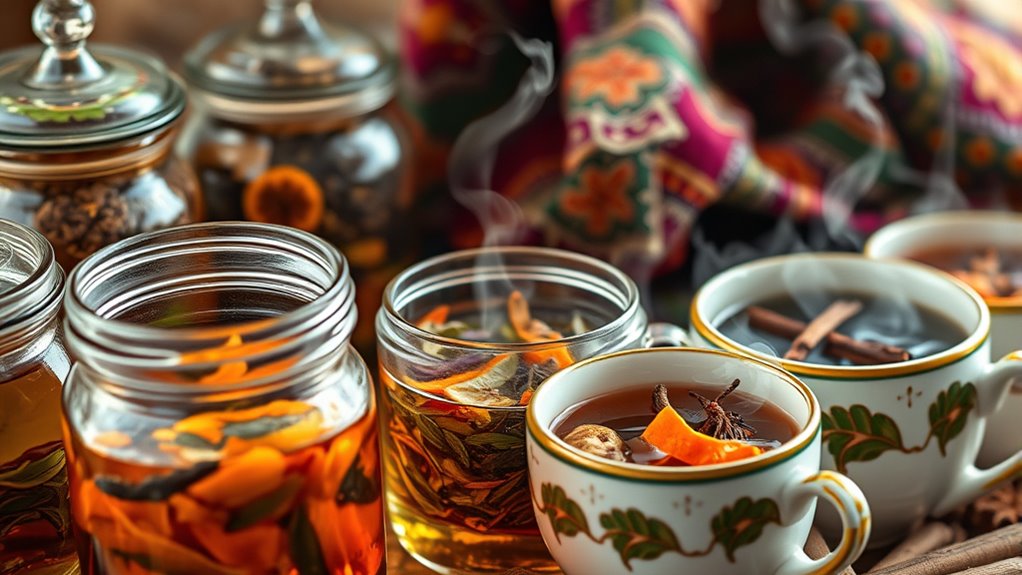
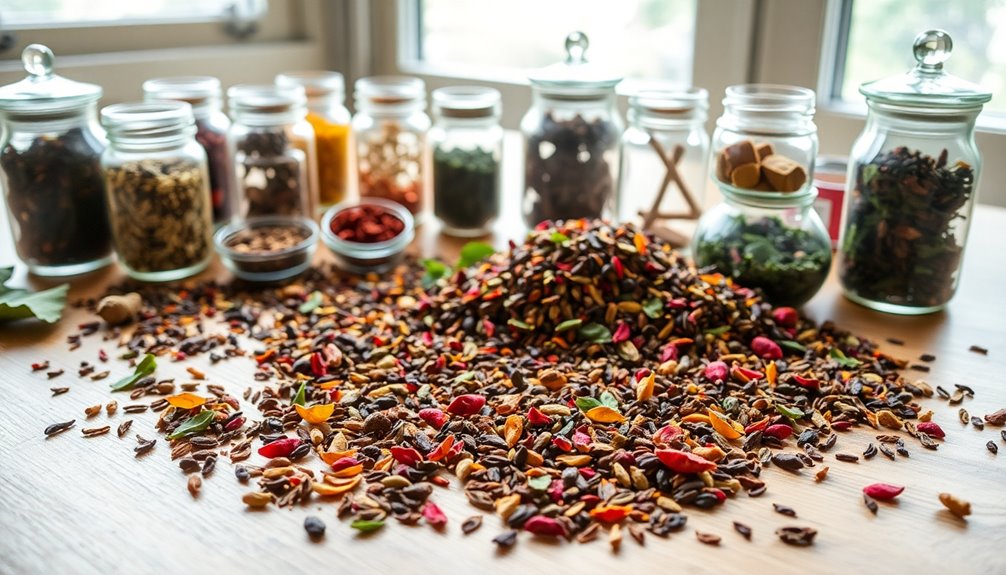
Tea blending is an exciting way to explore flavors from different cultures right in your own kitchen. Whether you’re new to tea or a seasoned enthusiast, creating your own blends allows you to connect with traditions like the elegant tea ceremony in Japan or the vibrant herbal infusions common in Middle Eastern cultures. These experiences aren’t just about taste; they’re about immersing yourself in the stories and customs behind each brew. When you start experimenting, you’ll find that blending herbal infusions with traditional teas opens up a world of possibilities, blending aromatic herbs, spices, and dried flowers to craft personalized beverages that reflect global influences.
In many cultures, the tea ceremony isn’t just about drinking tea—it’s a mindful ritual that emphasizes harmony, respect, and tranquility. Incorporating elements of these ceremonies into your own tea-making can elevate your experience. For example, you might prepare a green tea base, then add calming herbs like chamomile or mint to create a soothing herbal infusion. This mindful process encourages you to slow down, appreciate each step, and savor the flavors. Using high-quality loose leaves and fresh herbs allows you to control the intensity and aroma of your blends, making each cup a unique reflection of your taste and cultural inspiration.
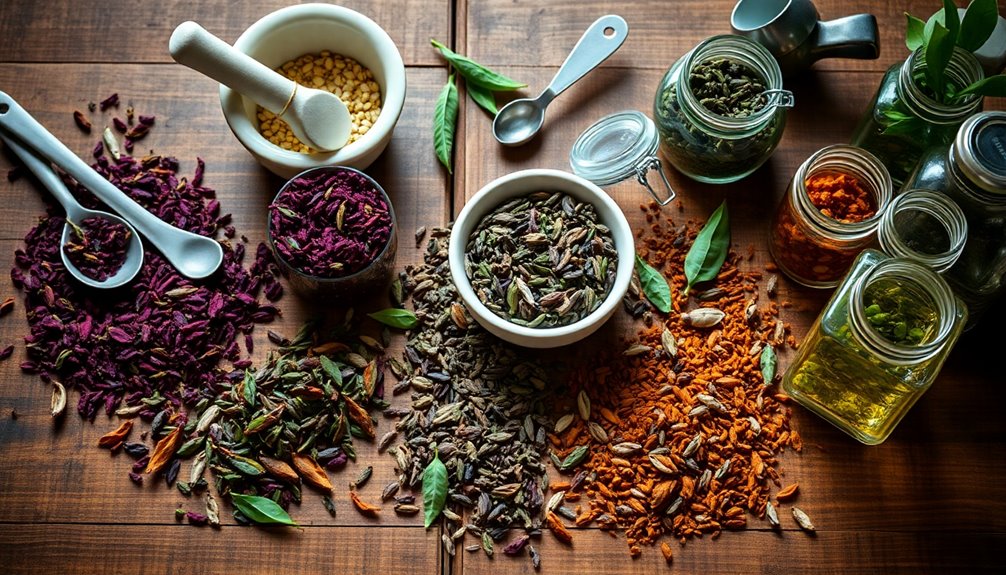
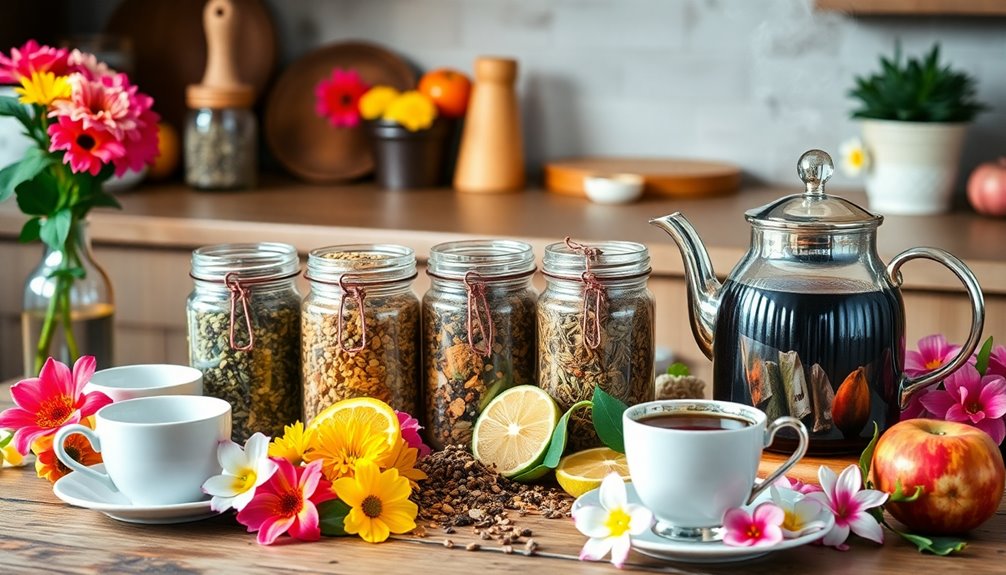
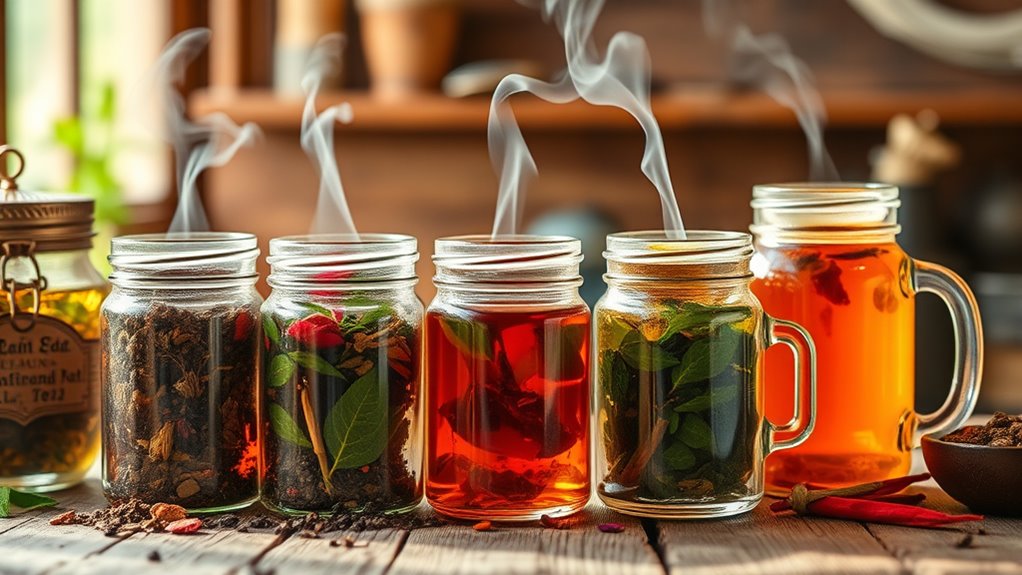
When it comes to herbal infusions, the variety is endless. You can experiment with herbs like lavender, lemon balm, or hibiscus to craft vibrant, healthful teas. Blending these with traditional teas such as black, green, or white tea gives you a chance to highlight different flavor profiles. For instance, adding rose petals and ginger to black tea creates a fragrant, spicy brew reminiscent of Middle Eastern traditions. Or, combining peppermint and lemongrass with green tea can evoke the fresh, bright flavors found in Southeast Asian markets. The key is to balance the herbs’ natural oils and flavors with your tea base, adjusting quantities to suit your preferences.
Experiment with herbs like lavender, hibiscus, and lemon balm to create vibrant, healthful tea blends.
Creating your own global-inspired tea blends isn’t just about taste—it’s about embracing cultural diversity and personal expression. You can draw inspiration from traditional herbal infusions used in various ceremonies to develop a blend that’s meaningful to you. As you experiment, keep notes on what works best, and don’t shy away from trying unconventional combinations. Over time, you’ll develop a repertoire of signature blends that honor different traditions while reflecting your own palate. Additionally, understanding that prophetic dreams often involve symbols and meanings from your subconscious can deepen your appreciation for the symbolic elements you might include in your blends. Ultimately, making homemade tea blends allows you to celebrate the rich tapestry of world tea culture, one mindful sip at a time.

Tiesta Tea – Top 8 Favorites Sampler Set, Loose Leaf, Up to 80 Cups, High to No Caffeine, Hot & Iced, Tea Variety Pack with Green, Herbal, & Black, 8 Sample Pouches
DIVERSE TEA SELECTION: Dive into Tiesta Tea’s premium Loose Leaf Tea Set, featuring our most popular handcrafted blends….
As an affiliate, we earn on qualifying purchases.
As an affiliate, we earn on qualifying purchases.
Frequently Asked Questions
How Do I Source Authentic Ingredients for International Tea Blends?
To source authentic ingredients for international tea blends, start by exploring local markets, where you can find fresh, genuine spices and herbs. Additionally, use reputable online suppliers that specialize in global ingredients to verify quality and authenticity. Research reviews and certifications before purchasing, and consider connecting with local growers or specialty stores for unique, hard-to-find items. This approach guarantees you get the best ingredients to create authentic, flavorful tea blends.
What Is the Best Way to Store Homemade Global Tea Blends?
To make certain of tea storage and flavor preservation, you should store your homemade global tea blends in airtight containers away from light, heat, and moisture. Use opaque jars or tins, and keep them in a cool, dark place. Avoid frequent opening to maintain freshness. Proper tea storage helps preserve the delicate flavors, so your blends stay vibrant and aromatic longer, giving you a delightful experience with every cup.
Are There Any Health Benefits Associated With Specific Regional Teas?
Yes, specific regional teas offer health benefits through herbal synergy and antioxidant effects. For example, matcha provides a powerful antioxidant boost, while chamomile promotes relaxation and digestion. Green tea enhances metabolism, and rooibos contains unique antioxidants that support skin health. By choosing regional teas, you harness their natural compounds, boosting your immune system and overall well-being. Incorporating these into your routine helps you enjoy their health-enhancing properties every day.
How Can I Customize International Tea Recipes for Dietary Restrictions?
Imagine the aroma of your perfect tea, tailored just for you. You can customize international recipes by using herbal infusion techniques that suit your dietary needs—like swapping honey for sugar or adding gluten-free herbs. Adjust the flavor profile by choosing allergen-free spices or natural ingredients. With careful experimentation, your personalized blend becomes a delightful, health-conscious experience, revealing the magic of global flavors while respecting your restrictions.
Which Tools Are Essential for Blending and Preparing Global Tea Varieties?
To blend and prepare global tea varieties, you’ll need essential tools like a fine mesh strainer or infuser for proper tea brewing techniques. A digital scale helps measure ingredients accurately for flavor enhancement methods. You should also have a teapot or gaiwan to control steeping, a thermometer to monitor water temperature, and storage jars to keep your ingredients fresh. These tools guarantee consistent quality and allow you to experiment with different international flavors effectively.

Loose Leaf Tea Sampler Create Your Own Tea Blend Starter Kit w/Sencha, Rooibos, China Black, & Ginger, Lavender, Rose, Lemongrass, Hibiscus Spices
DIY TEA FLAVORING KIT: Now you can mix & match to create your own loose leaf tea
As an affiliate, we earn on qualifying purchases.
As an affiliate, we earn on qualifying purchases.
Conclusion
As you explore homemade tea blends from around the world, you’ll discover how diverse ingredients come together to create unique flavors. Did you know that the global tea market is expected to reach over $73 billion by 2027? This shows just how much people worldwide cherish their tea traditions. So, don’t hesitate to experiment with different herbs and spices—your perfect cup might be just a brew away, connecting you to cultures across the globe.

Micro Ingredients Organic Matcha Green Tea Powder, First Harvest, Culinary Grade from Japan, 100% Pure & Unflavored, Great for Tea, Latte, & Smoothies, Non-GMO, No Sugar, Eco-Friendly Packaging, 1 Lb
Micro Ingredients 100% fresh culinary grade matcha powder. A smooth tasting green tea powder that is derived from…
As an affiliate, we earn on qualifying purchases.
As an affiliate, we earn on qualifying purchases.
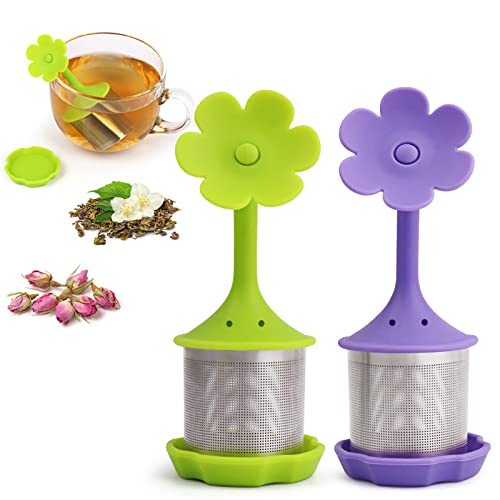
2-Pack Silicone Tea Steeper, Infusers – Fine Mesh Filters for Tea Leaves, Flowers; Purple or Green
Food Grade Silicone : Silicone handle and high-grade stainless steel with extra fine mesh. You can feel healthy…
As an affiliate, we earn on qualifying purchases.
As an affiliate, we earn on qualifying purchases.