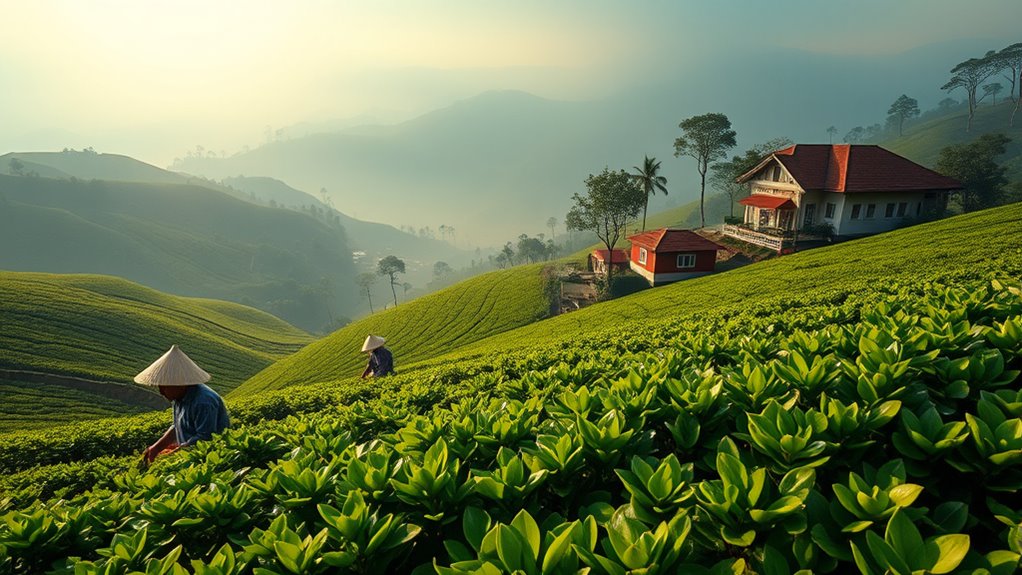

Famous places like China’s Hangzhou and Japan’s Uji showcase centuries-old tea traditions and legendary ceremonies. Key figures include China’s legendary tea master Lu Yu, known as the “Sage of Tea,” and Britain’s Queen Victoria, who popularized afternoon tea. Iconic locations and people helped shape tea’s cultural importance worldwide, from trade routes to social rituals. Keep exploring to discover more about the intriguing history behind these influential places and individuals.
Key Takeaways
- Uji in Japan is renowned for its centuries-old tea traditions and historic tea ceremonies.
- Hangzhou in China features iconic teahouses and cultural sites central to Chinese tea history.
- London’s Tea Room became a famous landmark symbolizing Britain’s tea social rituals.
- The city of Suzhou in China is celebrated for its traditional tea culture and craftsmanship.
- Key historical figures like Queen Victoria popularized tea in Britain, shaping its cultural legacy.
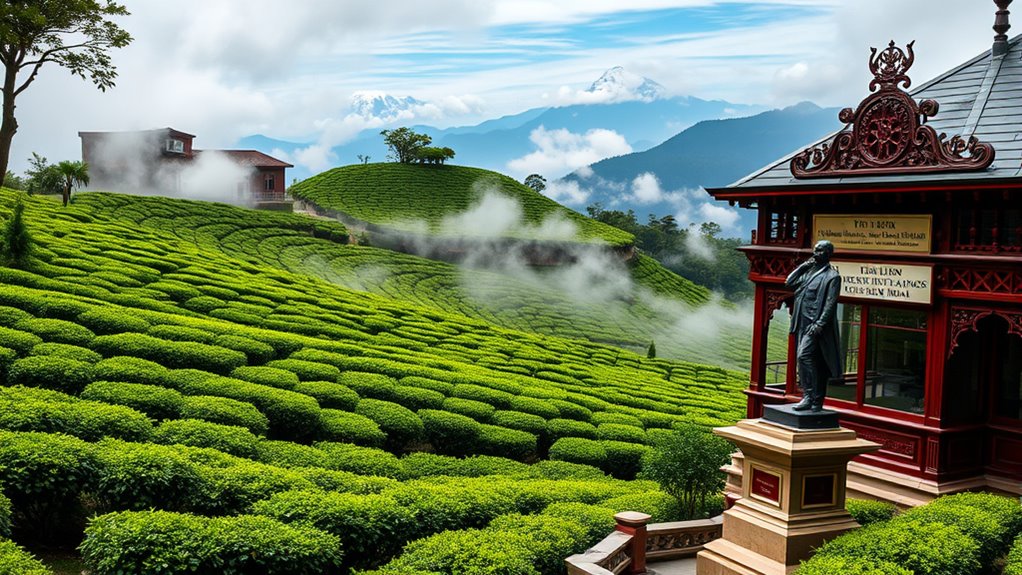
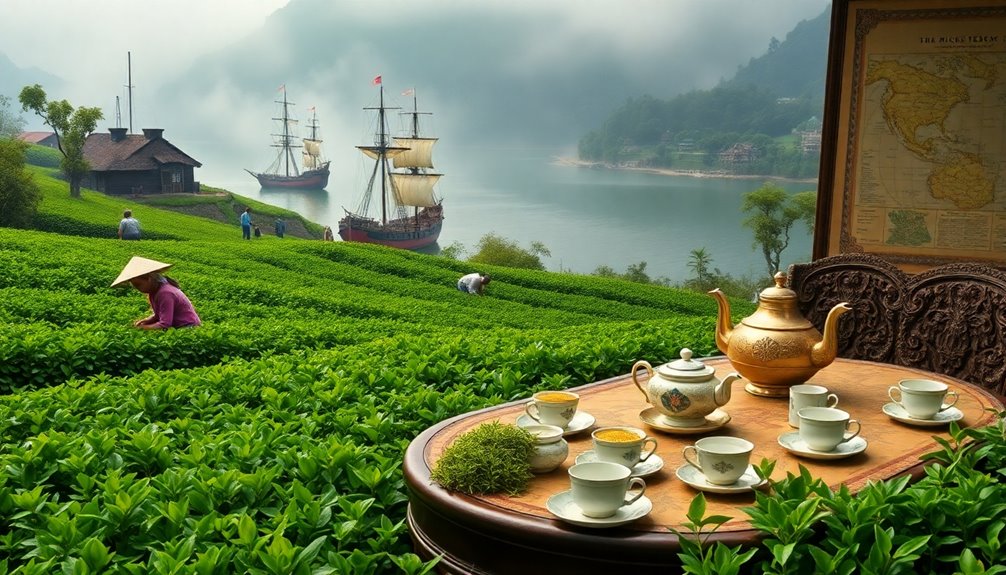
Tea has played a pivotal role in shaping cultures and histories around the world, inspiring legendary figures and iconic locations. One of the most influential aspects of tea’s history is the tea trade, which transformed distant regions into bustling centers of commerce and cultural exchange. As you explore the origins of tea, you’ll discover how ancient trade routes like the Silk Road and maritime routes connected China, India, and later Europe, turning tea into a highly sought-after commodity. The tea trade didn’t just boost economies; it also facilitated the spread of customs and traditions. You’ll see how different societies developed their unique cultural rituals around tea, elevating it beyond a mere beverage to a symbol of hospitality, status, and spiritual practice. In China, for instance, tea ceremonies became an art form, emphasizing harmony, respect, and mindfulness. These rituals, passed down through centuries, reflect a deep reverence for the process and the social bonds forged during tea preparation and consumption. Moving across Asia, Japan’s tea ceremony, or chanoyu, embodies these principles and elevates tea to a spiritual experience, emphasizing purity, tranquility, and harmony. You can visit places like Uji in Japan, renowned for its centuries-old tea traditions, or the teahouses of Hangzhou in China, where the art of brewing and serving tea remains integral to cultural identity.
In Europe, the influence of tea trade led to the establishment of iconic locations like London’s Tea Room and the historic tea clippers that sailed between Britain and China. These ships symbolize the daring efforts of traders and explorers who brought tea to the Western world, fueling social rituals such as afternoon tea, which became a cherished tradition in Britain. You’ll find that famous figures like Charles II and Queen Victoria popularized this custom, making it a cornerstone of British social life. These locations and personalities are intertwined with the broader narrative of how tea shaped social customs, diplomacy, and even political history. As you investigate this history, you’ll notice how tea’s journey from humble leaf to cultural cornerstone reflects a global story of exchange, innovation, and tradition. Whether through the ceremonial elegance in Japan or the social rituals in Britain, the legacy of tea continues to influence cultures worldwide, reminding you of its enduring significance in human history.
Frequently Asked Questions
How Did Tea Influence Global Trade Routes Historically?
The tea trade transformed global trade routes by turning maritime routes into key pathways for commerce. You can see how the demand for tea led explorers and merchants to establish new maritime routes, connecting Asia, Europe, and beyond. This shift boosted international trade, promoted the growth of port cities, and increased economic exchanges worldwide. As a result, tea played a central role in shaping the development of global trade networks.
Which Ancient Civilizations First Cultivated Tea?
You’ll find that ancient China first cultivated tea around 2737 BCE, marking the start of its long history. During this time, people practiced ancient brewing techniques, transforming wild tea leaves into a popular beverage. The Chinese’s dedication to tea cultivation greatly influenced neighboring civilizations, spreading throughout Asia. Today, this rich history continues to shape global tea culture, making China the birthplace of this cherished tradition.
What Are the Traditional Ceremonies Associated With Tea Around the World?
You’ll find that tea rituals and cultural ceremonies vary globally, reflecting deep traditions. In Japan, the tea ceremony emphasizes harmony, respect, purity, and tranquility, often performed with meticulous precision. In Britain, afternoon tea combines elegance and social bonding with scones and finger sandwiches. China’s Gongfu tea ceremony highlights skill and mindfulness, while Morocco’s tea ritual features sweet mint tea served with warmth and hospitality. These ceremonies honor tea’s cultural significance worldwide.
How Did Tea Become a Symbol of Social Status Historically?
You see, tea became a symbol of social status through the rise of the tea aristocracy and elaborate social rituals. Wealthy elites used tea gatherings to showcase their wealth and refinement, making tea a mark of privilege. Over time, these social rituals became exclusive, reinforcing class distinctions. By participating in these customs, you could signal your social standing, turning tea into a symbol of power and sophistication across different cultures.
Are There Any Famous Artworks Depicting Historic Tea Scenes?
Imagine a canvas whispering stories through tea art—yes, many historic paintings depict iconic tea scenes. Artists like Jean-Baptiste-Siméon Chardin and William Hogarth captured moments of tea-drinking, showcasing its cultural significance. These historic paintings reveal the social rituals and elegance surrounding tea, turning everyday scenes into timeless art. Such works invite you to see tea not just as a beverage, but as a symbol woven into history and art alike.
Conclusion
As you explore the famous places and people linked to tea’s history, you realize their stories are woven into your own. You see how tradition and innovation, heritage and discovery, connect across cultures and centuries. By understanding these connections, you appreciate how tea’s significance transcends time and borders. Just as tea unites people through shared rituals, your journey reminds you that history, culture, and personal stories are all part of a greater whole.