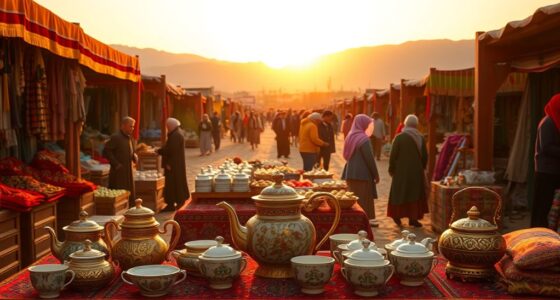

Tea is deeply intertwined with cultural etiquette and symbolism that reveal a society’s core values and spiritual beliefs. As you observe or participate, you’ll see rituals like Japanese tea ceremonies, which emphasize respect, mindfulness, and harmony, or Chinese traditions that symbolize balance and social bonds. British afternoon teas highlight civility and community. By exploring these customs, you’ll discover how tea acts as a subtle language of cultural identity and connection—continue to uncover its rich significance.
Key Takeaways
- Tea ceremonies embody cultural values like respect, harmony, and mindfulness through carefully choreographed rituals.
- Offering and serving tea signifies hospitality, social bonds, and reverence across various cultures such as Japanese, Chinese, and British.
- Tea’s symbolism reflects philosophical beliefs, representing balance, spiritual growth, and inner peace.
- Participating in tea rituals provides insight into societal priorities, emphasizing etiquette, respect, and cultural identity.
- The physical acts and symbolic gestures in tea ceremonies promote mindfulness and reinforce community connection and shared traditions.
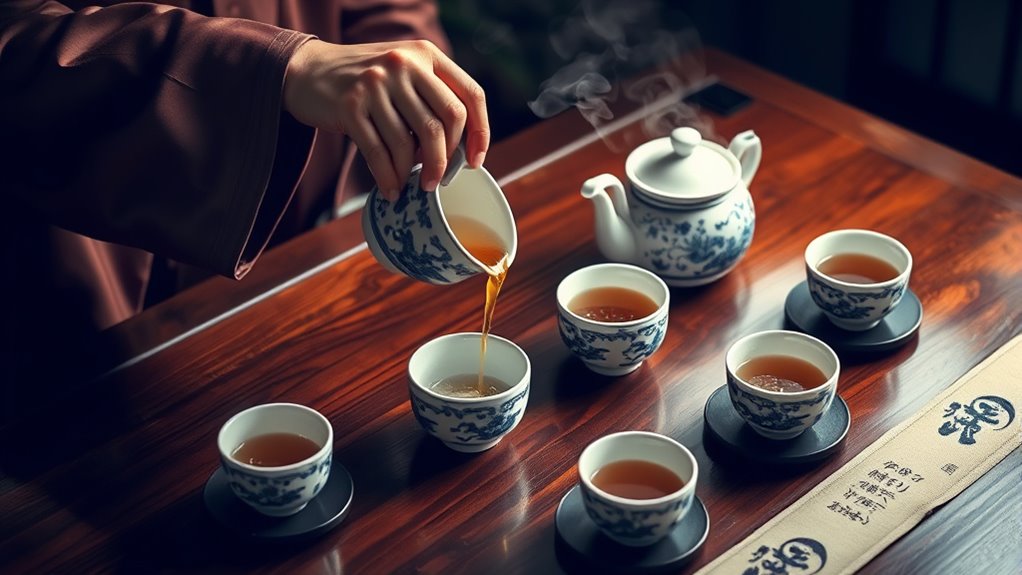
Tea culture is more than just a way to enjoy a warm beverage; it’s a rich tapestry of etiquette and symbolism that varies across societies. When you participate in tea ceremonies, you’re engaging with centuries-old traditions that transcend simple refreshment. These ceremonies are carefully choreographed rituals designed to honor the tea itself, the host, and the guests. Each movement and gesture carries meaning, emphasizing respect, harmony, and mindfulness. For example, in Japanese tea ceremonies, known as chanoyu, every step reflects principles of purity, tranquility, and respect. You might notice how the host meticulously prepares and presents the tea, emphasizing the importance of mindfulness and attention to detail. It’s not just about drinking tea—it’s about experiencing a moment of serenity and connection.
Participating in tea ceremonies honors tradition, mindfulness, respect, and creates meaningful moments of serenity and connection.
The symbolism of tea stretches far beyond its physical form. In many cultures, tea is a symbol of hospitality and social harmony. Offering a cup of tea signifies goodwill, friendship, and respect. When you accept a cup, you’re acknowledging the bond between you and your host, reinforcing social bonds. In China, tea is deeply intertwined with Confucian values, representing harmony and balance. Serving tea in Chinese culture often symbolizes respect for elders and guests. Similarly, in Britain, the tradition of afternoon tea reflects a sense of civility and tradition, emphasizing social equality and leisure. Additionally, the rituals associated with tea often serve to reinforce cultural identity and shared values within a community.
Tea ceremonies often embody more than tradition—they reflect deeper philosophical and spiritual beliefs. In China and Japan, for instance, tea is seen as a pathway to spiritual enlightenment. The ritualistic aspects of preparing and drinking tea are meant to cultivate mindfulness, patience, and inner peace. The symbolism of tea here is tied to the idea of harmony with oneself and the universe. The careful handling of the tea utensils and the deliberate pace of the ceremony serve as reminders to slow down and appreciate the present moment.
In essence, participating in a tea ceremony offers a window into a culture’s values and worldview. It’s a practice that elevates a simple act of drinking tea into a meaningful experience filled with symbolism and etiquette. When you understand these traditions, you gain insight into the societal importance placed on respect, harmony, and mindfulness. Tea, in its many forms and rituals, becomes a universal language—an elegant symbol of cultural identity and shared human connection.
Frequently Asked Questions
How Did Tea Influence Ancient Diplomatic Relationships?
Tea influenced ancient diplomatic relationships through tea diplomacy and royal exchanges. When you participate in tea diplomacy, you help foster trust and goodwill between nations, often through sharing tea as a gesture of friendship. Royal exchanges involving tea were more than just offering a beverage; they symbolized mutual respect and alliance, strengthening diplomatic ties. By engaging in these customs, you contribute to building peaceful relationships rooted in cultural exchange and shared traditions.
What Are the Regional Variations in Tea Symbolism?
You’ll notice regional customs shape tea symbolism variations around the world. In China, tea symbolizes harmony and respect, while in Japan, it embodies purity and Zen principles during tea ceremonies. In Britain, tea represents hospitality and social bonding. These cultural differences influence how tea is perceived, valued, and used in traditions. Exploring these regional customs helps you understand the deep-rooted significance tea holds in diverse societies worldwide.
How Has Tea Etiquette Evolved Over Centuries?
Like a flowing river shaping its banks, tea etiquette has evolved over centuries through ceremonial traditions and social shifts. You’ve seen the formalization of etiquette development, from elaborate rituals in China and Japan to more relaxed customs in Europe. As societies grew, the focus shifted from strict rules to shared experiences. Today, you adapt these traditions, blending respect and comfort, keeping the rich history alive while creating your own tea-drinking moments.
Are There Specific Rituals Associated With Tea in Different Cultures?
Yes, many cultures have specific rituals associated with tea. You’ll notice Tea ceremonies in Japan emphasize precise movements and mindfulness, while Chinese cultural gestures focus on respect and harmony during the Gongfu tea ceremony. In Britain, pouring tea with a pinkie up or serving with a specific order reflects tradition. These rituals highlight the importance of etiquette, symbolizing respect and cultural identity in each society.
What Role Does Tea Play in Religious or Spiritual Practices?
Tea isn’t just a drink; it’s the VIP guest in many spiritual ceremonies, elevating mundane moments to sacredness. You might find yourself bowing, chanting, or meditating over steaming cups, all in honor of tea’s spiritual significance. In Japan, Zen monks sip tea to deepen mindfulness, while in Tibet, it’s part of sacred rituals. Embrace tea’s divine role—after all, it’s more than just a beverage, it’s spiritual fuel.
Conclusion
As you sip your tea, remember it’s more than just a drink—it’s a bridge to history and culture. Just like the Japanese tea ceremony, where every gesture symbolizes respect and harmony, your appreciation deepens your understanding. Think of each cup as a story steeped in tradition, reminding you that tea’s true power lies in its ability to connect us across time and boundaries. Embrace this ritual, and let it enrich your perspective.