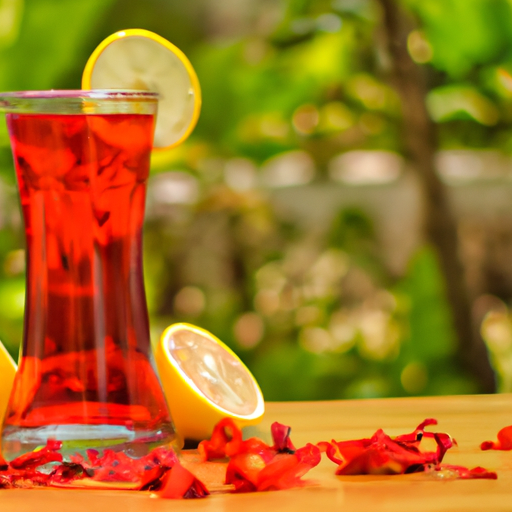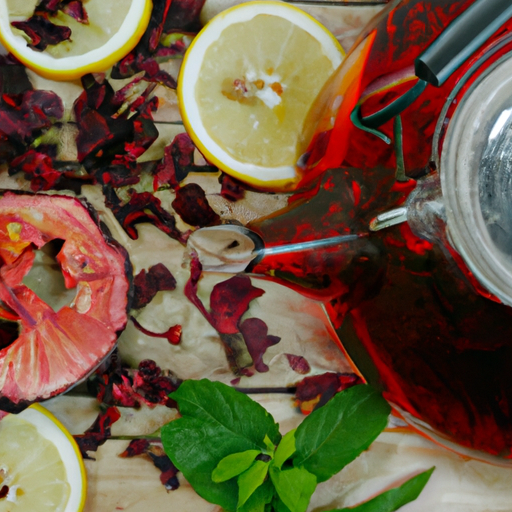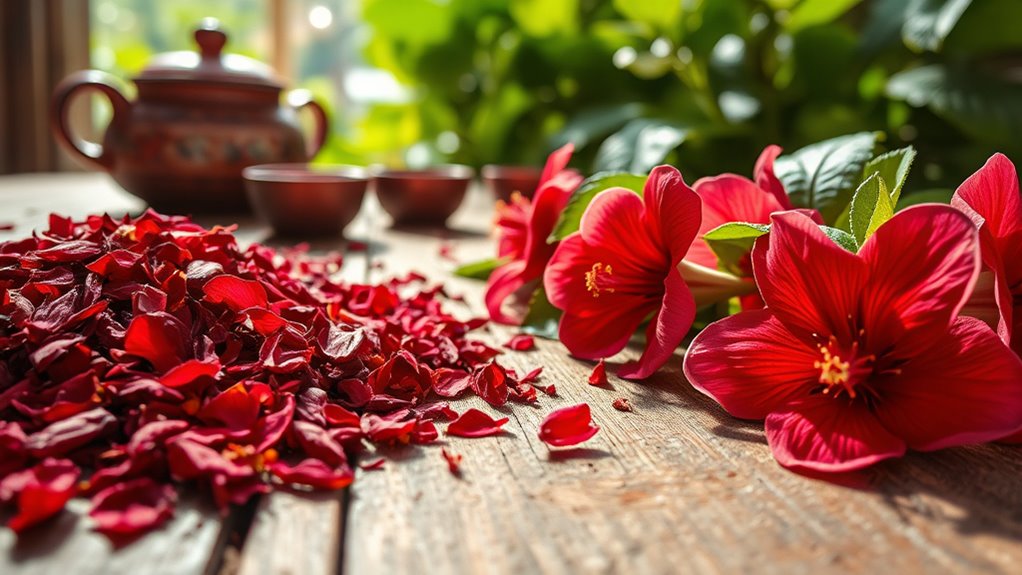
The regional varieties and terroir of hibiscus tea markedly influence its flavor, aroma, and appearance. Tropical areas produce larger, bolder flowers with tart, vibrant flavors, while cooler regions yield smaller, more delicate blossoms with subtler tastes. Processing methods like sun or shade drying also impact the tea’s color and complexity. By exploring these regional differences, you can find hibiscus teas tailored to your taste and health preferences—stay curious to discover more about these unique origins.
Key Takeaways
- Different cultivation regions produce hibiscus teas with unique flavor profiles, colors, and aromas shaped by local climate and soil.
- Tropical areas yield large, bold flowers with tart, vibrant flavors, while cooler regions produce smaller, subtler blossoms.
- Terroir influences hibiscus tea’s taste, aroma, color, and antioxidant levels through soil minerals and weather conditions.
- Processing methods like sun drying or shade drying vary regionally, affecting flavor intensity and appearance.
- Cultural practices and environmental factors shape regional hibiscus varieties, creating distinctive sensory and visual characteristics.
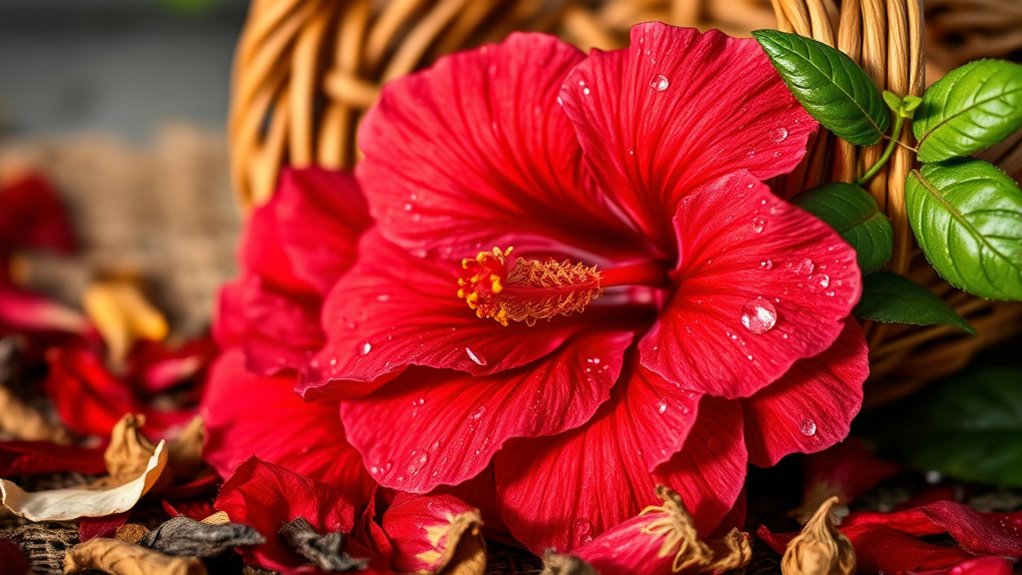
Hibiscus tea offers a vibrant array of varieties, each with unique flavors and health benefits. The journey from plant to tea cup begins with hibiscus cultivation, which plays a pivotal role in shaping the final product’s character. Depending on the region, the climate, soil quality, and farming practices influence how the hibiscus plants grow and develop. In warmer, tropical areas, hibiscus tends to flourish with robust, large flowers that imbue the tea with a bold, tart flavor. Conversely, in cooler regions, the plants may produce smaller, more delicate blossoms, resulting in a subtler taste. As you explore different regional varieties, you’ll notice how terroir impacts the plant’s resilience, aroma, and color. Local soil minerals and weather patterns contribute to subtle differences in the hibiscus’s flavor profile, making each region’s tea distinctive.
Processing techniques also considerably influence the taste and quality of hibiscus tea. After harvesting, the flowers are carefully dried through various methods—shade drying, sun drying, or controlled dehydration—each imparting different qualities. Shade drying preserves more of the plant’s natural antioxidants and maintains a brighter color, while sun drying can intensify the flavor and deepen the hue. Some regions incorporate specific processing steps, like lightly roasting the dried petals or blending with local herbs, to add complexity and regional identity to the tea. These techniques not only preserve the delicate flavors but also enhance specific health benefits, such as increased antioxidant activity or enhanced aroma. The choice of processing method reflects cultural preferences and the local environment, creating a wide spectrum of hibiscus teas that range from tart and invigorating to subtly sweet and floral.
As you compare hibiscus teas from different regions, you’ll find that the cultivation and processing techniques combine to produce unique sensory experiences. For instance, Caribbean hibiscus varieties often have a bright, tangy flavor with a deep crimson hue, thanks to specific soil conditions and traditional sun drying. In contrast, Egyptian hibiscus may feature a more mellow profile, achieved through shade drying and gentle processing, highlighting floral notes. Recognizing these differences allows you to appreciate the terroir’s influence on each tea’s character. Ultimately, understanding hibiscus cultivation and processing techniques helps you select teas that match your taste preferences and health goals, whether you seek a vibrant, punchy brew or a subtle, aromatic infusion.
Frequently Asked Questions
How Do Regional Climates Affect Hibiscus Flavor Profiles?
Your climate notably influences hibiscus flavor profiles through climate adaptation and flavor development. Warmer, sunnier climates intensify the floral and tart notes, making the tea more vibrant. Cooler or more humid environments may mellow flavors and add subtle earthy tones. By understanding how climate affects growth, you can select hibiscus varieties suited for your region, ensuring ideal flavor development and a more enjoyable tea experience.
Are There Traditional Preparation Methods Unique to Specific Regions?
Did you know that in Egypt, hibiscus tea is traditionally prepared with sugar and mint, forming a key part of cultural rituals? You’ll find regional brewing methods that emphasize local flavors, like adding spices in West Africa or using specific sweeteners in Mexico. These unique preparation techniques reflect cultural traditions, making hibiscus tea more than just a beverage — it’s a symbol of regional identity and community.
What Are the Health Benefits Associated With Regional Hibiscus Varieties?
You’ll find that regional hibiscus varieties offer unique health benefits thanks to their herbal medicinal properties. You might notice that some varieties have higher antioxidant properties, which help protect your cells from damage and support overall health. Consuming these regional teas can boost your immune system, improve digestion, and lower blood pressure. So, exploring different types of hibiscus tea allows you to enjoy both delicious flavor and natural health benefits.
How Does Soil Composition Influence Hibiscus Taste and Quality?
Did you know that soil mineral content can boost hibiscus flavor by up to 30%? You’ll notice that rich, vibrant taste when the soil has ideal nutrients. Soil composition influences hibiscus quality through mineral levels, which affect plant health and flavor profile. Proper irrigation practices ensure these minerals are absorbed efficiently, resulting in a superior, more aromatic brew. So, healthy soil and mindful watering truly make your hibiscus tea exceptional.
Can Terroir Differences Impact the Color Intensity of Hibiscus Tea?
Terroir differences can definitely impact the color intensity of your hibiscus tea. You’ll notice variations in hibiscus pigmentation, which influence the tea infusion color. Factors like soil type, climate, and altitude affect pigment development in the flowers, making some teas more vibrant and deeply colored. So, when you brew, the unique terroir of the hibiscus can give you a richer, more intense hue in your cup.
Conclusion
So, next time you sip your hibiscus tea, remember—its vibrant flavors come from all those unique regional quirks and terroir. Who would’ve thought that the tiny, sun-soaked leaves from distant lands could turn into such a colorful, aromatic brew? It’s almost poetic—your perfect cup, crafted by nature’s own fingerprint, yet somehow still a simple, everyday pleasure. Cheers to the delicious irony that the world’s diversity makes our tea moments so delightfully unforgettable.