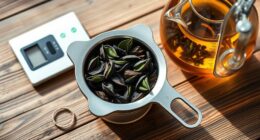

Incorporate herbal teas like ginger, peppermint, fennel, and chamomile into your daily routine to naturally support digestion. Start your day with ginger tea to boost digestion early, enjoy peppermint or fennel after meals to soothe discomfort, and unwind with chamomile before bed to promote relaxation. Making these tea rituals a regular part of your life helps improve gut health and overall well-being. Continue exploring simple ways to enhance your digestion naturally.
Key Takeaways
- Incorporate herbal teas like ginger or peppermint into your morning routine to stimulate digestion early.
- Drink fennel or chamomile tea after meals to soothe the stomach and reduce bloating.
- Establish a consistent tea-drinking schedule, such as before bed, to promote relaxation and digestive health.
- Prepare and savor herbal infusions mindfully to create calming rituals that support gut well-being.
- Combine herbal tea consumption with a balanced diet, hydration, and stress management for optimal digestive support.

Incorporating tea into your daily routine can be a simple yet effective way to support your digestive health. Herbal infusions, in particular, are known for their natural ability to soothe and improve digestion. These teas, made from a variety of herbs like chamomile, peppermint, ginger, and fennel, work as gentle digestion aids that can help calm an upset stomach, reduce bloating, and promote regularity. By making herbal infusions a part of your day, you create a calming ritual that not only benefits your gut but also offers a moment of relaxation amid a busy schedule.
Herbal infusions like chamomile, peppermint, ginger, and fennel soothe digestion and promote relaxation.
Starting your day with a cup of ginger tea can stimulate digestion and get your gastrointestinal system moving. Ginger is celebrated for its anti-inflammatory properties and its ability to reduce nausea and bloating. You might find that sipping on this herbal infusion after breakfast helps prevent discomfort later in the day. Similarly, peppermint tea is renowned for soothing the digestive tract. Its natural muscle-relaxing effects can ease indigestion and gas, making it a perfect post-meal beverage. Keep a cup handy after lunch or dinner to help your body process food more efficiently.
Fennel tea is another excellent herbal infusion to incorporate into your routine. Fennel seeds contain compounds that relax the muscles in your gastrointestinal system, reducing cramping and bloating. Drinking fennel tea after meals may support digestion and prevent that uncomfortable feeling of fullness. If you’re looking for a calming ritual, chamomile tea is a great choice. Not only does chamomile help reduce stress, but it also has anti-inflammatory properties that can soothe an irritated stomach and promote better digestion overall. Enjoy a warm cup about an hour before bed to help your body wind down and support overnight digestive processes.
Consistency is key when using herbal infusions as digestion aids. Making a habit of drinking a cup of herbal tea at specific times—such as after meals or in the evening—can reinforce your digestive health. Additionally, taking the time to prepare and savor your tea creates a mindful moment that encourages relaxation, which is beneficial for digestion. Remember, though, that while herbal infusions are helpful, they work best as part of a balanced diet and healthy lifestyle. Stay hydrated, eat fiber-rich foods, and manage stress to maximize the benefits of your tea ritual.
Herbal infusions can also support your overall well-being by promoting emotional balance, which is closely linked to digestive health. Incorporating herbal infusions into your daily routine isn’t just about the physical benefits; it’s about creating a mindful, soothing practice that nurtures your gut and your overall well-being. With each sip, you support your digestive system naturally and enjoy a simple, calming ritual that can become a cherished part of your day.
Frequently Asked Questions
Can Different Types of Tea Improve Specific Digestive Issues?
Yes, different tea varieties can target specific digestive issues. Herbal blends like peppermint soothe indigestion, while ginger tea helps with nausea and inflammation. Chamomile calms stomach discomfort, and fennel aids digestion and bloating. By choosing the right tea variety, you can effectively support your digestive health. Incorporate these herbal blends into your daily routine for gentle relief and improved digestion, making your tea choices work for your specific needs.
How Much Tea Is Safe to Consume Daily for Digestion?
You can safely enjoy 3-4 cups of tea daily, but it’s a fine line to walk. Too much tea caffeine may cause jitters or disrupt sleep, while herbal infusions generally pose fewer risks. Listen to your body and keep an eye on how you react. Remember, moderation is key—don’t overdo it, or you might find yourself in hot water. Balance your tea intake for ideal digestive benefits.
Are There Any Side Effects of Drinking Tea for Digestion?
Yes, drinking tea for digestion can have side effects. You might experience a tea allergy, which causes symptoms like itching or swelling. If you’re caffeine sensitive, too much tea can lead to jitters, insomnia, or increased heart rate. Also, excessive tea intake may upset your stomach or cause acid reflux. Always listen to your body, and if you notice adverse effects, reduce consumption or switch to caffeine-free herbal teas.
What’s the Best Time of Day to Drink Tea for Digestive Health?
Imagine your digestion running smoother than a waterfall — that’s why timing matters. For the biggest boost, drink tea in the morning when your digestion wakes up and can absorb its benefits fully. Evening tea can relax your system, but it might interfere with sleep if it contains caffeine. So, consider your timing considerations carefully—morning for energy, evening for calm—tailoring your tea ritual to your digestive rhythm.
Can Tea Help With Chronic Digestive Conditions Like IBS?
Yes, tea can assist with chronic digestive conditions like IBS. Herbal infusions such as chamomile or peppermint soothe your digestive tract, reducing discomfort. Probiotic teas introduce beneficial bacteria that support gut health, potentially easing symptoms. Incorporate these teas into your daily routine, but always consult your healthcare provider to verify they complement your treatment plan. Regularly drinking herbal and probiotic teas may improve your overall digestive health over time.
Conclusion
Incorporating these tea rituals into your daily routine can substantially boost your digestion and overall well-being. Did you know that sipping tea after meals can reduce bloating by up to 30%? By making these simple practices part of your day, you’ll support a healthier gut and enjoy better comfort and energy. So, brew a cup, relax, and let these small habits transform your digestive health for the better.