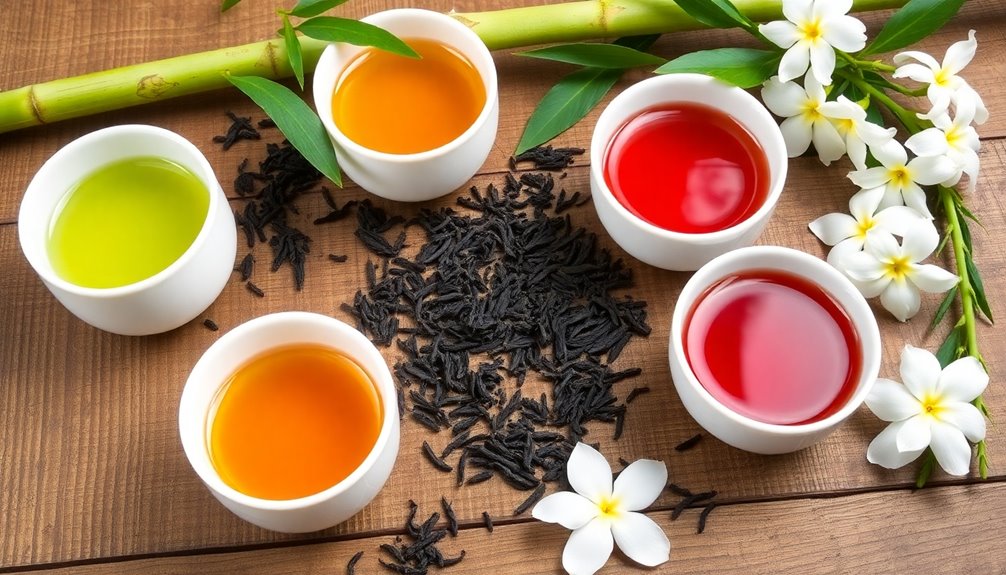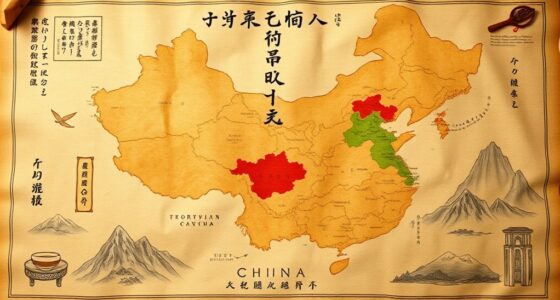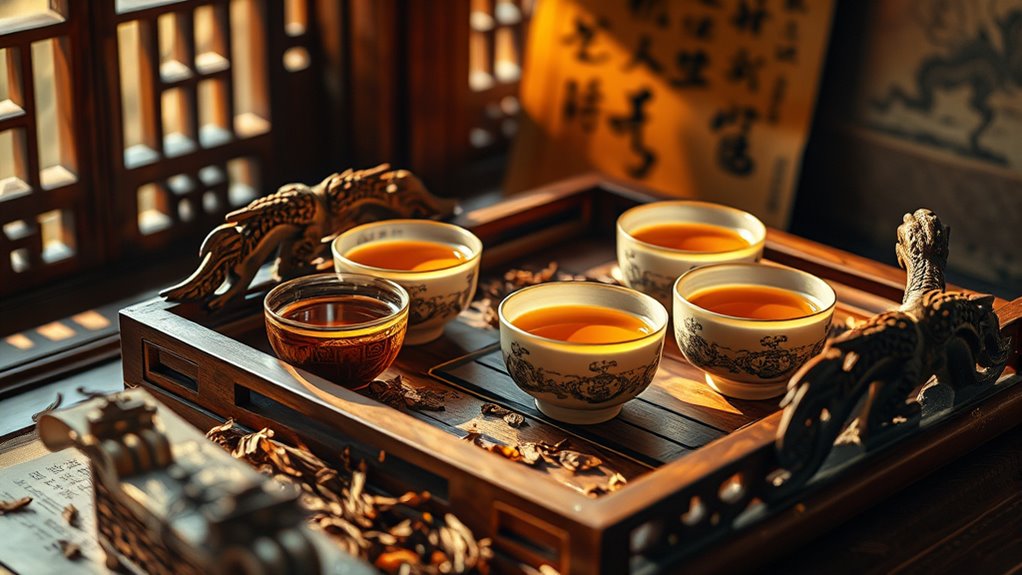

Chinese tea boasts a history spanning thousands of years, deeply rooted in harmony with nature and traditional craftsmanship. From early origins in ancient China, different regions developed unique styles influenced by climate, soil, and altitude. The art of harvesting, processing, and brewing tea has been passed down through generations, shaping its cultural significance. If you explore further, you’ll discover how these timeless traditions continue to influence modern tea practices and appreciation around the world.
Key Takeaways
- Chinese tea has a history spanning over thousands of years, rooted in harmony with nature and regional cultivation practices.
- The origins trace back to legendary figures like Shennong, who first discovered tea’s medicinal and cultural significance.
- Different tea types (green, black, oolong, white) evolved through unique processing techniques developed over centuries.
- Regional climates and terrains in China influence the distinct flavors and qualities of local teas.
- Traditional harvesting and brewing methods have been passed down through generations, preserving China’s rich tea heritage.

Have you ever wondered what makes Chinese tea so renowned worldwide? It all begins with the careful process of tea cultivation, which has been refined over thousands of years. In China, tea cultivation isn’t just about planting tea bushes; it’s a tradition rooted in harmony with nature. The climate, soil, and altitude all influence the flavor and quality of the leaves. Farmers often select specific regions known for ideal growing conditions, guaranteeing each batch of tea embodies unique characteristics. From tender spring shoots to mature leaves, the harvesting process requires skill and attention to detail. Plucking the right leaves at the right time is essential to producing high-quality tea, and this practice has been passed down through generations. Once harvested, the leaves undergo processing that varies depending on the type of tea being produced—green, black, oolong, or white—and each step is designed to preserve the distinct flavors and aromas. Modern technological advancements also influence tea processing techniques, ensuring consistency and quality control across different batches.
As you explore Chinese tea, you’ll notice that traditional brewing techniques remain an integral part of the experience. These methods emphasize patience, precision, and respect for the tea leaves. Unlike quick infusions, traditional brewing often involves multiple short steepings, allowing the full spectrum of flavors to unfold gradually. The use of small, often handmade teaware like gaiwans, Yixing teapots, or small porcelain cups helps control brewing temperature and infusion time, making each cup a carefully crafted ritual. These techniques highlight the delicate balance between water temperature, steeping duration, and leaf-to-water ratio. For instance, green teas are brewed at lower temperatures to prevent bitterness, while black teas require hotter water for a more robust flavor. The process isn’t just about making tea; it’s about appreciating the journey and respecting the nuances of each brew.
Throughout history, these traditional brewing techniques have been passed down from master to apprentice, forming a cultural link that connects modern tea drinkers with ancient practices. This reverence for tradition guarantees that each cup of Chinese tea offers a sensory experience that’s both authentic and deeply rooted in history. As you learn about Chinese tea, you’ll realize that its reputation isn’t just about the leaves themselves but also about the centuries of craftsmanship behind each step—from cultivation to brewing. Whether you’re savoring a delicate green tea or a fragrant oolong, understanding the importance of tea cultivation and traditional brewing techniques enriches your appreciation and transforms each sip into a moment of cultural connection.
Frequently Asked Questions
How Did Chinese Tea Cultivation Spread Across Asia?
You see, Chinese tea cultivation spread across Asia through tea dissemination and cultural exchange. Traders, monks, and travelers introduced tea to neighboring regions like Japan, Korea, and Southeast Asia. As these cultures interacted, they adopted and adapted tea practices, fostering a rich exchange of techniques and traditions. This movement helped establish tea as a essential part of Asian culture, creating a lasting legacy of interconnectedness and shared appreciation for this ancient beverage.
What Are the Traditional Methods of Chinese Tea Processing?
Imagine artisans crafting liquid gold with delicate hands. You’ll find traditional Chinese tea processing involves meticulous fermentation techniques that develop flavor and aroma. Rolling methods are essential—they shape leaves into tight curls or pearls, revealing their essence. Each step demands patience and skill, transforming fresh leaves into cherished teas like green, black, or oolong. You’re witnessing a dance of nature and craft, where every movement sings a song of centuries-old tradition.
How Has Chinese Tea Influenced Global Tea Culture?
You see how Chinese tea has shaped global tea culture through elegant tea ceremonies that emphasize mindfulness and tradition. These rituals, rich in cultural symbolism, inspire tea practices worldwide, fostering appreciation for craftsmanship and serenity. As you participate in or observe these ceremonies, you connect with centuries of history, making Chinese tea a essential influence that elevates tea-drinking beyond mere refreshment into an art form and cultural expression globally.
Are There Regional Varieties of Chinese Tea With Unique Characteristics?
Yes, you’ll find regional varieties of Chinese tea with unique characteristics. Different regions boast distinct flavors due to local climate and soil, giving each tea its regional flavor. Unique processing methods, like pan-firing or sun-drying, further define these teas. For example, you might notice a smoky aroma in teas from Fujian or a floral scent in those from Yunnan. Exploring these regional differences enriches your tea experience.
What Role Did Chinese Tea Play in Ancient Trade Routes Like the Silk Road?
A journey of a thousand miles begins with a single step, and Chinese tea played a key role in ancient trade routes like the Silk Road. You see, tea diplomacy fostered cultural exchange, turning simple leaves into a symbol of goodwill. As traders carried tea across borders, it built bridges between civilizations, making it more than just a beverage but an essential part of connecting diverse cultures and strengthening international relations.
Conclusion
As you sip Chinese tea, remember it’s like a journey through time, connecting you to ancient dynasties and timeless traditions. Just as a single leaf holds centuries of history, your cup carries stories of emperors and farmers alike. Imagine each sip as a bridge that links past and present, making every moment with tea a toast to centuries of craftsmanship and culture. Embrace this heritage, and let each cup remind you of China’s rich, flavorful history.