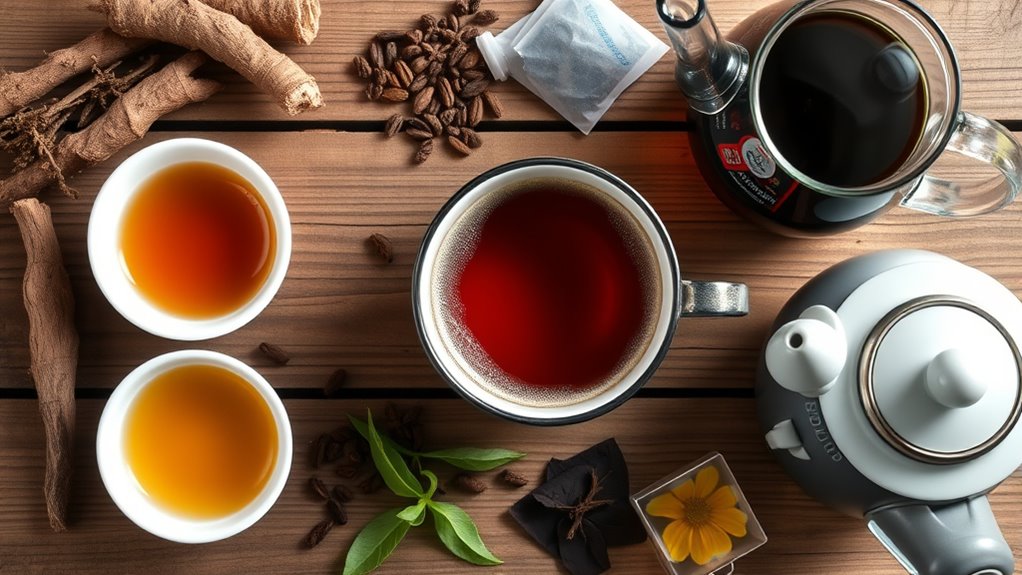

Chicory root offers a distinct alternative to traditional teas with its rich, roasted, and slightly nutty flavor that resembles coffee without bitterness. Unlike most teas, it’s caffeine-free and packed with inulin, supporting your gut health and digestion. Its bold taste pairs well with milk or sweeteners, making it versatile for your daily drink routine. If you’re curious about how chicory compares in health benefits and flavor, there’s more to uncover below.
Key Takeaways
- Chicory root offers a rich, roasted flavor with nutty undertones, unlike the grassy or floral notes of traditional teas.
- It is caffeine-free and provides digestive and anti-inflammatory benefits not typically found in black or green teas.
- Chicory root contains inulin, a prebiotic fiber that supports gut health, whereas most other teas lack this dietary fiber.
- Its smooth, hearty taste makes it a versatile beverage, suitable for blending with milk or sweeteners, unlike more delicate herbal teas.
- Compared to herbal teas, chicory root provides a more robust, coffee-like experience with unique health benefits and natural earthiness.
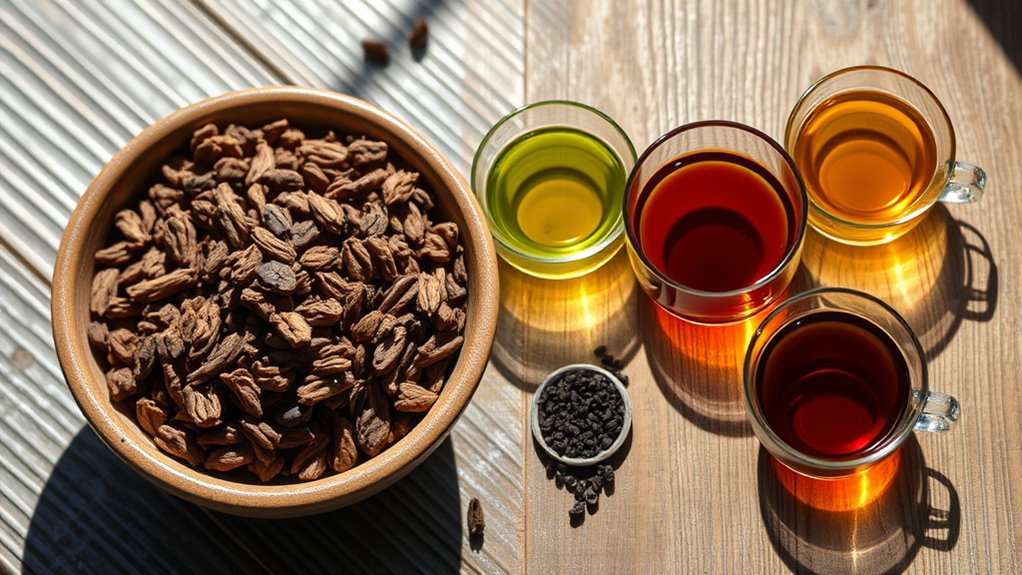
When choosing a tea, many people overlook chicory root, yet it offers unique benefits that set it apart from traditional options like black, green, or herbal teas. If you’re exploring different beverages for health or taste, chicory root deserves your attention. Its health benefits are notable; it’s packed with inulin, a prebiotic fiber that supports gut health, improves digestion, and may help regulate blood sugar levels. Unlike some teas that only offer antioxidants, chicory root provides these digestive benefits along with anti-inflammatory properties. It’s also caffeine-free, making it an excellent choice if you’re sensitive to stimulants or want a relaxing, non-jittery drink.
Flavor profiles are another reason to contemplate chicory root. Its taste is often described as rich, roasted, and slightly nutty, reminiscent of coffee but without the bitterness. This makes it a versatile option for those seeking a warm, comforting beverage with a depth of flavor. When compared to black or green teas, which can sometimes be sharp or grassy, chicory offers a smoother, more mellow experience. Its natural earthiness pairs well with milk or sweeteners, allowing you to customize your drink easily. If you’re accustomed to herbal teas, which tend to have floral or fruity notes, chicory provides a different sensory experience—more robust and hearty, yet still gentle on the palate.
Another aspect to consider is how chicory root can be brewed. It can be enjoyed on its own as a tea, or used as a coffee substitute or enhancer, blending well with roasted grains or other herbs. Its flavor profile complements a variety of additions, making it adaptable to your preferences. Unlike some teas that require specific steeping times or temperatures, chicory root is straightforward to prepare, making it a convenient choice for busy mornings or relaxing evenings.
Frequently Asked Questions
Is Chicory Root Suitable for People With Caffeine Sensitivities?
Yes, chicory root is suitable for people with caffeine sensitivity because it’s naturally caffeine-free. You can enjoy it as an herbal tea, making it a great herbal tea compatibility choice for those avoiding caffeine. Since it doesn’t contain stimulants, you won’t experience the jitters or sleep issues associated with caffeine. So, if you’re sensitive to caffeine, chicory root offers a comforting, caffeine-free alternative.
How Does Chicory Root Affect Blood Sugar Levels?
Oh, chicory root is here to save your blood sugar! It has a gentle glycemic impact, helping with blood sugar regulation without causing spikes. While it’s not a miracle cure, it can be a supportive addition to your diet. Just remember, it’s not a free pass to indulge endlessly. Incorporate chicory root thoughtfully, and enjoy its subtle benefits for maintaining balanced blood sugar levels.
Can Chicory Root Be Combined With Other Herbal Teas?
Yes, you can combine chicory root with other herbal teas to create a flavorful herbal blend. This not only enhances the flavor profile but also boosts potential health benefits. Experiment by blending chicory root with herbs like peppermint, chamomile, or ginger for a unique taste and added wellness perks. Just guarantee the flavors complement each other, and enjoy your customized tea for a satisfying, health-boosting experience.
What Are the Storage Requirements for Chicory Root Tea?
Think of chicory root tea like a precious treasure—you want to keep it safe. Store it in an airtight container, away from light, heat, and moisture to preserve its freshness. Keep it in a cool, dry place, and you’ll enjoy its rich flavor longer. Typically, it has a shelf life of about 6 to 12 months if stored properly. Proper storage ensures you get the best taste and benefits every time you brew.
Are There Any Known Interactions Between Chicory Root and Medications?
You should be aware that chicory root may interact with certain medications, especially those affecting blood sugar levels or blood clotting. While generally safe as an herbal supplement, it’s important to check for medication interactions before adding it to your routine. Always consult your healthcare provider to verify herbal supplement compatibility, particularly if you’re on medication, to avoid any adverse effects or reduced medication effectiveness.
Conclusion
So, next time you reach for a comforting cup, consider chicory root—who knew it might unexpectedly match or even surpass your favorite teas? It’s funny how a simple ingredient can surprise you, blending rich flavor with unique health benefits. Sometimes, the best discoveries happen by chance. Keep an open mind; your new favorite might just be waiting in a cup of chicory root, right when you least expect it.