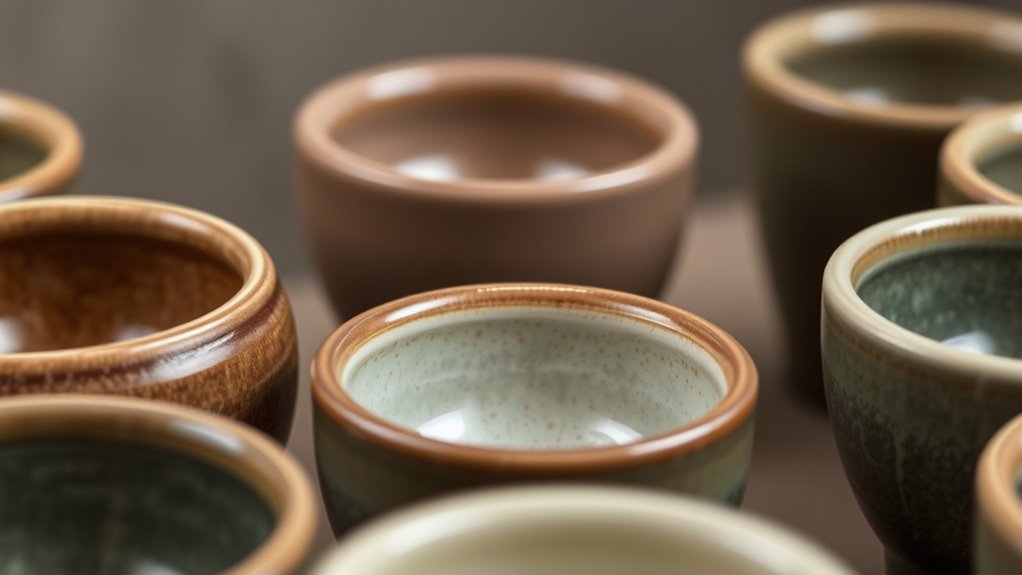

Ceremonial bowls, especially chawan shapes, blend aesthetic appeal with cultural symbolism, transforming simple rituals into meaningful experiences. Their rounded form invites you to cradle and focus, deepening mindfulness during use. The shapes and patterns reflect cultural values, spiritual beliefs, and artistic styles, making each bowl a symbol of identity and tradition. By exploring their design, you’ll discover how these forms elevate everyday acts into powerful cultural expressions. Continue to uncover the deeper significance behind these timeless shapes.
Key Takeaways
- The rounded chawan shape enhances tactile engagement, fostering intimacy and mindfulness during traditional tea rituals.
- Curved forms symbolize harmony and spiritual balance, reflecting cultural philosophical ideals.
- Shape variations convey regional artistic styles and cultural identities through specific forms and motifs.
- The form’s aesthetic qualities elevate the ritual, transforming simple acts into meaningful cultural expressions.
- Design choices in shape and decoration reinforce symbolic messages of good fortune and spiritual protection.
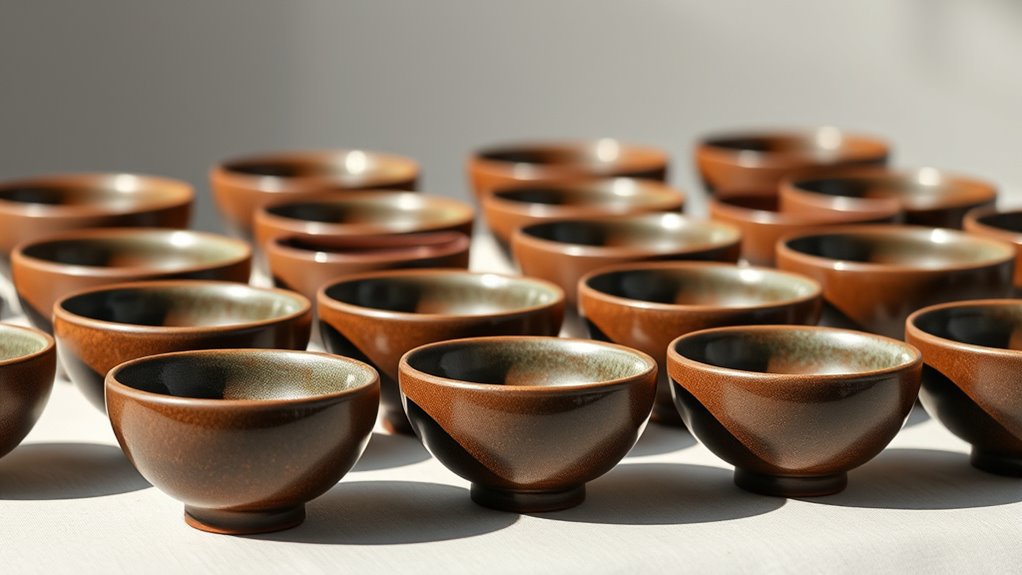
Have you ever wondered about the significance of ceremonial bowls in various cultures? These vessels are more than simple containers; they embody deep cultural symbolism and serve as essential components of traditional practices. Take the tea ceremony, for example. In Japan, the chawan, or tea bowl, is central to the ritual, representing harmony, respect, purity, and tranquility. Its shape and design aren’t random—they’re carefully chosen to enhance the sensory experience and reflect cultural values. The rounded form of a typical chawan allows you to cradle it comfortably in your hands, fostering a personal connection with the ritual. This shape isn’t just functional; it’s steeped in symbolism. The curvature invites mindfulness and focus, encouraging you to savor each sip and appreciate the moment fully.
Across different cultures, ceremonial bowls often symbolize more than their immediate purpose. They are considered conduits of tradition, embodying centuries of history and artistry. The shape of a tea bowl, for example, influences the way you perceive and enjoy the tea, emphasizing the aesthetic function of these forms. The gentle curves, the size, and even the texture all contribute to the experience, making it more than just about drinking tea — it becomes a meditative act. In Chinese tea ceremonies, similarly, the shape of the bowl facilitates a sense of balance and harmony that aligns with broader philosophical ideals. These objects are designed to elevate the ritual, turning everyday acts into meaningful cultural expressions. Additionally, the aesthetic design of these bowls often reflects the artistic styles and cultural influences of their respective regions, further enriching their symbolic significance.
The cultural symbolism encoded in these bowls extends beyond their physical form. They often carry motifs, patterns, or materials that reflect the identity or spiritual beliefs of a community. For instance, a finely crafted tea bowl might feature symbols representing good fortune or spiritual protection, reinforcing the cultural values during the ceremony. The aesthetic choices—such as the glaze, form, or decorative elements—are deliberate, meant to evoke specific emotions and uphold tradition. You might notice how the shape and style of ceremonial bowls influence your perception of the ritual, making each experience unique and rooted in cultural significance.
In essence, ceremonial bowls, especially those used in sacred practices like the tea ceremony, serve as both functional objects and symbols of cultural identity. Their shapes are carefully designed to enhance sensory engagement and embody core values. When you participate in such a ritual, you’re not just drinking tea—you’re engaging with a centuries-old tradition expressed through form, material, and symbolism. This fusion of aesthetic function and cultural meaning transforms a simple bowl into a powerful vessel of tradition, allowing you to connect deeply with the cultural stories and philosophies behind each ritual.
Frequently Asked Questions
How Are Ceremonial Bowls Traditionally Decorated?
You might notice that ceremonial bowls are traditionally decorated with calligraphy motifs and symbolic patterns. These designs often carry spiritual or cultural significance, enhancing the bowl’s beauty and meaning. Artists carefully craft intricate calligraphy or meaningful symbols, making each piece unique. These decorations aren’t just aesthetic; they also reflect tradition and beliefs, adding depth to the ceremonial experience and emphasizing the importance of the occasion.
What Materials Are Commonly Used for Chawan Production?
When making chawan, you typically choose materials like clay that offer good ceramic glazing options and material durability. You might select porcelain or stoneware, known for their strength and ability to hold glaze well. These materials guarantee your chawan is both aesthetically pleasing and durable, making it suitable for ceremonial use. By carefully selecting your clay and glazing techniques, you create a bowl that’s functional and beautifully crafted.
Are There Regional Differences in Chawan Shapes?
You’ll notice regional aesthetics and cultural variations markedly influence chawan shapes. In Japan, for instance, you might see more rustic, irregular forms reflecting wabi-sabi ideals, while in Korea, the shapes tend to be more refined and symmetrical. These differences showcase each region’s unique aesthetic values and cultural history, making each chawan not just a functional object but also a reflection of regional identity and artistic tradition.
How Do Chawan Shapes Influence Tea Flavor?
Did you know that the shape of your chawan can subtly influence your tea experience? The design affects the tea aroma you perceive and the mouthfeel influence, making each sip more unique. A wider bowl allows more aroma to escape, enhancing scent, while a narrower one concentrates flavors, affecting how the tea feels on your palate. Your choice of shape genuinely shapes your sensory enjoyment.
What Is the History Behind Chawan Design Evolution?
You explore the history of chawan design evolution, discovering how it reflects tea ceremony symbolism and cultural significance. Over centuries, shapes shifted from simple, functional forms to more expressive styles, often influenced by artistic trends and spiritual beliefs. These changes mirror Japan’s rich cultural history, emphasizing harmony and mindfulness. As a result, each chawan’s design connects you to tradition, enhancing the ceremonial experience and embodying deeper cultural values.
Conclusion
As you hold these ceremonial bowls, you realize they’re more than just vessels; they’re windows into tradition and artistry. Their shapes whisper stories of centuries, much like a river that carves its path through time. Each curve and form invites you to connect with history, transforming simple moments into sacred rituals. In embracing their aesthetic, you embrace a living legacy—an eternal dance between form and meaning that flows through generations, shaping your own sense of cultural identity.