
To brew the perfect chai, start by choosing fresh, high-quality spices like cinnamon, cardamom, and ginger, and create a balanced blend to suit your taste. Simmer the spices in water, then add black tea leaves and let it steep for a few minutes. Afterward, stir in milk and your preferred sweetener, and simmer gently. Strain out the solids for a smooth, aromatic cup. Keep experimenting to perfect your flavor, and you’ll discover the secret to exceptional chai.
Key Takeaways
- Use high-quality, traditional spices like cinnamon, cardamom, and cloves, and consider freshly grinding whole spices for maximum flavor.
- Simmer spices with water before adding tea leaves, allowing flavors to infuse thoroughly over 3-5 minutes.
- Incorporate milk and sweetener after simmering, then gently reheat to meld all flavors harmoniously.
- Adjust spice proportions and simmering time to customize the strength and aroma of your chai.
- Strain the chai to remove solids, ensuring a smooth and aromatic beverage for the perfect cup.
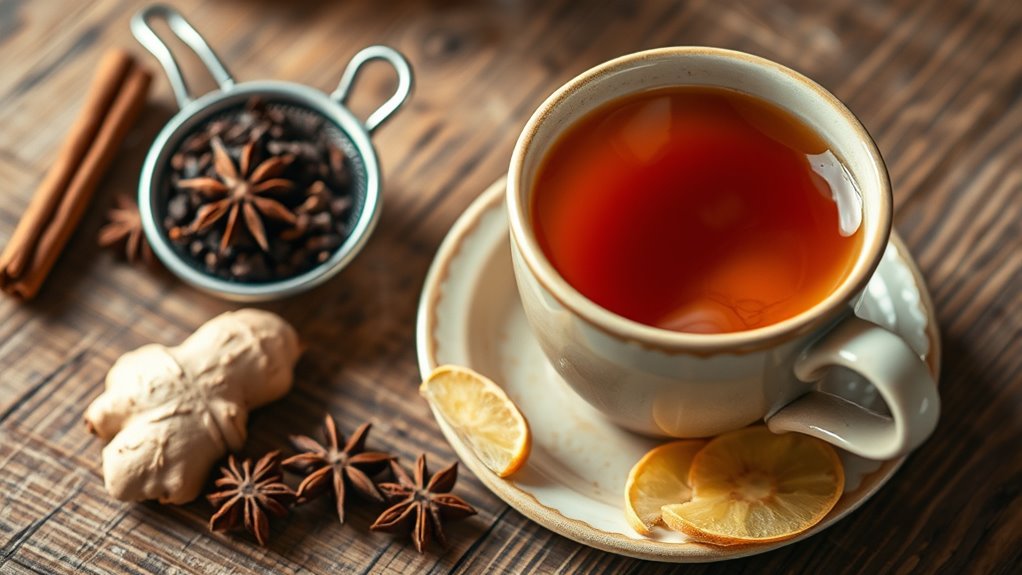
Brewing a perfect cup of chai tea is simple once you understand the key steps. The foundation of great chai lies in your spice blending and brewing techniques. When you start, choose high-quality ingredients, as they make all the difference. The first step is selecting your spices: cinnamon, cardamom, cloves, ginger, and black pepper are traditional, but you can customize to your taste. The art of spice blending is crucial—you want a balanced mix that complements rather than overwhelms. You might grind whole spices fresh or use pre-ground varieties, but fresh grinding often releases more aroma and flavor, elevating your chai. Experimenting with different proportions helps you craft a blend that suits your palate.
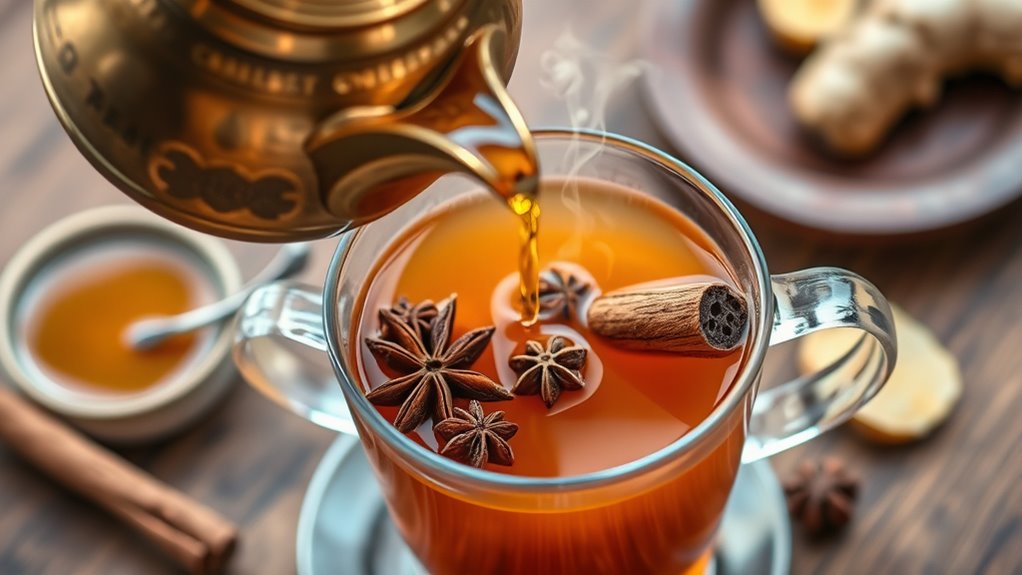
Once your spice blend is ready, it’s time to focus on brewing techniques. Start by adding your spices to a pot with water, and bring it to a gentle simmer. This simmering releases the essential oils and flavors from the spices, allowing them to infuse the water thoroughly. Patience is key here; don’t rush the process. As the water heats, add tea leaves—traditionally black tea—so they can steep alongside the spices. The steeping time influences the strength of your chai, so keep an eye on it. Usually, 3 to 5 minutes is enough to develop a rich flavor, but you can extend or shorten based on your preference.
Next, add milk and sweetener, whether sugar, honey, or a plant-based alternative. When you add milk, bring the mixture back to a gentle simmer. This step is essential because it melds the flavors, creating the creamy, comforting profile characteristic of chai. Stir occasionally to prevent the milk from scorching or boiling over. Some brewing techniques involve removing the chai from heat once it’s reached the desired strength, then straining it into your cup. Others prefer to simmer longer for a more intense flavor. Straining is necessary to remove the spice solids and tea leaves, giving you a smooth, flavorful beverage.
Mastering spice blending and brewing techniques allows you to customize your chai exactly how you like it—more spicy, sweeter, or milder. The key is balancing the spices and paying attention to temperature and timing. Once you’ve perfected your process, you’ll find brewing chai is less about following a strict recipe and more about crafting a personalized, aromatic experience every time. With a little practice, you’ll be able to brew a consistently delicious cup that captures the warm, spicy essence of traditional chai.
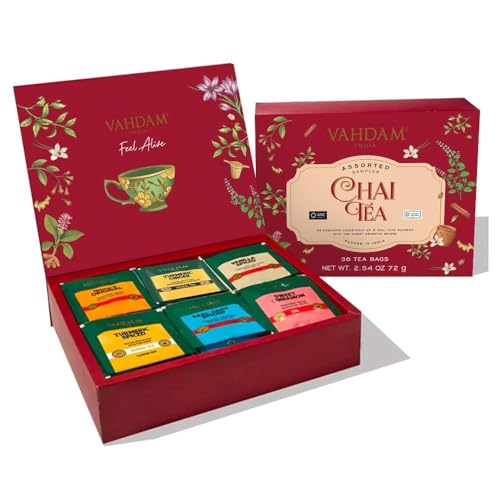
VAHDAM, Assorted Chai Tea Variety Pack (6 Delicious Flavors, 36 Eco Friendly Pyramid Tea Bags) Caffeinated, Gluten Free, Non GMO | Indian Masala Chai Tea Blends | Tea Gift Set for Men and Women
ASSORTED CHAI TEA GIFT SET – Step into a world of tea enchantment with our exclusive & premium…
As an affiliate, we earn on qualifying purchases.
As an affiliate, we earn on qualifying purchases.
Frequently Asked Questions
Can I Use Loose Leaf Tea Instead of Tea Bags?
Yes, you can definitely use loose leaf tea instead of tea bags. Simply follow tea brewing techniques by measuring the right amount of leaves and steeping them properly. Store your loose leaves in an airtight container, following good tea storage tips, to keep them fresh. When brewing, use a strainer or infuser to prevent leaves from floating in your chai. This guarantees a flavorful, aromatic cup every time.
What’s the Best Type of Milk for Chai?
Oh, definitely stick with cow’s milk if you want authentic chai, but if you’re feeling fancy or dairy-free, your best bet is almond or oat milk. They add creaminess without overpowering the spices, and many brands offer dairy-free options that froth just like dairy. So, go ahead, experiment with milk alternatives—your chai will still be delicious, and you’ll impress everyone with your trendy, dairy-free sophistication.
How Do I Adjust Spice Levels to Taste?
To adjust spice levels to your taste, start by adding less or more of your chosen spices during brewing. Use spice customization to suit your preference, adding cinnamon, ginger, or cardamom gradually. Taste as you go, balancing flavors until you achieve your ideal intensity. Remember, it’s easier to add more spice than to fix an overly spicy brew. Keep experimenting until you find the perfect flavor balancing for your perfect cup.
Can I Make Chai Ahead of Time?
Think of your chai as a treasure chest waiting to be opened later. You can make chai ahead of time and store it in an airtight container in the fridge for up to 24 hours. Use proper storage tips to preserve its flavor, like reheating gently on the stove. While it may lose some freshness, this method keeps your chai flavorful and ready when you need a comforting sip.
Is It Okay to Reuse Tea Leaves for a Second Brew?
Reusing tea leaves for a second brew is possible, but it may affect flavor preservation. You might notice a milder taste and less aromatic qualities with each subsequent steep. To get the most out of your tea leaf reuse, steep the leaves briefly the second time and accept that the flavor will be less intense. Keep in mind, fresh leaves generally deliver a richer, more vibrant chai experience.

52USA Cinnamon Sticks, Cinnamon 4 oz (113g), Whole Cinnamon Sticks, 100% Raw, Kosher Certified, Gluten Free, Pure & Fresh Cinnamon, Perfect for Baking, Cooking & Beverages
Natural & Pure: No added preservatives, fillers, or artificial ingredients. 52USA cinnamon ensure you get the purest and…
As an affiliate, we earn on qualifying purchases.
As an affiliate, we earn on qualifying purchases.
Conclusion
Now that you know how to brew the perfect cup of chai tea, your mornings will never be the same. With just a few simple steps, you’ll create a beverage so flavorful and comforting, it’ll feel like a warm hug from the universe itself. So, go ahead—experiment, adjust, and enjoy every sip. Before long, you’ll be turning your kitchen into a cozy chai haven, where every cup is a symphony of spice and serenity.

Eletary Premium Cardamom Ground with Guatemalan Green Organic Cardamom Pods & Seeds (5 oz) – All Natural, Vegan, Gluten-Free, Non-GMO – Flavor Enhancer for Indian Cuisine, Baking, Meat, Coffee & Tea
AUTHENTIC GUATEMALAN CARDAMOM – Grown in Guatemala’s rich, tropical soils, our organic cardamom powder offers unmatched quality. This…
As an affiliate, we earn on qualifying purchases.
As an affiliate, we earn on qualifying purchases.

Tea India CTC Assam Loose Leaf Black Tea Strong, Full-Bodied Flavorful Blend Of Premium Black Tea Made with Natural Ingredients Traditional Indian Tea Caffeinated Iced Tea Breakfast Tea (32 Ounce)
CTC TEA- CTC stands for Crush Tear Curl. The black tea leaves in the process of passing through…
As an affiliate, we earn on qualifying purchases.
As an affiliate, we earn on qualifying purchases.