
Chai tea holds deep cultural significance in local traditions, symbolizing hospitality, community, and respect. When you participate in its preparation and sharing, you’re engaging in rituals that foster connections and uphold cultural values. Whether served during festivals, gatherings, or ceremonies, chai acts as a unifying element that preserves history and strengthens social bonds. To discover how these traditions shape daily life and community identity, keep exploring its rich cultural role.
Key Takeaways
- Chai tea symbolizes hospitality, community, and tradition in various cultures, fostering social bonds through ritualistic preparation and sharing.
- The process of making chai involves deliberate rituals that honor cultural values and demonstrate respect for guests.
- Serving chai during festivals, ceremonies, and gatherings reinforces cultural identity and unites communities.
- Preparing and pouring chai with care reflects social respect and reinforces bonds within families and communities.
- Chai acts as a cultural symbol that preserves history, promotes social cohesion, and celebrates local customs across regions.
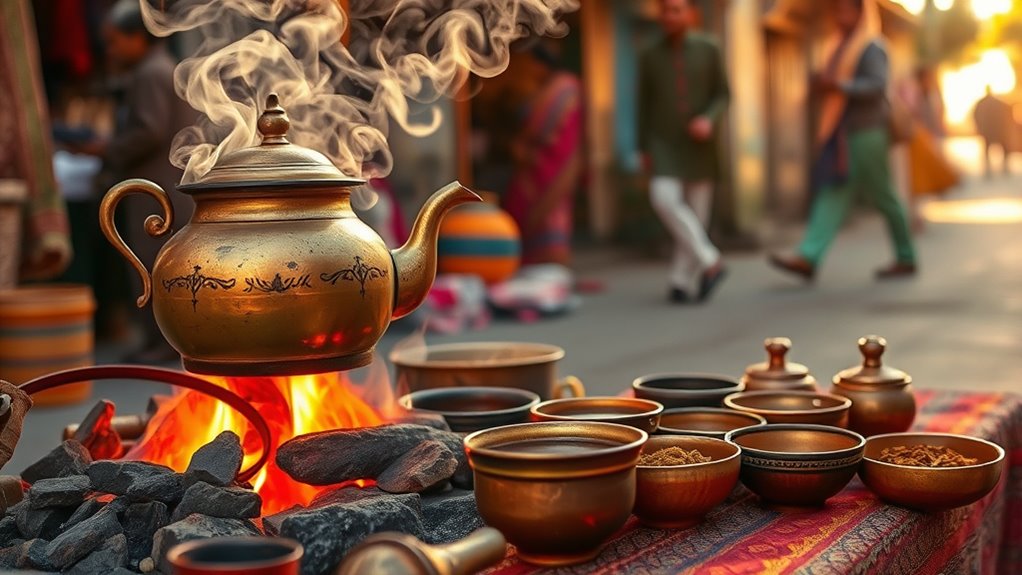
Chai tea holds a special place in many cultures, acting as more than just a beverage—it’s a symbol of hospitality, community, and tradition. In numerous societies, serving chai isn’t merely about quenching thirst; it’s a meaningful ritual that fosters connections and shows respect. When you participate in a traditional tea ceremony, you’re engaging in a practice that embodies centuries of cultural values. The act of preparing and serving chai often carries deep ritual significance, symbolizing warmth, welcome, and social bonding. Whether it’s a simple gesture among friends or a formal event, the tea ceremony reflects a shared understanding that hospitality is at the heart of community life.
In many cultures, the ritual significance of chai extends beyond its physical preparation. The way it’s brewed, served, and consumed can reveal important social cues. For instance, in Indian households, the process of making chai isn’t rushed; it’s a deliberate act that involves specific steps like boiling tea with spices and milk, infusing the brew with cultural meaning. This process isn’t just about taste—it’s about creating an experience that honors tradition and signifies respect for guests. The pouring of chai, often from a height to create a foam, is also a part of the ritual, emphasizing the care and attention given to hospitality. These small acts reinforce social bonds and serve as a gesture of goodwill.
In some traditions, the tea ceremony is a communal event, bringing people together to share stories and celebrate milestones. It’s common to see chai served during festivals, family gatherings, or religious ceremonies, where it acts as a unifying element. The ritual significance here lies in its ability to mark important moments and foster a sense of belonging. When you take part in these customs, you’re engaging in more than just drinking tea—you’re participating in a cultural ritual that preserves history and promotes social cohesion. Additionally, understanding the cultural importance of chai can deepen appreciation for its role in uniting communities across different regions.
Frequently Asked Questions
How Did Chai Tea Originate Historically?
You might not know, but chai tea originated centuries ago in India, where it was used in spiritual rituals to promote healing and mindfulness. Over time, it became a symbol of social bonding, shared during gatherings and daily conversations. The spicy blend of tea, milk, and spices was cherished not only for its flavor but also for its role in fostering community and spiritual connection across generations.
Are There Regional Variations of Chai Tea?
Yes, there are regional variations of chai tea that showcase unique flavors and ingredient diversity. In India, you might enjoy spiced blends with cardamom, cinnamon, and ginger, while in Nepal, you’ll find a milder, milkier version. In South Africa, Rooibos-based chai offers a different regional flavor. These variations reflect local tastes and ingredients, giving you a rich and diverse chai experience across different areas.
What Symbols Are Associated With Chai in Traditions?
Imagine you’re participating in a traditional tea ceremony where a steaming cup of chai symbolizes hospitality and warmth. In these rituals, cinnamon and cardamom represent health and prosperity, while the act of serving chai signifies respect and community. These symbols are integral to the ceremonial aspects, turning everyday tea into a meaningful ritual that fosters connection and cultural identity.
How Is Chai Prepared During Festivals?
During festivals, you engage in festive brewing of chai by boiling water, milk, tea leaves, and spices like cardamom and cinnamon together. You often follow ceremonial rituals, such as offering the chai to deities or sharing it with family and friends. This process emphasizes community and tradition, making chai a central part of celebrations. You might also add sweeteners or garnishes to enhance the experience and honor the festive spirit.
Who Are the Key Figures in Chai’s Cultural History?
You’re like a traveler tracing chai’s roots, discovering key figures shaping its story. Historically, figures like Guru Nanak integrated chai into spiritual rituals, turning tea into a symbol of unity and devotion. Tea ceremonies, blending tradition and reverence, highlight their influence. These pioneers transformed chai from simple refreshment into a sacred ritual, making them essential figures in its cultural history. Their legacy brews a rich tapestry of tradition you can still taste today.
Conclusion
As you savor each sip of chai tea, you’re tasting centuries of tradition and community. It’s more than just a drink—it’s a symbol of hospitality, connection, and warmth woven into daily life. Can you imagine a moment where a simple cup brings people together, bridging cultures and stories? Next time you enjoy chai, remember it’s a centuries-old ritual that invites you to be part of something bigger than yourself.