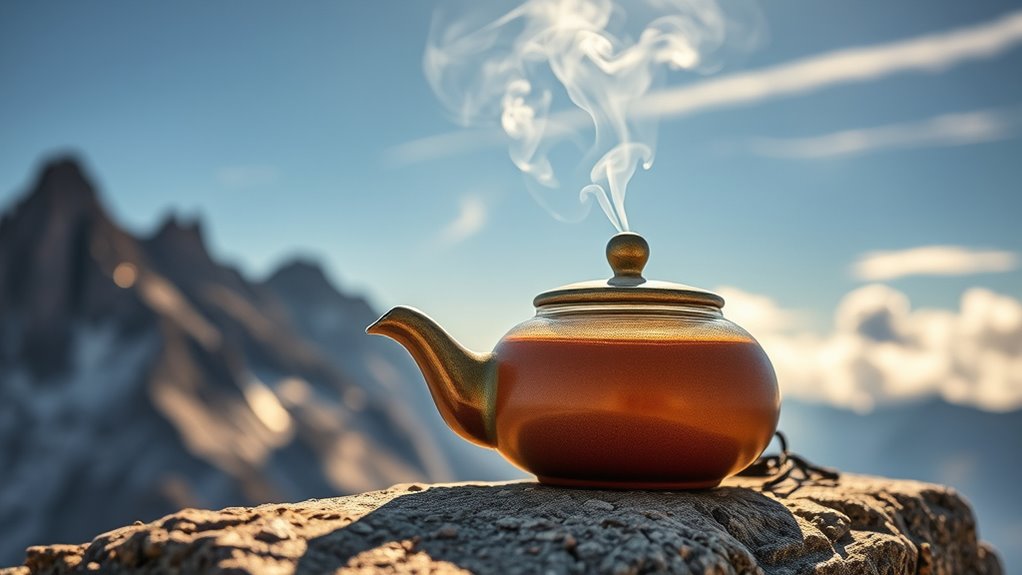

At high altitudes, you’ll need to modify your tea brewing process because water boils at a lower temperature, around 198°F at 7,500 feet. To get the best flavor, extend your steeping time by 1-2 minutes and use hotter water if possible. Using a thermometer helps you monitor temperature precisely. Making these small tweaks ensures your tea fully develops its aroma and taste, and if you keep exploring, you’ll discover even more tips.
Key Takeaways
- Water boils at lower temperatures at high altitude, requiring adjustments in brewing time and temperature.
- Extend steeping time by 1-2 minutes to compensate for reduced extraction efficiency.
- Use a thermometer to monitor water temperature and ensure proper steeping conditions.
- Consider pre-heating the teapot and increasing initial water temperature slightly above boiling point.
- Experiment with gentle temperature increases and longer steeping to optimize flavor without over-extracting.

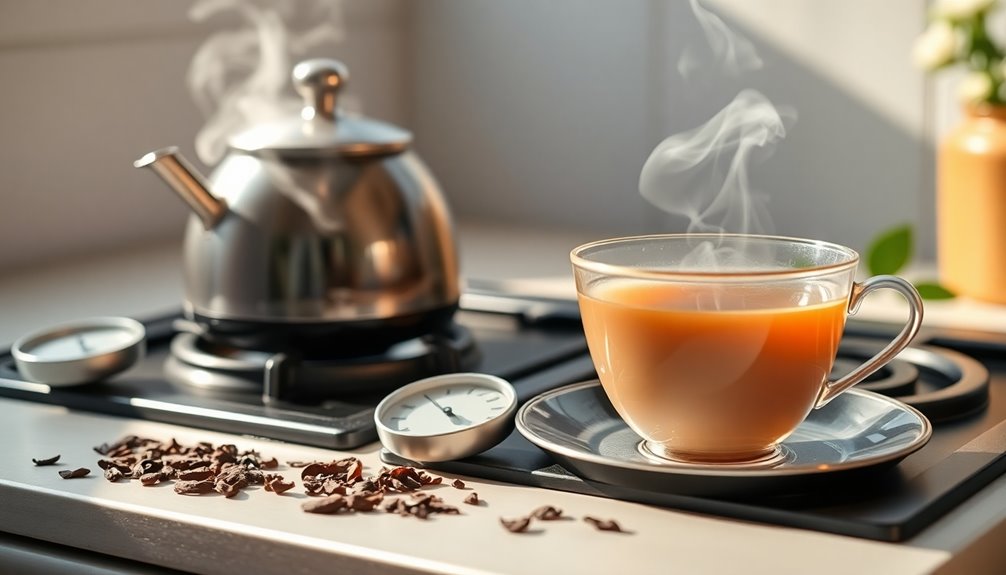
Have you ever wondered how brewing tea changes when you’re at a higher elevation? The main factor to contemplate is the water boiling point. At sea level, water boils at 212°F (100°C), but as you ascend, the boiling point drops. For example, at 7,500 feet, water boils around 198°F (92°C). This lower temperature means your tea won’t extract flavors as quickly or thoroughly if you follow standard brewing times. To get the best flavor, you might need to tweak your steeping duration, allowing the tea more time to infuse properly. Additionally, understanding the optimal angles for pinball machines can help you set up your game room for maximum enjoyment and better gameplay. Since the water isn’t reaching the same high temperature as it would at lower altitudes, the extraction process slows down. This means a typical steeping time of 3-5 minutes might not be enough for your tea to develop its full flavor profile. Instead, you could extend the steeping duration slightly—perhaps by a minute or two—so the tea leaves have ample opportunity to release their aromatic oils and compounds. However, be cautious; too long, and you risk over-extracting, which can lead to bitterness. Adjusting your brewing process is straightforward once you understand the relationship between water temperature and steeping duration. You might also consider pre-heating your teapot with hot water to maintain a consistent temperature during steeping. Using a thermometer can help you monitor the water temperature, ensuring you’re not brewing with water that’s too cool to extract the desired flavors effectively. Some experienced tea drinkers also recommend increasing the initial steeping temperature slightly or using water that’s a bit hotter than the boiling point at your altitude before pouring it over your tea leaves.
Frequently Asked Questions
How Does Altitude Affect the Caffeine Content in Tea?
Altitude can influence the caffeine content in your tea by affecting how the leaves release their compounds. Higher altitudes may cause the tea to have a slightly different potency because the environment impacts extraction. While caffeine levels stay relatively consistent, you might notice changes in tea potency due to variations in steeping time and temperature at different altitudes. So, altitude can subtly alter how much caffeine ends up in your brew.
Can Certain Tea Types Tolerate Higher Brewing Temperatures at Altitude?
You might wonder if certain tea types tolerate higher brewing temperatures at altitude. Generally, delicate teas like green or white don’t handle higher temps well, risking bitterness and loss of flavor. However, robust teas like black or oolong can often withstand increased temperatures, enhancing their flavor profiles. Your brewing vessel choices also matter—using a proper teapot helps control temperature, ensuring ideal taste even at higher altitudes.
What Equipment Adjustments Are Needed for Brewing Tea at High Elevations?
Imagine your tea as a delicate dance partner; at high elevations, water’s boiling point drops, making your dance more hurried. You’ll need to modify your equipment by using a thermometer to monitor water temperature and consider steeping time adjustments, as water boils at lower temps. Using a kettle with precise temperature control helps maintain consistency. These tweaks ensure your tea’s flavor isn’t compromised, even at high altitude.
Does Altitude Impact the Shelf Life of Brewed Tea?
Altitude can impact the shelf life of brewed tea by affecting storage stability and microbial growth. Higher elevations often have lower temperatures and humidity, which can slow microbial growth, potentially extending tea’s freshness. However, if you don’t store it properly—like leaving it out in warm, humid conditions—it may spoil faster. So, focus on airtight containers and cool, dry storage to maximize freshness, regardless of altitude.
Are There Specific Tea Varieties Recommended for High-Altitude Brewing?
You might find certain tea varieties, like robust black teas or full-bodied oolongs, better suited for high-altitude brewing because their flavor profiles stand up to altered brewing conditions. To preserve their tea flavor profiles, use proper tea storage techniques, keeping teas airtight and away from light. This guarantees your brewed tea maintains its desired taste, even when brewing at higher elevations where temperature and time adjustments are necessary for peak flavor.
Conclusion
Brewing tea at altitude is like steering a mountain stream—every twist and turn demands attention to detail. By adjusting your time and temperature, you guarantee each cup captures the true flavor, no matter how high you climb. Remember, a little patience and precision go a long way, turning your tea experience into a smooth, invigorating journey. So, embrace the altitude’s challenge and let your perfect brew be the summit of your adventure.