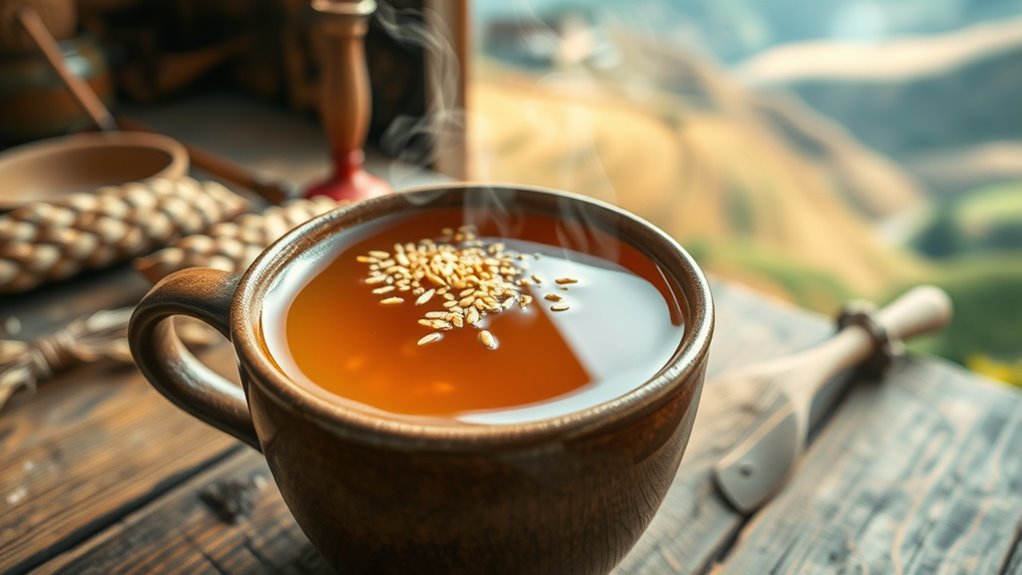
The regional varieties and terroir of barley tea shape its unique flavors, influenced by local climate, soil, and cultivation methods. These differences create distinct taste profiles, such as nutty and roasted or light and grassy notes. Brewing techniques further bring out regional nuances, affecting flavor and health benefits. By understanding these factors, you can choose your preferred style and enjoy a deeper appreciation. If you keep exploring, you’ll discover even more about what makes each regional variety special.
Key Takeaways
- Regional terroirs influence barley tea flavors, creating unique nutty, roasted, or grassy profiles based on climate and soil.
- East Asian regions often produce barley teas with deep roasted, nutty notes, while other areas may offer lighter, fresh flavors.
- Brewing methods, such as steeping time and water temperature, enhance regional taste characteristics and flavor nuances.
- Local cultivation practices and environmental factors shape the flavor profiles and health benefits of regional barley teas.
- Proper preparation techniques maximize antioxidants and polyphenols, reflecting regional styles and contributing to health benefits.
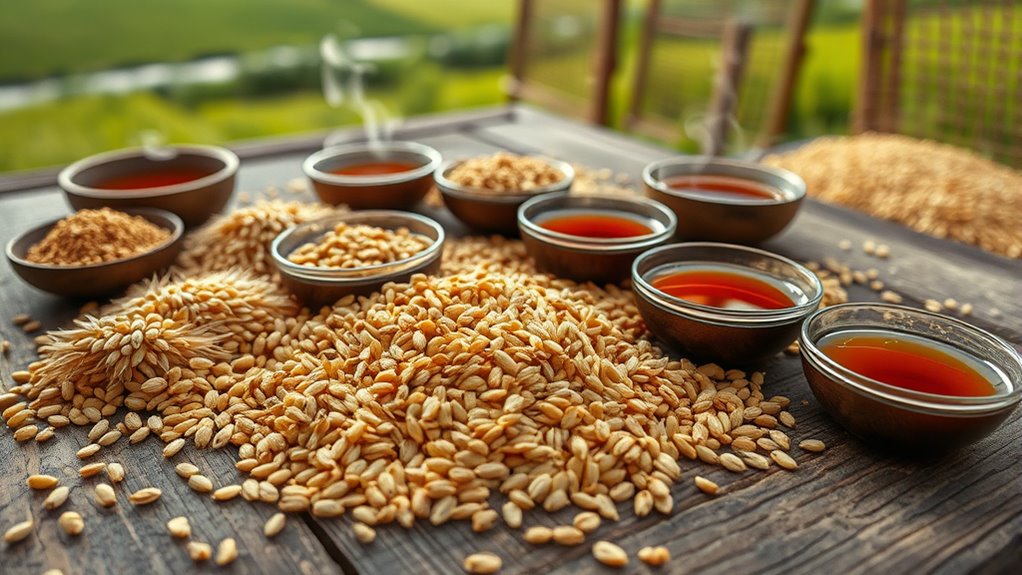
Barley tea, a popular beverage across many regions, offers a rich tapestry of flavors influenced by local climates, soil, and cultivation methods. As you explore different varieties, you’ll notice that each region’s unique terroir shapes the taste profile, making every cup a reflection of its origin. Whether you prefer the nutty, roasted notes from East Asia or the lighter, grassy undertones found elsewhere, understanding the regional nuances helps you appreciate the complexity behind each brew. The key to revealing these flavors lies in the brewing techniques you choose. For instance, some regions favor a longer steep, extracting deeper roasted flavors, while others opt for shorter infusions to preserve subtler, fresh notes. Adjusting water temperature and steeping time allows you to tailor the flavor to your preference, highlighting specific regional characteristics. Proper brewing not only enhances taste but also preserves the health benefits associated with barley tea, which is renowned for its antioxidant properties, hydration qualities, and potential to aid digestion. When you brew your barley tea thoughtfully, you’re maximizing these health benefits, making it a nourishing choice alongside its delightful flavor.
The health benefits of barley tea span several areas. Rich in polyphenols and antioxidants, it helps combat oxidative stress, supporting your overall well-being. Its naturally caffeine-free nature makes it a calming beverage, perfect for relaxing without the jitters or disrupting sleep. Regular consumption may also promote good digestion and reduce inflammation, thanks to its anti-inflammatory compounds. Furthermore, barley tea contains dietary fiber that can assist in maintaining healthy cholesterol levels and improving gut health. These health perks are often amplified by the way you prepare your tea; for example, using high-quality, freshly roasted barley enhances the release of beneficial compounds. As you experiment with different regional styles, you’ll find that brewing techniques such as temperature control, steeping duration, and barley roast level all influence the concentration of health-promoting nutrients. By paying attention to these details, you guarantee that each cup delivers the maximum health benefits while offering a taste that resonates with the specific terroir.
Frequently Asked Questions
How Does Barley Tea Influence Local Cuisine?
Barley tea influences your local cuisine by adding unique flavor profiles that enhance traditional dishes. Its nutty, roasted taste pairs well with savory foods like grilled meats, rice dishes, or even spicy stews. You’ll find it’s also great as a invigorating beverage to balance rich flavors. Incorporating barley tea into culinary pairings enriches your meals, offering a subtle, earthy complement that deepens the overall taste experience in your regional cuisine.
Are There Health Benefits Unique to Regional Barley Teas?
Like a hidden treasure chest, regional barley teas hold health benefits unique to their origins. You might find that some varieties boost digestion, thanks to local grains and water sources, while others help with relaxation through specific antioxidants. These regional varieties create a tapestry of wellness, each with its own subtle magic. By exploring these differences, you reveal health benefits that are as diverse and rich as the land itself.
What Traditional Brewing Methods Vary Across Regions?
You’ll notice that regional brewing methods for barley tea differ quite a bit. In some areas, people prefer traditional techniques like boiling the grains directly in water, which enhances flavor. Others use steeping or roasting methods to bring out unique tastes. These regional variations reflect local customs, climate, and available tools, making each brewing style special. Embracing these traditional techniques allows you to experience the full cultural richness of barley tea.
How Does Climate Change Affect Barley Tea Production Areas?
Climate change impacts barley tea production areas through shifting temperatures and unpredictable weather patterns. You’ll notice a climate impact that challenges traditional crop adaptation, forcing farmers to modify planting schedules or select resilient barley varieties. These changes can affect tea quality and yield. To guarantee sustainable production, growers must continuously adapt their practices, embracing new methods to cope with the evolving climate and safeguard their crops for future harvests.
Are There Cultural Festivals Dedicated to Barley Tea?
Barley tea festivals symbolize community and tradition, celebrating this humble beverage’s cultural significance. You’ll find regional tea ceremonies and barley tea festivals that honor its history and regional flavors. These events bring people together, showcasing unique brewing techniques and stories behind each variety. Attending these festivals deepens your appreciation, connecting you to local heritage and the enduring spirit of barley tea, enriching your cultural understanding with every sip.
Conclusion
Exploring the regional varieties and terroir of barley tea reveals how local conditions shape its unique flavors. By understanding these differences, you gain a deeper appreciation for each cup you enjoy. Remember, knowledge is power, and in this case, it’s your ticket to savoring barley tea’s rich diversity. So, keep an open mind and a curious palate—after all, variety is the spice of life, and every sip tells a story worth discovering.