
Modern innovations in African tea production and preparation focus on eco-friendly farming, advanced processing techniques, and convenient brewing methods. Farmers adopt sustainable practices like organic fertilization and water conservation to reduce environmental impact. Processing methods now use controlled fermentation and digital monitoring to enhance flavor and consistency. Preparation methods include temperature-controlled infusion devices and pre-packaged options for at-home enjoyment. These innovations boost quality, sustainability, and market appeal—discover how these changes shape Africa’s tea industry.
Key Takeaways
- Adoption of eco-friendly farming practices like organic fertilization and crop diversification enhances sustainability and tea quality.
- Implementation of advanced processing techniques such as controlled fermentation improves flavor profiles and aroma.
- Modern infusion methods and digital monitoring ensure consistent preparation and richer taste experiences.
- Eco-conscious packaging and fair-trade certifications promote supply chain sustainability and ethical sourcing.
- Innovations elevate African teas’ market appeal, cultural heritage, and consumer confidence in quality and sustainability.
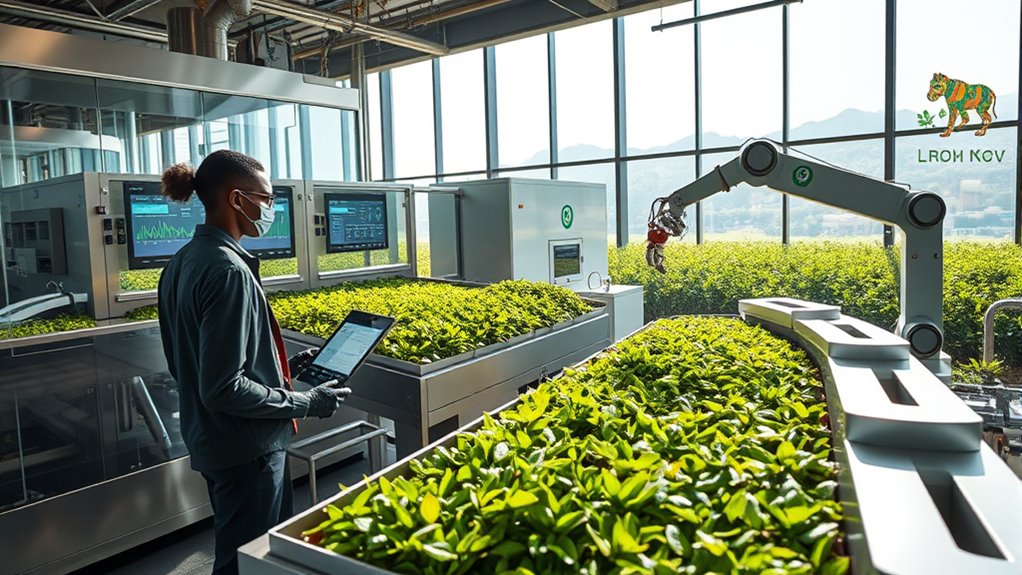
In recent years, African tea producers have embraced innovative techniques to boost quality and efficiency. One of the most significant shifts has been the adoption of sustainable farming practices, which not only protect the environment but also improve the overall quality of the tea. By integrating eco-friendly methods such as organic fertilization, water conservation, and crop diversification, farmers are reducing their ecological footprint while producing healthier, more vibrant tea leaves. These practices help maintain soil fertility and biodiversity, ensuring that future harvests remain robust and sustainable. As a result, the tea’s flavor profile becomes richer and more nuanced, appealing to discerning consumers who value both quality and ethical production.
You’ll notice that modern innovations extend beyond farming to the processing stage. Techniques like controlled fermentation and precise oxidation are now commonplace, allowing producers to fine-tune the flavor enhancement of their teas. These methods help develop unique aroma profiles and depth in taste, setting African teas apart on the global stage. Advanced machinery and digital monitoring systems enable more consistent processing, reducing waste and ensuring each batch meets high standards. This focus on processing techniques not only elevates the sensory experience for tea drinkers but also boosts the marketability of African teas, making them more competitive internationally.
Preparation methods have also evolved, with innovative infusion techniques gaining popularity. You might find that traditional brewing is complemented by modern equipment such as temperature-controlled kettles and specialized steeping devices. These tools help extract the full spectrum of flavors from high-quality leaves, allowing you to enjoy a more refined and satisfying cup. Additionally, the rise of pre-packaged, single-serve options with precise measurements ensures consistency and convenience for consumers. Such advancements make it easier for you to appreciate the complexity of African teas at home or on the go, encouraging a deeper appreciation for the craftsmanship involved.
Furthermore, the integration of sustainable practices into the entire supply chain adds value to the final product. From eco-conscious packaging to fair-trade certifications, producers are aligning their operations with global standards that emphasize sustainability and ethical sourcing. As a result, you can feel confident that the tea you enjoy not only tastes excellent but also supports environmentally responsible and socially equitable practices. This holistic approach to innovation ensures that African tea continues to thrive in a competitive marketplace while preserving the rich cultural heritage behind each cup. Ultimately, these advancements make African teas more appealing, flavorful, and sustainable for consumers like you seeking quality and authenticity.
Frequently Asked Questions
How Do Traditional African Tea Rituals Influence Modern Production Methods?
You see, traditional African tea rituals influence modern production methods by emphasizing cultural preservation and ritual significance. When you incorporate these values, you help maintain authentic practices while innovating for efficiency. This balance ensures that modern methods respect cultural roots, fostering a sense of identity and tradition. Ultimately, blending tradition with innovation keeps the ritual significance alive, enriching the tea experience for both producers and consumers.
What Are the Environmental Impacts of New Tea Processing Technologies?
You might notice that new tea processing technologies can reduce environmental impacts by promoting sustainable farming practices and waste reduction. These innovations often use less water and energy, lowering carbon footprints. By adopting eco-friendly methods, you help safeguard local ecosystems and ensure resources are conserved for future tea production. Overall, embracing these technologies allows you to enjoy high-quality tea while minimizing environmental harm.
How Do African Teas Compare Globally in Flavor and Quality Standards?
Imagine African teas as the underdog superheroes with a secret power—rich flavor profiles and high quality standards. You’ll find their taste rivals global giants, often surpassing expectations. While some may doubt African teas, they deliver bold, unique flavors that stand tall on the world stage. So, when you sip, remember you’re enjoying a crafted marvel that’s steadily earning its place among the finest worldwide.
What Role Do Local Communities Play in Adopting Innovative Tea Practices?
You play a crucial role in adopting innovative tea practices through community engagement, where your participation helps spread new techniques and technologies. By actively involving local communities, you support cultural preservation, ensuring traditional methods coexist with modern innovations. Your efforts foster knowledge sharing and collaboration, which boost tea quality and sustainability. This collective approach strengthens local identity while embracing progress, ultimately enhancing Africa’s reputation in global tea markets.
Are There Any Health Benefits Unique to African Tea Varieties?
African tea varieties offer unique health benefits, especially due to their rich herbal antioxidants. When you drink these teas, you’re boosting your immune system naturally. The antioxidants help fight free radicals, promoting overall health. Many African teas also contain compounds that support digestion and reduce inflammation. Incorporating these teas into your routine can enhance your well-being, giving you a flavorful and healthful experience rooted in traditional and modern practices.
Conclusion
As you explore Africa’s tea scene, you’ll find the gentle dance of tradition and modernity painting a vibrant tapestry. Innovations softly stir the air like a invigorating breeze, whispering promises of brighter horizons. Each leaf, carefully nurtured, holds the potential to craft a future where flavor and finesse bloom in harmony. Embrace these subtle shifts, and you’ll see how the continent’s tea journey gracefully unfolds, inviting you into a world where every sip hints at new beginnings.