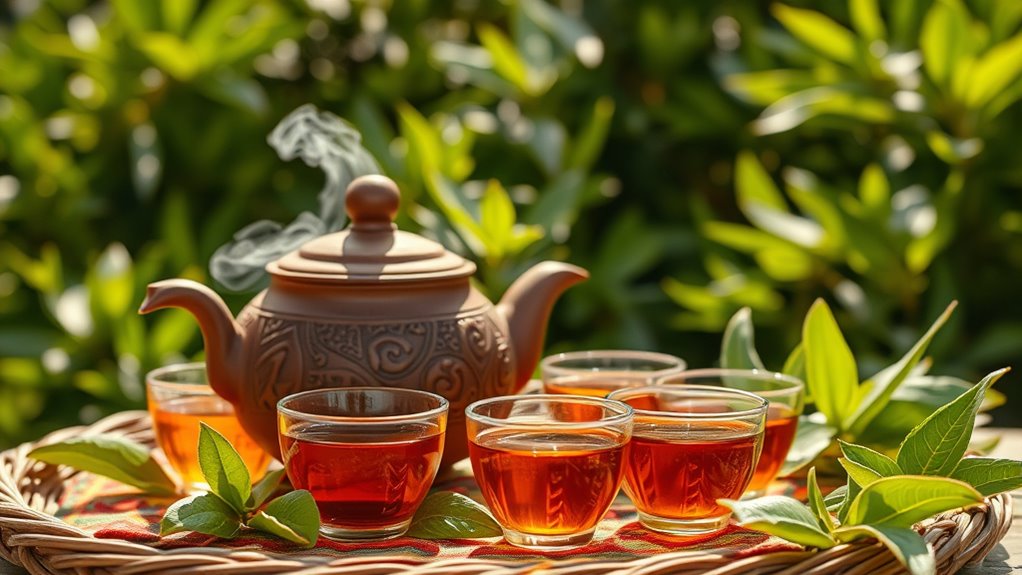

To brew the perfect cup of African tea, start with high-quality, fresh loose leaves or tea bags, using about one teaspoon per cup. Bring water to a rolling boil and pour it directly over the leaves, fully submerging them. Steep for 3 to 5 minutes, covering your cup to retain heat. Strain the leaves and serve with sugar, milk, or spices as desired. For more tips, you’ll discover key steps to turn your tea into a rich, vibrant experience.
Key Takeaways
- Use high-quality, fresh loose tea leaves or tea bags for rich flavor.
- Boil water thoroughly and pour directly over about one teaspoon of tea leaves per cup.
- Steep for 3 to 5 minutes, covering the cup to retain heat and ensure even flavor extraction.
- Strain the tea to prevent over-extraction and bitterness.
- Add preferred flavorings like sugar, milk, or spices to enhance the traditional taste.
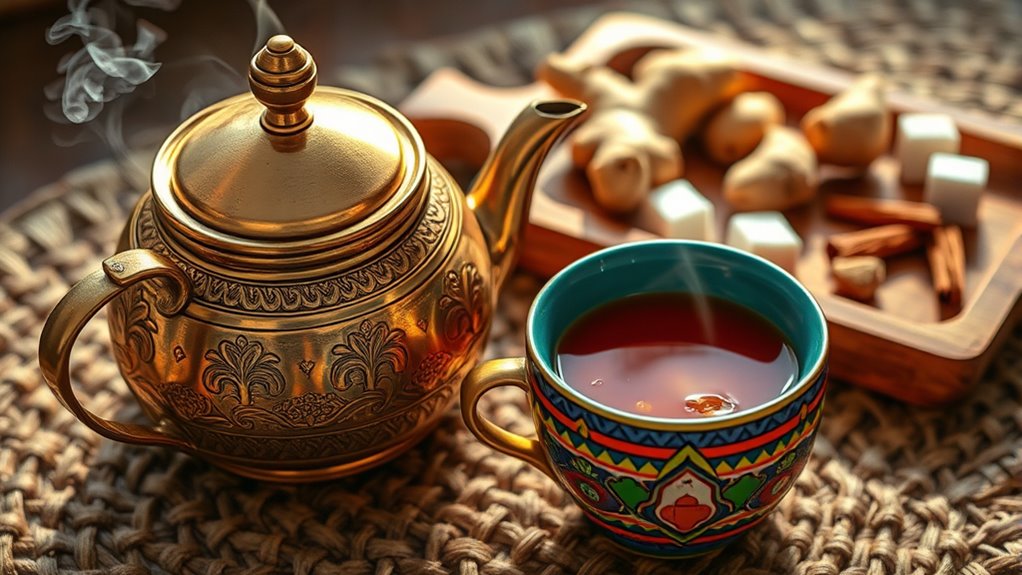
African tea is a rich tradition that varies across regions, but the basic brewing process remains simple and straightforward. When you start making African tea, the quality of your tea leaves plays a pivotal role. Selecting good tea leaves—whether loose or in tea bags—is your first step toward a flavorful cup. Depending on the region, you might use black, green, or even herbal varieties, but the core idea remains the same: fresh, high-quality leaves yield the best taste.
Once you have your tea leaves, it’s important to understand the brewing techniques that bring out their full flavor. Most African countries favor strong, robust brews, so don’t be shy with the quantity of leaves you use. Typically, you’ll want to use about one teaspoon of tea leaves per cup of water. Bring your water to a rolling boil; African tea often requires hot water to extract the deep, rich flavors from the leaves. Pour the boiling water over the tea leaves, ensuring they are fully submerged. This initial step is essential because it allows the leaves to release their essential oils and flavors, creating a strong, aromatic base for your tea.
Use one teaspoon of tea leaves per cup and pour boiling water to unlock rich, full flavors.
Steeping time is another key factor. For a traditional African brew, you should let the tea steep for around 3 to 5 minutes. If you prefer a more intense flavor, you can extend the steeping time slightly, but be cautious not to overdo it, as overly steeped tea can become bitter. The brewing techniques also involve a little bit of patience—cover the cup or pot to keep the heat in and allow the leaves to steep evenly. During this process, you might notice the water turning a deep amber or dark brown, indicating that the flavors are developing fully.
After steeping, strain the tea leaves to prevent over-extraction, which can lead to bitterness. Pour the tea into your cup, and you’re ready to enjoy a traditional African brew. Many people like to add sugar, milk, or spices such as ginger or cloves to enhance the flavor, but the pure, steeped tea leaves themselves form the foundation of a good cup. Remember, the secret to brewing African tea lies in understanding your tea leaves and mastering the brewing techniques—temperature, steeping time, and proper strainings are what transform simple leaves into a vibrant, comforting beverage. With practice, you’ll be able to craft the perfect cup every time, celebrating a centuries-old tradition that’s both rich and inviting.
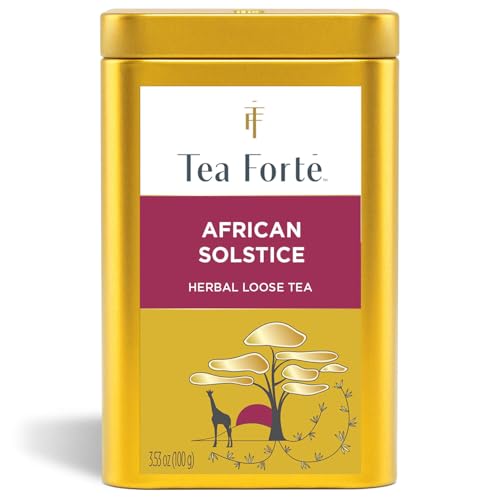
Tea Forte African Solstice Premium Loose Leaf Caffeine-Free Herbal Tea Blend Canister, Makes 35-50 Cups
AFRICAN SOLSTICE – Smooth, naturally caffeine-free rooibos crafted with delectable berries.
As an affiliate, we earn on qualifying purchases.
As an affiliate, we earn on qualifying purchases.
Frequently Asked Questions
What Are Traditional African Tea Varieties?
You’ll find traditional African tea varieties like Kenyan black tea, made from high-quality tea leaf origins, and Moroccan mint tea, often served with fresh mint leaves. In many regions, you steep the tea using traditional serving methods, such as pouring it from a height to aerate or sweetening it generously with sugar or honey. These methods highlight the rich flavors and cultural significance of each variety in their respective communities.
Can I Add Milk or Sugar to African Tea?
Yes, you can add milk or sugar to African tea. Many enjoy tea flavoring with milk to create a creamy, smooth taste, while sweetening methods like sugar, honey, or condensed milk enhance the tea’s richness. Feel free to experiment with these options to suit your preference. Just add your chosen sweetener or milk after brewing, and stir well for the perfect balance of flavors.
What Are Common African Tea Brewing Tools?
Think of your brewing setup as a toolkit for a master chef. Common African tea brewing tools include a teapot, which acts as your stage, a tea strainer for clarity, and a kettle to bring water to a rolling boil. Using the right tea accessory, you can perfect your brewing technique, ensuring each cup is flavorful. These tools help you craft a rich, aromatic brew, elevating your tea experience to new heights.
How Long Should I Steep African Tea?
You should steep African tea for about 3 to 5 minutes, depending on your preferred strength. Keep the tea at a temperature of around 90-100°C to guarantee proper extraction of flavors. If you like it stronger, extend the steeping time slightly, but avoid over-steeping to prevent bitterness. Stir gently and cover the cup to retain heat, ensuring you get a rich, flavorful brew every time.
Are There Regional Differences in African Tea Preparation?
Yes, regional differences in African tea preparation influence flavor profiles. You’ll notice that tea leaf origins, like Kenyan or Ethiopian, create distinct tastes, and locals adapt their methods accordingly. For example, Kenyan teas often have a bold, robust flavor, while Ethiopian teas may be more floral. You can experiment by adjusting steeping times and ingredients to match regional styles, enhancing your tea experience based on these regional flavor profiles.
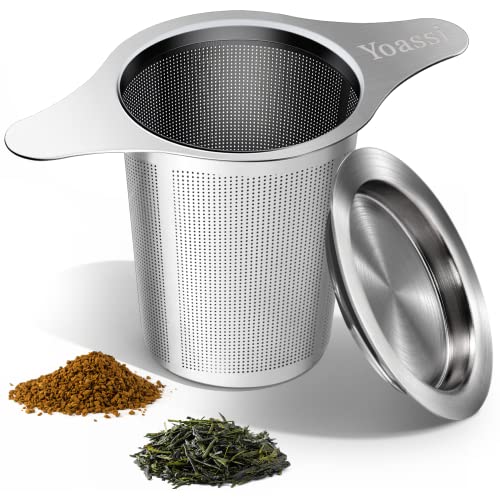
Extra Fine 18/8 Stainless Steel Tea Infuser Mesh Strainer with Large Capacity & Perfect Size Double Handles for Hanging on Teapots, Mugs, Cups to Steep Loose Leaf Tea and Coffee
Made of 8/18 Food Grade Stainless Steel. Odor Free. Contains NO harmful chemicals. Safer option to dip in…
As an affiliate, we earn on qualifying purchases.
As an affiliate, we earn on qualifying purchases.
Conclusion
Now that you’ve learned how to brew African tea, you’re ready to enjoy its rich flavors. With each sip, experience the warmth and tradition that come from careful preparation. It’s simple, yet profound—like the vibrant cultures that inspired it. So, embrace the process, savor the moment, and let each cup remind you of Africa’s timeless hospitality. In a world of quick fixes, your perfect brew stands as a proof to patience and passion.
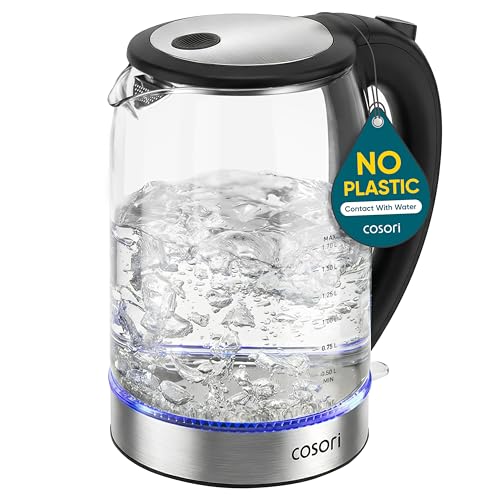
Cosori Electric Kettle, No Plastic Contact With Water, Wide Mouth For Easy Cleaning, Auto Shut Off, 1.7L Tea Kettle & Hot Water Boiler, Water Heater & Teapot, Borosilicate Glass, Black, 1500W
No Plastic Contact with Your Water——With no plastic inside, water never touches plastic, ensuring a pure taste and…
As an affiliate, we earn on qualifying purchases.
As an affiliate, we earn on qualifying purchases.

DOPUDO Glass Tea Cup with Infuser and Lid, 17.6oz/520ml Large Borosilicate Teacup,Tea Glass, Clear Mug for Loose Leaf Tea, Blooming Tea, Microwave & Dishwasher Safe – Tea Maker Gift for Birthday.
High-quality Glass: The DOPUDO tea cup is made of high-quality extra thick borosilicate glass, which is lead free,…
As an affiliate, we earn on qualifying purchases.
As an affiliate, we earn on qualifying purchases.