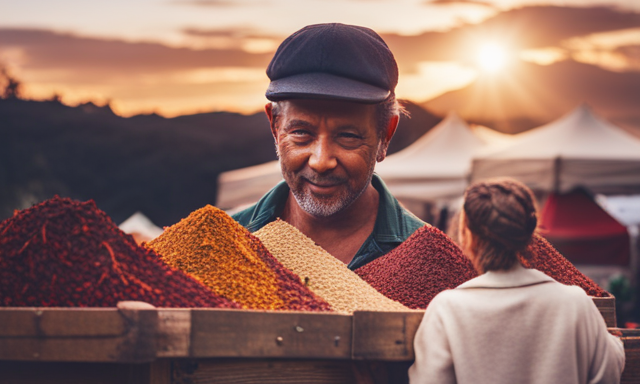
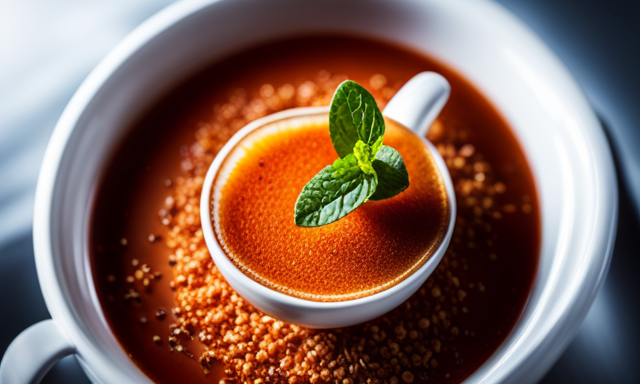
Modern innovations in rooibos tea focus on advanced fermentation techniques that enhance flavor and health benefits, while innovative packaging like vacuum-sealing and nitrogen flushing help preserve freshness and aroma. Functional and colorful designs also improve consumer experience, making it easier to enjoy rooibos on the go. These developments blend traditional practices with modern technology, transforming rooibos into a versatile, craft beverage. Keep exploring to discover how these changes continue to elevate your rooibos experience.
Key Takeaways
- Controlled fermentation processes enhance flavor complexity and increase antioxidant levels in rooibos tea.
- Advanced packaging methods like vacuum sealing and nitrogen flushing preserve freshness and extend shelf life.
- Innovative, resealable, and eco-friendly packaging designs improve product convenience and consumer appeal.
- Modern technologies enable diverse formats such as iced, hot, and culinary rooibos applications.
- Integration of traditional methods with contemporary innovations elevates rooibos as a versatile, artisanal beverage.
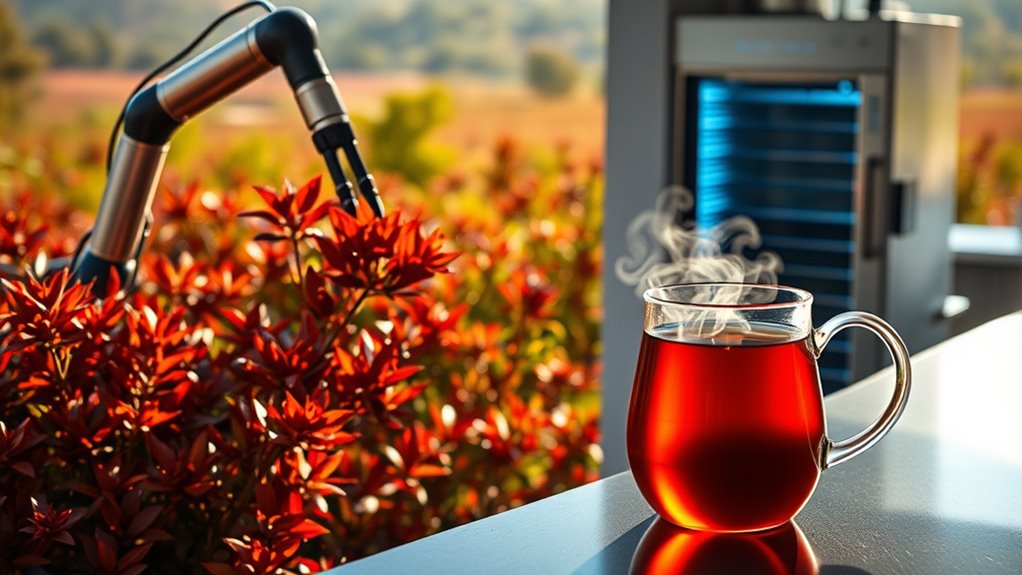
Rooibos tea, once a traditional South African beverage, is now experiencing a surge of innovative uses and products worldwide. As producers explore new methods to enhance its flavor, health benefits, and shelf life, you’ll find that fermentation techniques are playing a key role in transforming this herbal tea. By introducing controlled fermentation, manufacturers can develop unique profiles that add depth and complexity to rooibos, appealing to a broader audience seeking artisanal and craft beverages. This process allows the tea to develop subtle notes of fruitiness or earthiness, creating a more dynamic drinking experience. Fermentation also boosts the antioxidant properties of rooibos, making it more attractive to health-conscious consumers. Alongside these advancements, packaging innovations are making a significant impact on how you experience and store rooibos tea. Traditional packaging methods often led to exposure to light, oxygen, and moisture, which could degrade the tea’s quality over time. Now, with cutting-edge packaging advancements, producers can better preserve rooibos’s freshness and flavor. Vacuum-sealed pouches and nitrogen-flushed containers prevent oxidation, ensuring that every cup you brew maintains the vibrant aroma and taste you expect. Additionally, eco-friendly packaging options are gaining popularity, aligning with sustainable practices and reducing environmental impact. These innovations also extend to portable and single-serve formats, making it easier for you to enjoy rooibos on the go without sacrificing quality or freshness. As the market evolves, you’ll notice that packaging designs are becoming more functional, resealable, and visually appealing, encouraging you to explore different brands and blends. The combination of advanced fermentation techniques and improved packaging means you’re likely to encounter rooibos products with richer flavors, increased health benefits, and longer shelf stability. These innovations not only elevate the tea’s profile but also empower you to enjoy rooibos in more diverse forms—whether as a traditional hot brew, a chilled iced tea, or even in culinary applications. The focus on quality preservation through innovative packaging ensures that every sip delivers the full essence of rooibos, regardless of where you are or how you choose to prepare it. As these technologies continue to develop, you’ll find that rooibos is no longer just a simple herbal tea but a versatile, modern product that combines traditional practices with innovation. This evolution allows you to explore new taste experiences and benefits, making each cup a reflection of both cultural heritage and contemporary ingenuity.

Amazon Basics Basket Coffee Filters for 8-12 Cup Coffee Makers, White, 200 Count, Packaging May Vary
- Package Quantity: 200 filters included
- Compatibility: Fits 8-12 cup coffee makers
- Filtration Quality: Eliminates sediment for better taste
As an affiliate, we earn on qualifying purchases.
Frequently Asked Questions
How Does Climate Change Affect Rooibos Cultivation?
Climate change impacts your rooibos cultivation by increasing drought frequency and unpredictability. You need to focus on climate resilience by adopting drought adaptation techniques, like water-efficient irrigation and selecting resilient plant varieties. These strategies help your crops withstand harsher conditions, ensuring steady production. Staying proactive with climate resilience measures allows you to protect your rooibos harvests amid changing weather patterns and secure your livelihood despite the challenges posed by climate change.
Are There Sustainable Harvesting Methods for Rooibos?
Imagine you’re a time traveler in a world where sustainable farming and eco-friendly harvesting are essential. Yes, there are sustainable harvesting methods for rooibos, like selective plucking and minimal land disturbance, that protect the environment. These practices guarantee the plant’s health, preserve biodiversity, and support local communities. By choosing eco-friendly harvesting, you help maintain rooibos supply while reducing ecological impact—making your tea experience both enjoyable and responsible.
Can Rooibos Be Used in Non-Traditional Food Products?
Yes, you can use rooibos in non-traditional food products. Its versatile flavor lends itself well to innovative flavor infusions and diverse culinary applications. You might incorporate it into baked goods, smoothies, or even savory dishes like marinades and soups. Its natural sweetness and earthy notes add depth, making it a unique ingredient that elevates your creations and introduces a healthy, flavorful twist to everyday foods.
What Are the Health Benefits of New Rooibos Formulations?
You’ll benefit from new rooibos formulations that boost antioxidant properties, helping your body fight free radicals and reduce oxidative stress. These innovations also focus on allergen reduction, making rooibos more suitable for sensitive individuals. By choosing these modern versions, you support your immune system, enjoy improved overall health, and experience fewer allergic reactions, all while savoring the natural, caffeine-free goodness that rooibos offers.
How Does Automation Impact Traditional Rooibos Processing?
Automation improves traditional rooibos processing by boosting harvesting efficiency and ensuring consistent quality control. You’ll notice faster, more precise harvesting, reducing manual labor and variability. Automated systems monitor and maintain ideal conditions, which helps preserve the tea’s flavor and health benefits. As a result, the process becomes more dependable, allowing you to enjoy high-quality rooibos with better consistency, all while streamlining production and reducing costs.
Conclusion
So, now that you’ve seen how modern innovations are transforming rooibos tea, it’s almost sad—like watching a vintage car get a turbo boost. You might wonder if tradition is just a quaint memory or if your favorite brew will soon come with a QR code and a flavor profile designed by AI. But hey, who needs authenticity when you can sip on the future, right? Cheers to progress—because nothing says timeless like a high-tech tea.