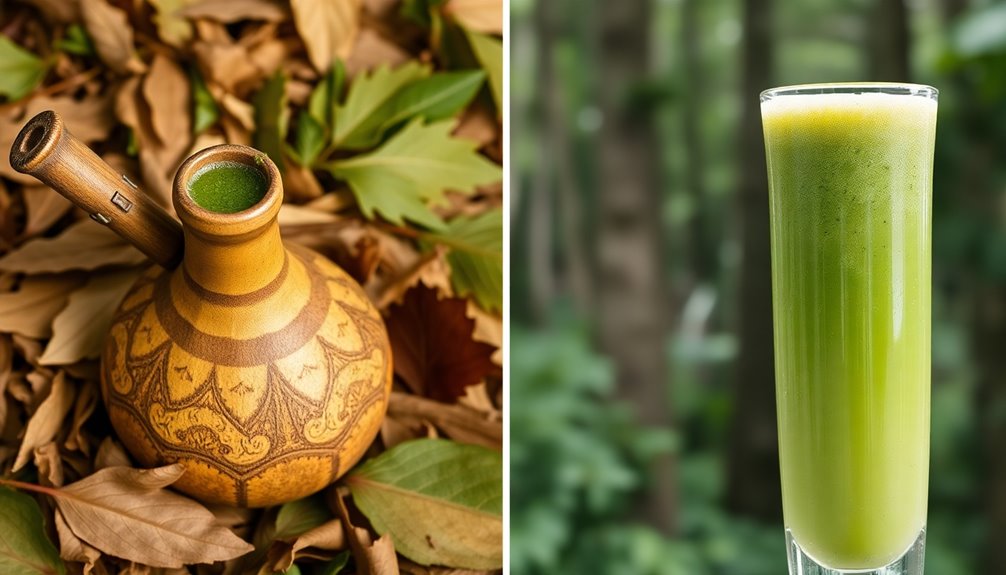
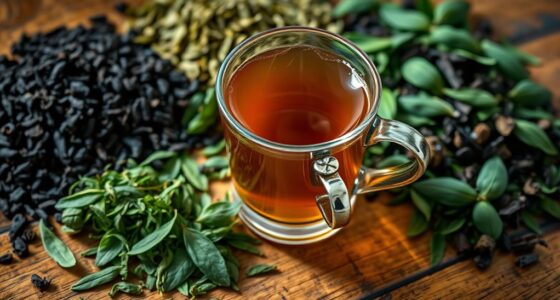
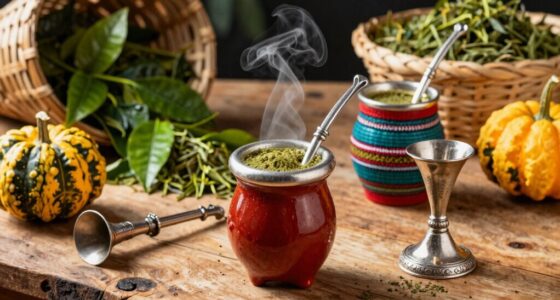
South American tea combines indigenous traditions with colonial influences, creating a rich history that reflects the region’s diverse climates and cultures. Native herbs like yerba mate and local fruits are often blended into traditional infusions, brewed with time-honored techniques passed down through generations. European settlers introduced new cultivation methods, shaping modern variations. Each sip tells a story of resilience and adaptation. To explore more about this vibrant heritage, keep exploring the fascinating origins and cultural significance behind South American tea.
Open a free Amazon Business account
Business pricing, bulk buying and tax-exempt orders.
As an affiliate, we earn on qualifying purchases.
Key Takeaways
- South American tea blends indigenous herbs with colonial influences, reflecting diverse cultural and environmental origins.
- The history includes indigenous practices and European colonial introductions of new crops and cultivation techniques.
- Traditional brewing methods involve slow steeping in clay pots, emphasizing cultural rituals and family traditions.
- Native plants like yerba mate are integral to regional tea-like beverages, showcasing adaptation to local ecosystems.
- Contemporary practices combine traditional methods with modern cultivation, celebrating cultural identity and regional diversity.

Have you ever wondered about the unique flavors and rich history behind South American tea? The story of tea in this continent isn’t as widely known as that of Asia, yet it holds a fascinating blend of indigenous traditions and colonial influences. When you explore South American tea, you’re diving into a world where tea cultivation has adapted to diverse climates and terrains, creating distinctive varieties that reflect the region’s cultural tapestry. From the lush highlands of Colombia to the subtropical zones of Argentina, local farmers have cultivated tea for generations, often blending it with native herbs and flavors to craft unique beverages. The process of tea cultivation here isn’t just about planting leaves; it’s about nurturing a crop that intertwines with local customs and histories.
South American tea blends indigenous traditions with colonial influences, reflecting a rich cultural tapestry across diverse climates and terrains.
Traditional brewing methods are central to experiencing South American tea’s full depth. Unlike the more standardized practices across the globe, brewing in this region often involves age-old techniques passed down through families. You might find yourself steeping leaves in a clay pot over an open flame, allowing the flavors to develop slowly and impart a sense of ritual and connection. Many communities take pride in their traditional brewing styles, which emphasize patience and respect for the ingredients. These methods preserve the authenticity of the flavors and highlight the cultural significance of tea as more than a simple beverage—it’s a social and spiritual experience.
Historically, tea in South America was influenced heavily by colonial powers, especially during the 19th century, when European settlers introduced new crops and cultivation techniques. Over time, local farmers began experimenting, incorporating native plants like yerba mate and other herbal infusions, creating a diverse landscape of tea-like beverages. This blending of traditions resulted in a rich tapestry of flavors, with some teas infused with fruits, herbs, or spices native to the region. Additionally, modern cultivation techniques have helped improve yields and maintain quality, ensuring that traditional practices continue to thrive amidst changing agricultural methods. Today, small-scale producers continue to uphold traditional brewing techniques, ensuring that each cup reflects the history and identity of the local community.
If you’re curious to taste South American tea, you’ll find that each sip carries stories of resilience, adaptation, and cultural pride. Whether you’re enjoying a simple brew at home or exploring the vibrant markets where locals sell their handcrafted blends, you’re connecting with a tradition that’s as diverse as the continent itself. The journey of South American tea invites you to appreciate its history, from ancient indigenous practices to modern innovations, all rooted in a deep respect for tradition and the land.

Amazon Basics Basket Coffee Filters for 8-12 Cup Coffee Makers, White, 200 Count, Packaging May Vary
- Package Quantity: 200 filters included
- Compatibility: Fits 8-12 cup coffee makers
- Filtration Quality: Eliminates sediment for better taste
As an affiliate, we earn on qualifying purchases.
Frequently Asked Questions
Which South American Countries Produce the Most Tea?
You’ll find that Brazil and Argentina lead in tea cultivation in South America. Brazil’s diverse climate supports regional preferences for different types of tea, especially in the southern regions. Argentina also has a growing tea industry, mainly producing yerba mate, which is popular locally. These countries prioritize tea cultivation because of their favorable climates and regional demand, making them the top producers in South America.
Are South American Teas Different From Asian Varieties?
Yes, South American teas differ from Asian varieties in flavor profiles and harvesting techniques. You’ll notice South American teas often have a lighter, earthier taste, influenced by unique climate and soil conditions. Harvesting techniques also vary, with some regions using hand-picking for quality, which enhances flavor depth. These differences give South American teas a distinctive character, making them a invigorating alternative to traditional Asian options.
How Has Indigenous Culture Influenced South American Tea Traditions?
Did you know that over 60% of indigenous communities in South America still incorporate traditional rituals into tea ceremonies? You see, indigenous culture deeply influences South American tea traditions through these rituals, which often symbolize spiritual connection and respect for nature. Cultural symbolism plays an essential role, as teas like mate are more than beverages; they embody indigenous values, history, and identity, shaping the unique tea experience across the continent.
What Are the Health Benefits of South American Teas?
You’ll find that South American teas, especially herbal infusions, offer numerous health benefits. They are rich in antioxidant properties, which help combat free radicals and support your immune system. Drinking these teas may improve digestion, reduce inflammation, and boost your energy levels. By incorporating traditional herbal infusions into your routine, you can enjoy their natural healing qualities while embracing the cultural heritage behind these unique beverages.
Are There Unique Processing Methods for South American Teas?
You’ll find that South American teas often use unique processing methods, including distinct fermentation techniques and drying methods. These techniques influence flavor and aroma, setting them apart from other teas. For instance, some teas undergo specific fermentation steps to develop earthy or fruity notes, while drying methods like sun-drying or shade-drying preserve their unique qualities. These processes reflect regional traditions and contribute to the teas’ distinctive profiles.
Conclusion
As you explore South American tea, it’s fascinating to realize how history and coincidence intertwine. You might stumble upon a local market, only to discover a rare tea leaf with roots stretching back centuries. Just like the unexpected beauty in a simple cup, the story of South American tea reminds you that sometimes, the most remarkable discoveries happen when you least expect them. So, keep your curiosity brewing—you never know what delightful surprise awaits.
Flea & tick season Picks
flea and tick prevention
As an affiliate, we earn on qualifying purchases.