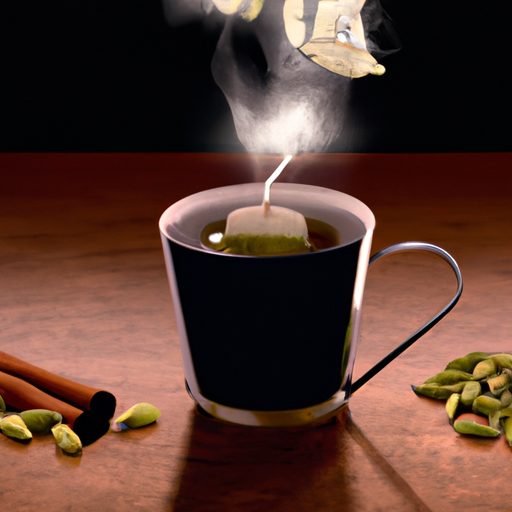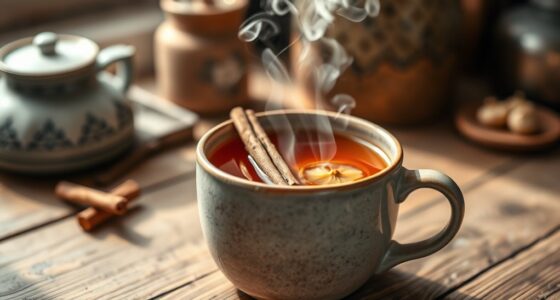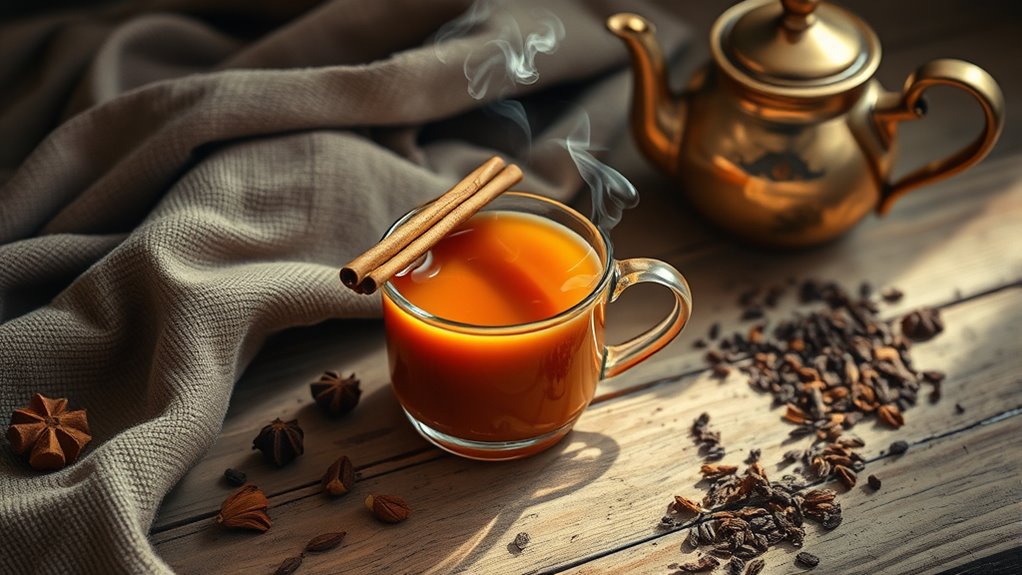

Chai tea’s history is rooted in ancient India as a healing herbal remedy. Over time, trade brought new spices, transforming it into the aromatic beverage we enjoy today. Colonial influences, especially the British, popularized black tea, mixing it with traditional spices. Today, chai represents more than a drink; it’s a symbol of hospitality, culture, and community. To explore its fascinating origins and evolving significance, keep exploring this rich tradition.
Open a free Amazon Business account
Business pricing, bulk buying and tax-exempt orders.
As an affiliate, we earn on qualifying purchases.
Key Takeaways
- Chai tea originated in ancient India as an herbal medicinal drink before evolving into a popular beverage.
- It was adapted over centuries through trade routes, introducing various spices and flavors.
- British influence popularized black tea versions, blending traditional herbs with imported tea leaves.
- Chai’s preparation and sharing have become cultural rituals symbolizing hospitality and community bonding.
- Modern chai combines traditional spices with contemporary practices, maintaining its cultural significance worldwide.

Have you ever wondered what makes chai tea so uniquely comforting and flavorful? It all starts with its rich history rooted in centuries-old traditions. Chai, which simply means “tea” in many Indian languages, has evolved from a traditional herbal brew into the aromatic beverage we enjoy today. Central to its appeal are the carefully curated spice blends that give chai its distinctive taste. These blends often include cinnamon, cardamom, ginger, cloves, and black pepper, each adding its own layer of warmth and complexity. But beyond the flavor profile, chai holds a deep cultural significance. It’s more than just a drink; it’s a social ritual, a symbol of hospitality, and a reflection of centuries of Indian heritage. When you drink a cup of chai, you’re participating in a tradition that has been passed down through generations, connecting you to a community and history that spans centuries.
The origins of chai tea trace back to ancient India, where it was originally an herbal concoction used for medicinal purposes. Over time, the recipe adapted as trade routes brought new spices and ingredients into the region. The British influence in India popularized the use of black tea, transforming the herbal brew into the spiced tea we now call chai. This transformation was also driven by local customs, where serving chai became a way to bring people together—whether in bustling markets, family gatherings, or tea stalls. Each region and household developed its own unique spice blend, reflecting local tastes and available ingredients. This diversity highlights the cultural significance of chai as a versatile, communal beverage that adapts to different contexts. Additionally, the Vetted electric bike conversion kits featured in recent reviews demonstrate how traditional practices can evolve alongside modern innovations, merging cultural heritage with contemporary technology.
The spice blends themselves aren’t just about flavor—they carry cultural symbolism as well. For many, these spices are believed to have health benefits, promoting digestion and overall well-being. The act of making and sharing chai often involves ritual and mindfulness, emphasizing community bonds and hospitality. Whether it’s a simple cup served to a friend or a more elaborate preparation for guests, chai’s cultural importance remains central. It’s a beverage that embodies warmth, comfort, and tradition, connecting people across generations and regions. So, next time you enjoy a steaming cup of chai, remember that you’re partaking in a centuries-old tradition rooted in history, infused with cultural significance, and crafted through carefully balanced spice blends that tell stories far beyond their flavor.

Spicewalla Masala Chai Spice 2.1 oz | Tea, Latte, Coffee, | Unsweetened Powdered Spice
- Spice Blend: Ginger, cinnamon, cardamom, pepper, clove, allspice
- Authentic Indian Chai: Named 'Chai' to reflect Indian roots
- High-Quality Ingredients: Gluten-free, Non-GMO, Keto, Paleo, No artificial flavors
As an affiliate, we earn on qualifying purchases.
As an affiliate, we earn on qualifying purchases.
Frequently Asked Questions
What Are the Health Benefits of Drinking Chai Tea?
Drinking chai tea offers several health benefits, including an immune boost thanks to its antioxidant-rich spices like cinnamon, ginger, and cardamom. These ingredients can help reduce inflammation, improve digestion, and increase energy levels. Plus, chai tea’s warmth and comforting aroma can help reduce stress. Regularly enjoying chai tea supports overall well-being, making it a delicious way to boost your health naturally.
How Do Different Spices Affect Chai Tea’s Flavor Profile?
When you mix different spices, you really spice up chai tea’s flavor profile, making each cup unique. Cinnamon adds warmth, cloves bring depth, and cardamom offers a fragrant zing. These spice combinations influence flavor enhancement, balancing sweetness and bitterness. Experimenting with spices can turn your chai into a symphony of tastes, so don’t be afraid to play around and find your perfect blend—sometimes, a little goes a long way.
Can Chai Tea Be Made Caffeine-Free?
Yes, you can make chai tea caffeine-free by using herbal chai options or decaffeination techniques. Herbal chai blends use herbs and spices without black tea leaves, providing a flavorful, caffeine-free alternative. Decaffeination methods like water processing or CO2 extraction remove caffeine from traditional black or green chai, allowing you to enjoy the spiced taste without the stimulant. Both options let you savor chai’s warmth without caffeine.
What Are Traditional Methods of Preparing Authentic Chai?
Traditional chai triumphs through tender tea preparation and meticulous spice blending. You simmer water and milk, infusing fragrant spices like cinnamon, cardamom, and ginger. You then add black tea leaves, allowing flavors to fuse fully. Strain the spicy, steamy mixture into a cup, sweeten as desired, and savor the soothing symphony of flavors. This timeless technique transforms simple ingredients into a soulful, aromatic experience rooted in rich cultural rituals.
How Has Chai Tea Influenced Global Tea Culture?
Chai tea has considerably influenced global tea culture by blending traditional tea ceremonies with rich cultural significance, creating a sensory experience that resonates worldwide. You might notice how chai’s warm spices and communal preparation foster social bonds, much like a tea ceremony. Its popularity has sparked a global appreciation for diverse tea traditions, inspiring cafes and households to embrace its unique flavor profile and cultural depth, making chai a symbol of hospitality and warmth everywhere.
Conclusion
As you sip your chai, remember you’re tasting centuries of rich history and tradition pouring into each warm, fragrant cup. It’s more than just tea; it’s a journey through time, blending spices and stories into a comforting embrace. Let each sip remind you of the vibrant cultures and ancient roots that make chai a timeless treasure. So, embrace this aromatic voyage — a beautiful dance of history and flavor, warming your soul with every drop.
Grilling season Picks
grills
As an affiliate, we earn on qualifying purchases.