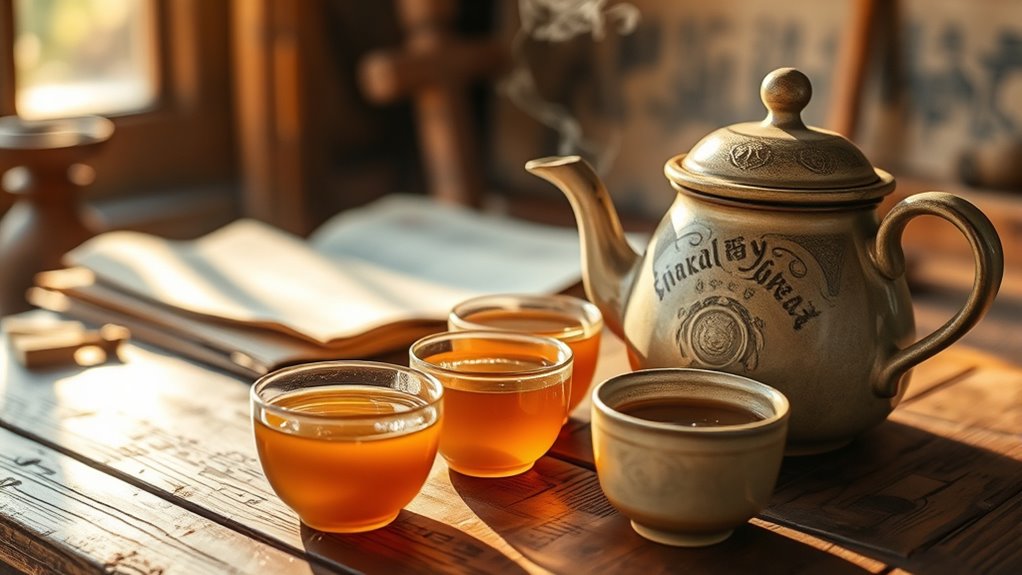
Barley tea has a long history in Asian cultures, especially in Korea, China, and Japan, where it’s been enjoyed for centuries. Traditionally, people roast barley kernels to develop its rich, nutty flavor and beneficial properties. It’s valued not only for its taste but also for its health benefits, like aiding digestion and lowering cholesterol. If you keep exploring, you’ll discover more about its cultural significance and how it’s brewed today.
Key Takeaways
- Barley tea has been enjoyed for centuries in East Asia, including Korea, China, and Japan.
- Traditionally brewed by roasting barley kernels, enhancing flavor and health benefits.
- Historically used as a medicinal drink to aid digestion and promote wellness.
- Its popularity reflects a cultural emphasis on health, simplicity, and accessibility.
- Modern brewing methods include stovetop and tea bags, maintaining its traditional origins.
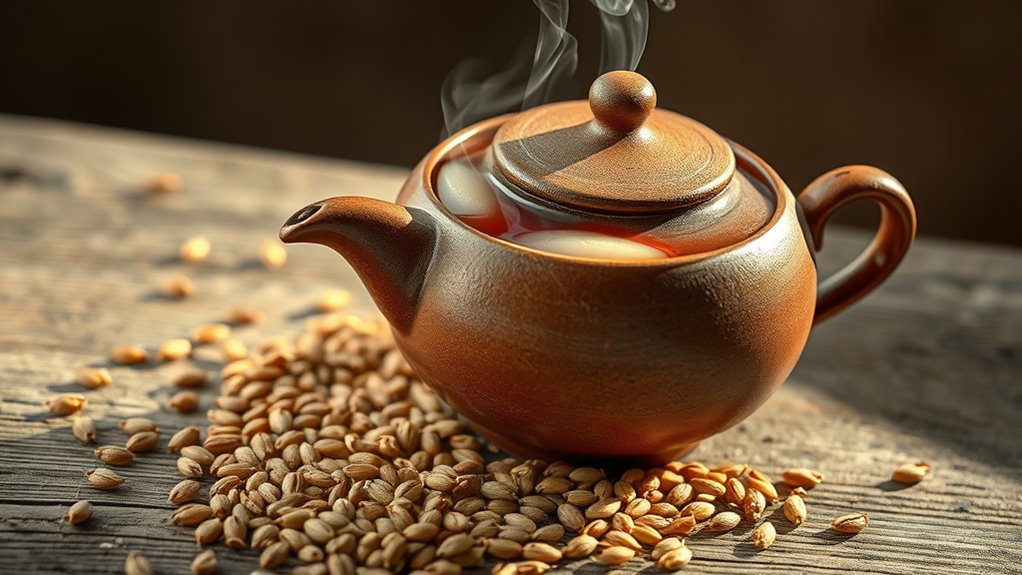
Barley tea, a popular beverage in many Asian countries, offers an invigorating and healthful alternative to traditional teas. Its rich, nutty flavor and mild aroma make it a favorite for daily consumption. As you explore its history and origins, you’ll discover that this tea has been enjoyed for centuries, valued not only for its taste but also for its numerous health benefits. Understanding the history behind barley tea can deepen your appreciation for this simple yet profound beverage, which has been cultivated and brewed across cultures for generations.
Barley tea: a flavorful, healthful beverage cherished across Asian cultures for centuries.
The origins of barley tea trace back thousands of years in East Asia, particularly in Korea, China, and Japan. Historically, it was used as a medicinal drink, believed to aid digestion, improve circulation, and promote overall wellness. Its popularity grew because barley was a common staple crop, making the tea accessible and affordable. Over time, traditional brewing techniques evolved, with each region developing its own methods for preparing the tea. Today, brewing techniques range from simple stovetop methods to modern tea bags, but the core principle remains the same: roasting barley kernels until they develop a toasted aroma and flavor, then steeping or boiling them to extract their essence.
When you prepare barley tea, you’re engaging in a process that not only *unlocks* its unique flavor but also preserves its health benefits. The health benefits of barley tea are numerous; it’s known to be rich in antioxidants, aid digestion, and even help in lowering cholesterol levels. Its caffeine-free nature makes it a suitable beverage for all times of the day, and many people find it helpful in reducing stress and promoting hydration. To maximize these health benefits, it’s important to follow proper brewing techniques. Typically, you roast the barley until it’s fragrant, then steep a handful of roasted barley in hot water for about 10-15 minutes. Some prefer to boil the barley directly, which intensifies the flavor. You can adjust the steeping time or water-to-barley ratio to suit your taste preferences, making it a versatile drink that can be tailored to your liking.
In addition, the traditional roasting process enhances both the flavor and the extraction of beneficial compounds from the barley. In essence, barley tea’s history and origins reveal a tradition rooted in health and simplicity. Its enduring popularity across Asia speaks to its timeless appeal and the health benefits it offers. By understanding the traditional brewing techniques, you can enjoy a beverage that’s not only flavorful but also beneficial for your well-being. Whether you’re seeking a caffeine-free alternative or a way to incorporate more antioxidants into your diet, barley tea stands out as a wholesome choice rooted in centuries of cultural practice.
Frequently Asked Questions
How Is Barley Tea Traditionally Prepared in Different Cultures?
You typically prepare barley tea by roasting barley grains until golden, then boiling them in water, creating a rich, nutty flavor. Preparation methods vary across cultures: in Korea, you’ll often enjoy it cold or hot, while in Japan, it’s commonly served cold with ice. Cultural variations influence how long you steep the grains and whether you blend them with other ingredients, but the core process remains roasting and boiling.
Are There Any Health Benefits Beyond Hydration?
You’ll be glad to know barley tea offers health benefits beyond hydration. It’s rich in antioxidant properties, which help fight free radicals and reduce inflammation. Additionally, it promotes digestive health by soothing the stomach and supporting gut function. Studies show that regular consumption can boost overall wellness, making it a smart choice for more than just quenching your thirst. So, enjoy your tea knowing it’s good for your health!
What Are Common Variations of Barley Tea Worldwide?
You’ll find that global brewing offers a variety of barley tea variations, each with unique flavor profiles. In Korea, roasted barley tea has a smoky, nutty taste, while Japan’s mugicha offers a mild, slightly sweet flavor. China’s barley tea tends to be lighter and more subtle. These variations let you explore diverse flavor profiles, enhancing your tea experience and connecting you to different cultural traditions worldwide.
Can Barley Tea Be Used in Cooking or Recipes?
Did you know that barley tea’s rich, nutty flavor can enhance many dishes? You can use tea brewing techniques to incorporate it into recipes like soups, stews, or marinades, adding depth and a subtle roasted taste. Its versatility in culinary uses makes it a great ingredient for savory and even some dessert recipes. Just replace water with brewed barley tea to boost flavor and add a unique twist to your cooking.
Is Barley Tea Suitable for Children and Pregnant Women?
Barley tea is generally safe for children and pregnant women when consumed in moderation. However, you should consider child safety and pregnancy considerations, as it contains no caffeine and is hydrating. Still, it’s best to consult your healthcare provider before adding it to a child’s diet or your pregnancy routine, especially if you have allergies or sensitivities. Overall, moderate consumption can be a healthy, comforting beverage.
Conclusion
Now that you know the history and origins of barley tea, you can appreciate its rich cultural significance, its comforting aroma, and its invigorating taste. Whether you enjoy it hot or cold, plain or flavored, barley tea offers a simple pleasure that connects you to centuries of tradition. Embrace its warmth, savor its flavor, and share its story. Because barley tea isn’t just a beverage—it’s a tradition, a ritual, a timeless experience waiting to be enjoyed.