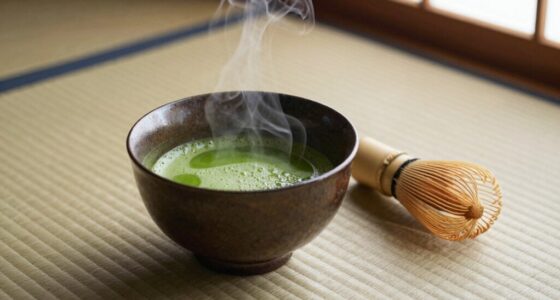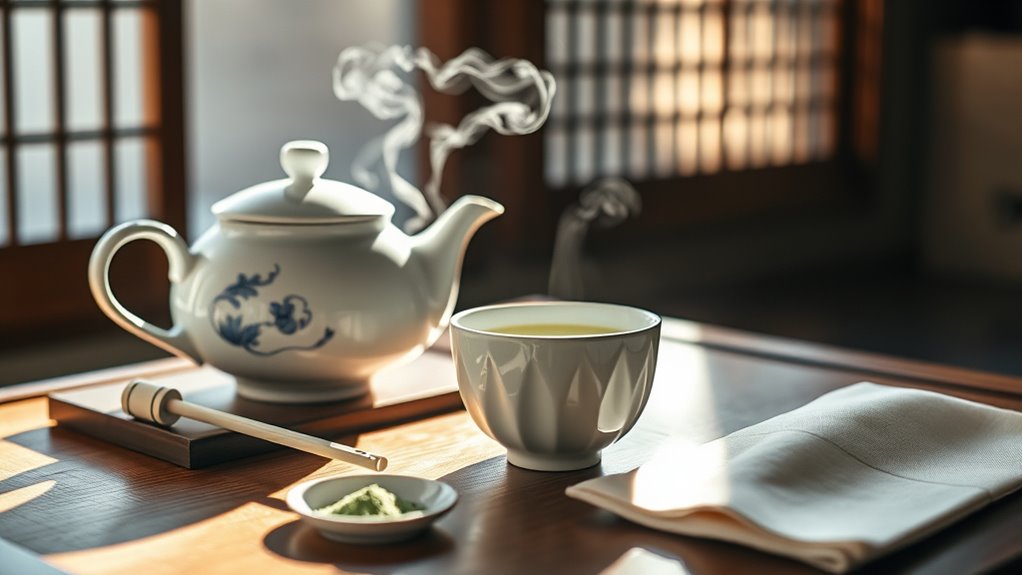
To brew the perfect Japanese tea, choose the right variety like matcha or sencha, and use quality water heated to the correct temperature—around 70-80°C for green teas. Use a kyusu or infuser, measure the right amount, and steep for just 1-3 minutes, depending on the tea type. Pay attention to pouring carefully and enjoying the aroma. Keep exploring to learn more tips that will elevate your tea brewing skills.
Open a free Amazon Business account
Business pricing, bulk buying and tax-exempt orders.
As an affiliate, we earn on qualifying purchases.
Key Takeaways
- Choose high-quality tea leaves or powder suited to your preferred variety.
- Use fresh, filtered water heated to the ideal temperature for each tea type.
- Measure the correct amount of tea and steep for the recommended 1-3 minutes.
- Use proper brewing equipment like a kyusu or gaiwan to enhance flavor extraction.
- Pour and serve carefully, savoring the aroma and subtle flavors for a mindful tea experience.
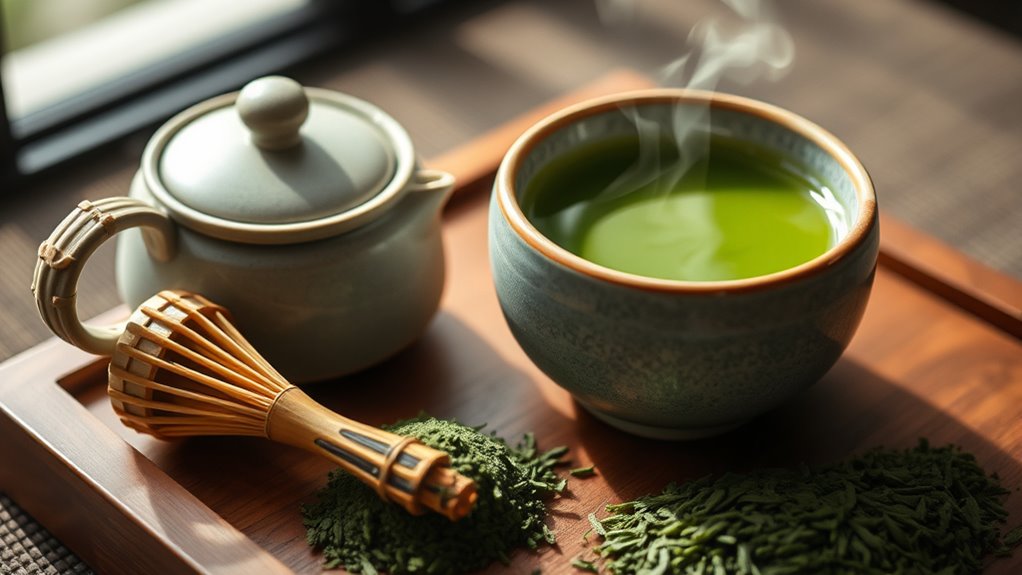
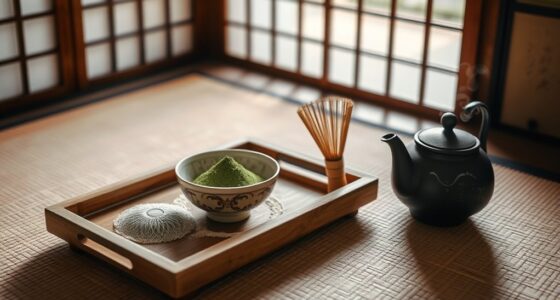
Brewing Japanese tea is a simple yet mindful process that brings out its delicate flavors. To do it right, you need to understand the different tea varieties and the essential brewing equipment. Japanese teas come in a range of types, each with unique characteristics. Sencha, for example, is a popular green tea with a grassy freshness, while matcha offers a rich, earthy flavor through powdered form. Gyokuro is a shade-grown green tea that boasts a sweet, umami taste, and hojicha provides a roasted, nutty profile. Knowing these varieties helps you choose the right tea for your mood and occasion. Equally important is selecting suitable brewing equipment—such as a kyusu (traditional teapot), a gaiwan, or a simple infuser. The right tools guarantee adequate extraction of flavors and make the brewing experience more enjoyable.
When preparing to brew Japanese tea, start by choosing high-quality loose leaves or powder, depending on the type. Use fresh, filtered water, as the quality of water considerably influences the final taste. The next step involves heating the water to the appropriate temperature, which varies among tea varieties. For delicate teas like gyokuro or sencha, aim for about 70-80°C (158-176°F). For more robust teas like hojicha, slightly higher temperatures around 80-90°C (176-194°F) work well. Avoid boiling water, as it can scorch the leaves and dull their nuanced flavors. Once your water reaches the desired temperature, pour it over the tea leaves or powder in your chosen brewing equipment. The amount of tea and water depends on your preference but typically follows a ratio of about one teaspoon of loose leaves per 150 ml of water.
Let the tea steep for the right amount of time—usually around one to three minutes—so the flavors develop fully without becoming bitter. For green teas, shorter steeping times prevent bitterness, while longer infusions are suitable for stronger varieties like hojicha. During steeping, keep the tea covered or in a teapot with a lid to maintain consistent temperature and aroma. Once steeped, carefully pour the tea into your cup, avoiding over-extraction, which can result in astringency. Savor the delicate aroma and flavor, appreciating the subtle complexities unique to each tea variety. Remember, brewing Japanese tea is as much about mindfulness as it is about technique, so take your time and enjoy the process. With practice, you’ll refine your approach and discover the perfect cup tailored to your taste. Additionally, understanding brewing equipment options can enhance your overall experience and help you achieve optimal flavor extraction.

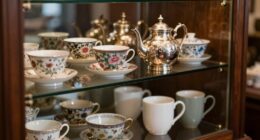
Dujust Japanese Tea Set, Black Porcelain Tea Set with 1 Teapot Set, 6 Tea Cups, 1 Tea Tray, 1 Stainless Infuser, Beautiful Asian Tea Sets for Adults, Tea Lover/Women/Men (Countryside in Golden)
- Beautiful Japanese Countryside Design: Depicts serene traditional Japanese scenery
- Comfortable Handle with Hemp Rope: Retro, anti-hot, ergonomic grip
- Built-in Stainless Steel Filter: Ensures smooth tea pouring and separation
As an affiliate, we earn on qualifying purchases.
As an affiliate, we earn on qualifying purchases.
Frequently Asked Questions
What Are the Health Benefits of Drinking Japanese Tea?
Drinking Japanese tea offers numerous health benefits, including antioxidant properties that help protect your cells from damage. It also supports weight management by boosting metabolism and aiding fat burning. When you enjoy Japanese tea regularly, you may experience improved focus, reduced stress, and better overall health. Plus, its natural compounds promote longevity and a stronger immune system, making it a great addition to your daily wellness routine.
How Long Can You Store Brewed Japanese Tea?
You can store brewed Japanese tea for up to 24 hours if you want to enjoy it at its freshest. To maintain tea freshness, transfer it to airtight storage containers and keep it refrigerated. Avoid leaving it out at room temperature for too long, as exposure to air and heat can degrade its flavor and quality. Always refrigerate promptly and consume within a day for the best taste and health benefits.
Which Type of Japanese Tea Is Best for Beginners?
You’ll find that green tea, especially Sencha, is the best choice for beginners because it’s like a gentle breeze compared to stronger varieties. Explore different tea varieties and try simple brewing techniques, such as steeping at the right temperature and time, to enjoy a smooth, flavorful cup. Sencha’s balanced taste makes it easy to learn and perfect your brewing skills without overwhelming your palate.
Can Japanese Tea Be Brewed Using Cold Water?
Yes, you can brew Japanese tea using cold water, creating a cold brew. Simply steep your tea leaves in cold water for several hours, usually 4-8 hours, to preserve the tea’s delicate flavors and aroma. Cold brewing minimizes bitterness and maintains a smooth, invigorating taste. This method is perfect if you want to enjoy a chilled, flavorful cup without the heat, making it convenient and enjoyable in warm weather.
Are There Specific Utensils Recommended for Brewing Japanese Tea?
Imagine delicate steam rising from your teapot—yes, specific utensils make a difference. You’ll want a fine mesh strainer, a kyusu (small teapot), and a matcha scoop if brewing powdered tea. These tea accessories enhance your brewing techniques, ensuring ideal flavor and aroma. Using the right utensils allows you to control water temperature and steeping time precisely, transforming your tea experience into a calm, mindful ritual.
Conclusion
As you sip your freshly brewed Japanese tea, imagine the gentle steam rising like delicate clouds, carrying the subtle aroma of tradition and patience. Each sip becomes a moment of calm, a pause in your busy day. When you brew with care, you’re not just making tea—you’re creating a small, peaceful retreat. So, take your time, savor every drop, and let the warmth and harmony of Japanese tea fill your senses.
College move-in / dorm season Picks
dorm essentials
As an affiliate, we earn on qualifying purchases.