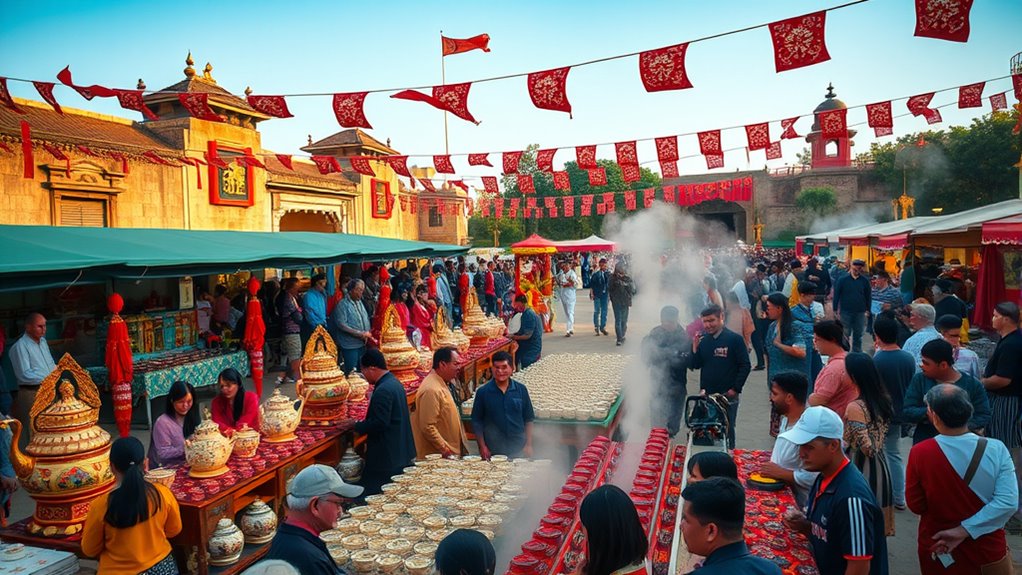
Tea events and festivals have deep roots in history, celebrating cultural heritage, artistry, and community through rituals and tastings. These gatherings reflect values like harmony, respect, and tranquility, helping you connect with traditions passed down over centuries. They serve as moments for cultural exchange, education, and social bonding, highlighting tea’s role in history and diplomacy. Keep exploring to discover how these vibrant celebrations continue to preserve and evolve this timeless tradition.

Get coffee and tea gear delivered free — and shop member deals
- Fast, free delivery on millions of items
- Access to Prime Big Deal Days deals on October 6–7
- Prime Video, Amazon Music and more included
Key Takeaways
- Tea festivals celebrate cultural heritage, emphasizing traditional rituals, artistry, and community bonding across different regions.
- Historically, tea events serve to preserve and transmit cultural values like harmony, respect, and tranquility.
- They often feature ceremonial demonstrations, tastings, and educational activities highlighting tea’s artistic and regional diversity.
- Tea festivals facilitate cultural exchange, fostering understanding and appreciation of global tea traditions and history.
- Overall, these events symbolize human connection, shared customs, and the enduring cultural significance of tea worldwide.
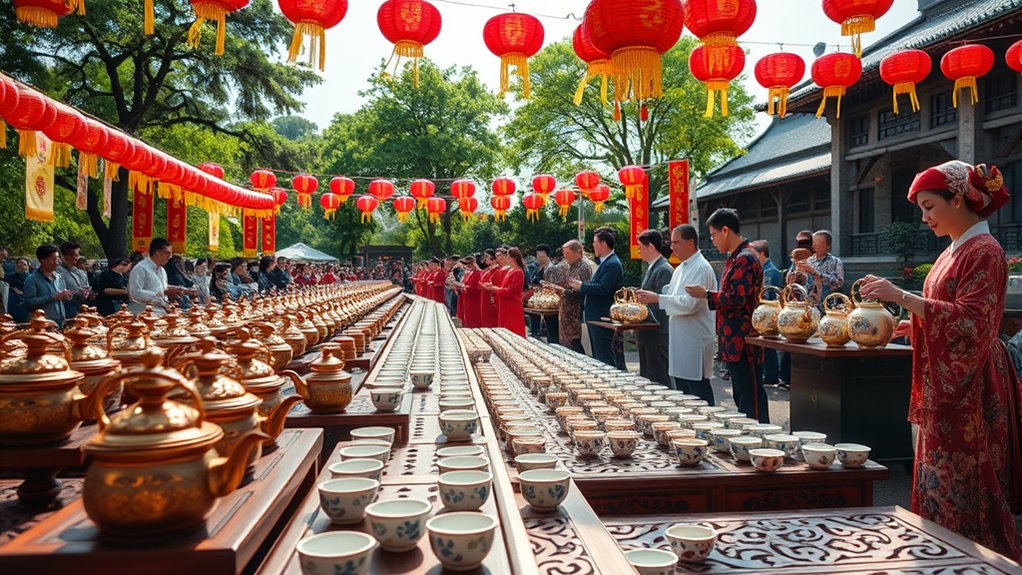
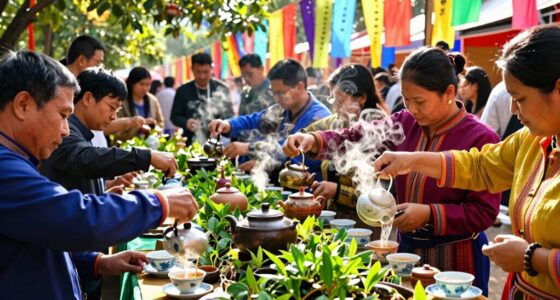
Tea events and festivals have a rich history that reflects their cultural significance across the world. These gatherings aren’t just about drinking tea; they’re about celebrating tradition, artistry, and community. When you participate in a tea ceremony, you’re engaging in a ritual that has been refined over centuries, embodying values like harmony, respect, purity, and tranquility. The tea ceremony isn’t just a method of brewing; it’s a form of art, emphasizing mindful preparation, precise movements, and the aesthetic experience. During these ceremonies, you’re invited to slow down, focus on each step, and appreciate the subtle flavors and aromas of the tea. It’s a meditative act that connects you with history and cultural identity.
Participating in tea ceremonies is a mindful, artistic act that connects you to history, tradition, and cultural harmony.
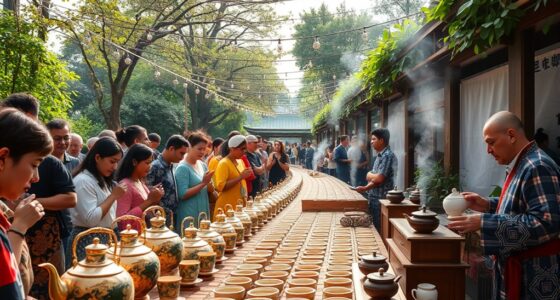
Tea tasting is another core element of many tea festivals. When you attend a tea tasting, you’re given the opportunity to sample various types of tea—green, black, oolong, white, and herbal blends—each with distinctive characteristics. This experience isn’t just about drinking; it’s about discovering nuances in flavor, aroma, and texture, often guided by experts who share insights into the origins and processing methods of each tea. As you compare different teas, you develop a deeper understanding of regional styles, cultivation techniques, and the ways in which local culture influences flavor profiles. Tea tastings often serve as educational moments, helping you appreciate the diversity and complexity of tea. Additionally, many festivals highlight the importance of color accuracy and presentation, which enhances the visual appeal and overall experience of tea appreciation.
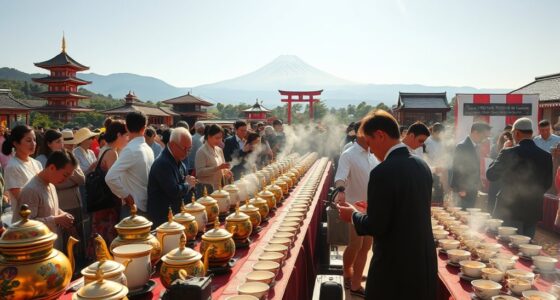
Throughout history, tea festivals have served as gatherings that foster cultural exchange and preserve traditional practices. Whether it’s a local community event or a large international festival, these gatherings provide a space for enthusiasts to connect, learn, and celebrate their shared passion. You might see demonstrations of traditional tea ceremonies, participate in workshops, or simply enjoy tasting sessions. These festivals often highlight the significance of tea beyond its flavor—its role in social bonding, spiritual practices, and even diplomatic relations. By taking part, you’re actively engaging in a timeless tradition that continues to evolve while holding onto its roots.
Ultimately, attending tea events and festivals allows you to immerse yourself in a world where every sip and ritual tells a story. It’s a journey through history, culture, and artistry that deepens your appreciation not just for tea, but for the rich tapestry of human connection woven into every cup. Whether you’re participating in a ceremonial event or simply sampling teas at a tasting, you’re part of a global tradition that celebrates the simple act of sharing a moment over a cup of tea.
Frequently Asked Questions
How Do Tea Festivals Vary Across Different Cultures?
You’ll notice that tea festivals vary across cultures due to cultural differences and local traditions. In Japan, you might experience elegant tea ceremonies emphasizing mindfulness, while in China, festivals often celebrate tea’s history with tastings and displays. In the UK, tea festivals focus on different blends and social aspects. These festival variations reflect each culture’s unique approach to tea, making each event a distinct celebration rooted in local customs.
What Are the Most Traditional Rituals at Tea Festivals?
At tea festivals, you’ll find traditional rituals like strict tea etiquette, emphasizing proper handling and serving of tea. You’ll participate in ceremonial tastings, where every movement is precise and meaningful. Often, hosts perform intricate brewing techniques, showcasing respect for tradition. These rituals deepen your appreciation, connecting you with history and culture. Embrace the ceremonial atmosphere, and you’ll experience the true essence of tea festivals firsthand.
How Have Tea Festivals Evolved in Modern Times?
Ever wonder how tea festivals have transformed over time? Today, you see a blend of tradition and innovation, with tea commercialization making the experience more accessible, and digital tea events connecting enthusiasts worldwide. These festivals now often feature online tastings, virtual workshops, and global exchanges, breaking geographical barriers. As a result, you can enjoy rich cultural experiences from your home while still celebrating the timeless art of tea.
Which Countries Host the Oldest Tea Celebrations?
You’ll find China and Japan hosting the oldest tea celebrations, dating back centuries. In China, ancient brewing techniques and tea etiquette are central to traditional festivals, emphasizing respect and harmony. Japan’s tea ceremonies, rooted in Zen Buddhism, also showcase centuries-old customs. These countries preserve their rich heritage by honoring ancient brewing methods and refined tea etiquette, making their celebrations some of the most historic and culturally significant worldwide.
What Are Unique Regional Tea Festival Customs?
You’ll find fascinating regional tea festival customs worldwide. In Japan, you’ll experience elegant tea tasting and precise ceremonial rituals that showcase respect and tradition. In Morocco, vibrant celebrations include mint tea pouring rituals that symbolize hospitality. Meanwhile, in India, colorful festivals feature lively tea tastings and folk performances. These unique customs highlight local culture, turning simple tea into a spectacular sensory experience, inviting you to immerse yourself in diverse, delightful traditions.
Conclusion
So, when you attend a tea festival or event, you’re not just sipping a hot beverage—you’re stepping into a centuries-old tapestry of culture, tradition, and shared human connection. It’s as if each cup holds the secrets of empires, the whispers of ancient rituals, and the heartbeat of countless generations. Embrace these moments, for they’re more than just tea—they’re a gateway to understanding the soul of civilizations and the timeless magic of a simple, yet profound, brew.
Halloween Picks
halloween
As an affiliate, we earn on qualifying purchases.