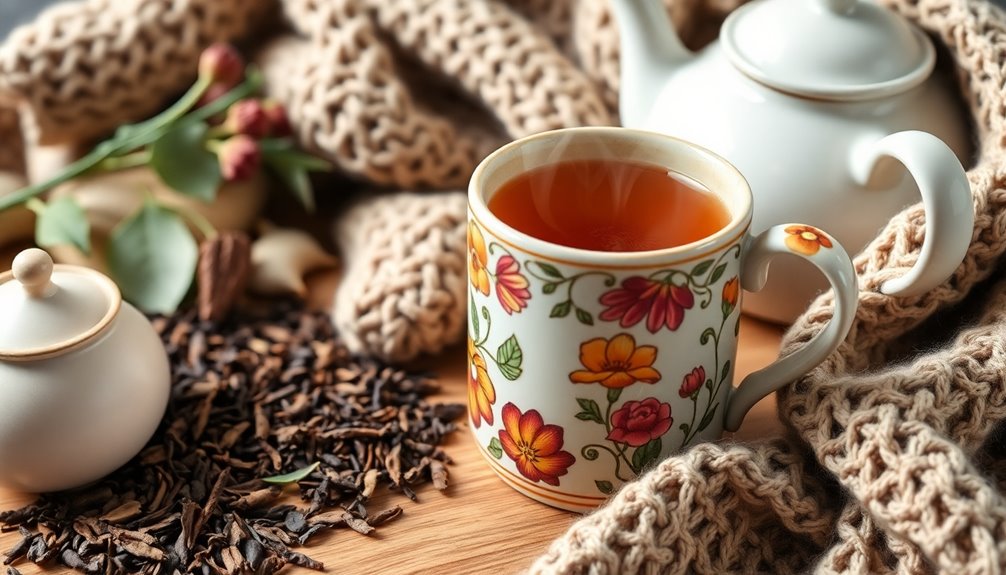
The history and evolution of tea cups and mugs show a journey from simple, practical vessels to symbols of culture, craftsmanship, and social status. Early ceramics were shaped by tradition, regional styles, and technological advances like wheel-throwing and glazing. Cross-cultural exchanges and trade introduced new techniques, inspiring diverse designs and artistic expression. Modern production combines craftsmanship with mass manufacturing, while these vessels continue to hold cultural and social significance. If you explore further, you’ll uncover how their stories reflect human creativity and history.
Key Takeaways
- Early ceramic vessels evolved from practical uses to decorative art, with Chinese porcelain symbolizing wealth and refinement.
- Designs on tea cups reflected cultural meanings, social hierarchies, and regional traditions across different societies.
- Trade routes facilitated cross-cultural exchanges, influencing styles and techniques, transforming tea cups into artistic expressions.
- Technological advancements, such as wheel-throwing and kiln firing, improved durability, aesthetics, and mass production of cups and mugs.
- The evolution of tea cups and mugs mirrors societal shifts, cultural values, and their role as symbols of hospitality and tradition.

Tea cups and mugs have a long and fascinating history that reflects changes in culture, technology, and taste. From simple vessels to ornate works of art, their evolution reveals much about human civilization. In the earliest days, basic ceramic craftsmanship produced utilitarian cups that served practical purposes. Over time, artisans began experimenting with shapes, glazes, and decorations, elevating everyday drinking vessels into symbols of cultural identity. These ceramic pieces often carried cultural symbolism, representing social status, religious beliefs, or regional traditions. For example, in China, porcelain tea cups became highly prized, symbolizing wealth and refinement. The intricate designs and fine craftsmanship demonstrated not only technical skill but also cultural values, reinforcing social hierarchies and artistic expression.
Ceramic tea cups symbolize cultural identity, social status, and artistic craftsmanship across centuries.
As trade routes expanded, the exchange of ceramic techniques and stylistic influences led to diverse styles across regions. In Europe, for instance, the introduction of porcelain from Asia inspired local potters to imitate and eventually innovate their own designs. This cross-cultural exchange enriched the visual language of tea cups and mugs, allowing them to evolve from purely functional items into artistic statements. The symbolism embedded in these ceramics often reflected local customs or beliefs, making each piece a cultural artifact. For example, certain motifs on Japanese tea cups signified harmony or tranquility, aligning with tea’s role in spiritual practices.
Technological advancements played a pivotal role in the evolution of tea cups and mugs. The development of wheel-throwing techniques, glazing methods, and kiln firing processes allowed artisans to create more durable, intricate, and aesthetically appealing vessels. The industrial revolution further revolutionized ceramic production, making cups and mugs more accessible and varied. Mass production techniques enabled the creation of standardized designs, but many artisans still preserved traditional methods to maintain cultural symbolism. Today, you can find a wide range of styles, from handcrafted ceramics that showcase exceptional ceramic craftsmanship to mass-produced mugs that emphasize convenience and familiarity.
Throughout history, the design of tea cups and mugs has mirrored societal shifts, technological progress, and cultural values. Whether they’re simple or ornate, these vessels serve as more than just containers—they embody stories, traditions, and identities. When you hold a ceramic mug or a delicately crafted tea cup, you’re connecting with centuries of history, appreciating the artistry and symbolism that have shaped this enduring symbol of hospitality and ritual.
Frequently Asked Questions
How Do Cultural Differences Influence Tea Cup Designs Worldwide?
Cultural differences shape tea cup designs through symbolism and regional aesthetics, influencing your choices. In Japan, you might prefer delicate, minimalist cups reflecting Zen principles, while in Morocco, vibrant, ornate patterns express lively traditions. These designs embody cultural symbolism that connects you to your heritage, and regional aesthetics that suit local customs. By understanding these influences, you can appreciate how cultural diversity enriches the variety of tea cups worldwide.
What Materials Are Currently Popular for Modern Tea Mugs?
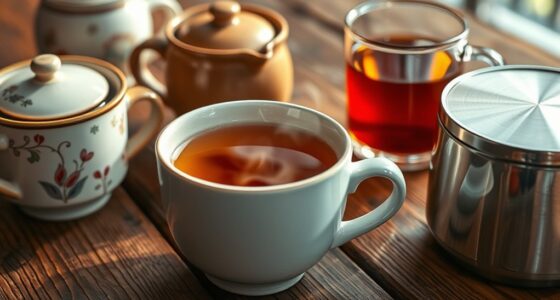
You’ll notice that popular materials for modern tea mugs include ceramic, glass, and stainless steel, reflecting current material trends. These materials offer durability, heat retention, and sleek design options. Design innovations focus on eco-friendly options like biodegradable ceramics and insulated double-walled glass, enhancing user experience. Whether you prefer a classic ceramic mug or a contemporary stainless steel one, these materials are shaping the way you enjoy your tea daily.
How Do Ergonomic Features Improve Tea Drinking Experiences?
Ergonomic features enhance your tea-drinking experience by making your mug more comfortable and easier to hold. An ergonomic grip ensures your hand feels secure, reducing strain, while a well-designed handle fits naturally in your fingers. These features allow you to sip calmly, without discomfort or spills. By prioritizing handle design and grip, your tea-time becomes more enjoyable, relaxing, and free from unnecessary effort or awkwardness.
Are There Eco-Friendly Alternatives to Traditional Ceramic Cups?
Looking for eco-friendly options? You’re in luck! You can switch to biodegradable materials or recycled ceramics, which are gentle on Mother Earth. These alternatives help reduce waste and lower your carbon footprint. It’s a win-win situation—by making small changes, you’re doing your part to keep the planet green. So, don’t throw the baby out with the bathwater; explore sustainable choices for your tea-drinking habits.
How Have Technological Advances Impacted Tea Cup Manufacturing?
Technological advances have transformed tea cup manufacturing by introducing manufacturing automation, which speeds up production and improves consistency. You’ll notice better ceramic glazing techniques that enhance durability and aesthetics, making cups more appealing and long-lasting. Automation also reduces waste and energy use, making the process more eco-friendly. These innovations guarantee you get high-quality, beautifully crafted tea cups faster, with improved sustainability and design features.
Conclusion
As you trace the journey of tea cups and mugs, you realize they’re more than just vessels—they’re storytellers of history and culture. Like a timeless melody, their design evolves, echoing traditions and innovations. Each sip transports you through centuries, connecting you to ancient artisans and modern creators. Just as a well-loved mug holds memories, these humble vessels remind us that comfort and craftsmanship endure, inviting you to savor history with every warm, comforting sip.