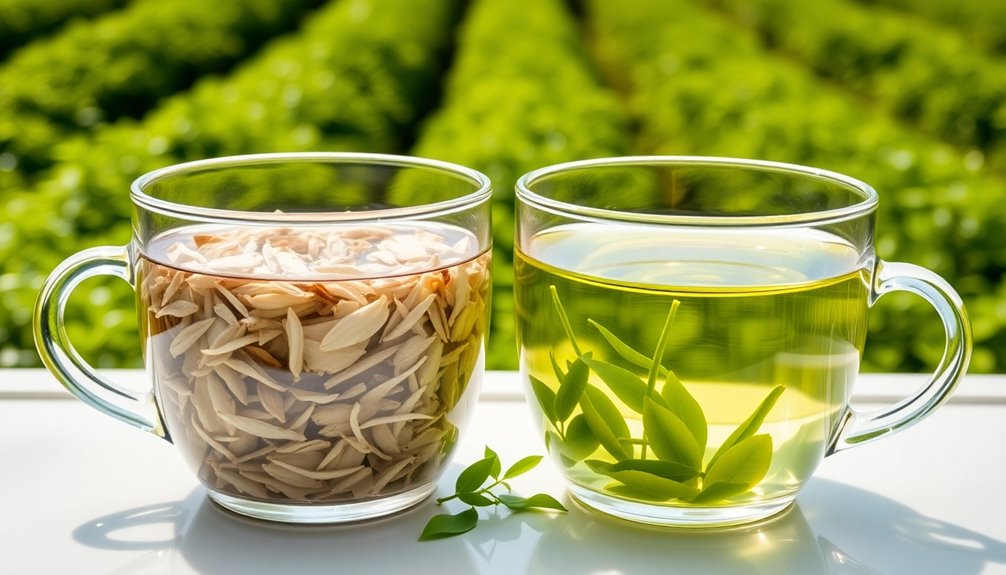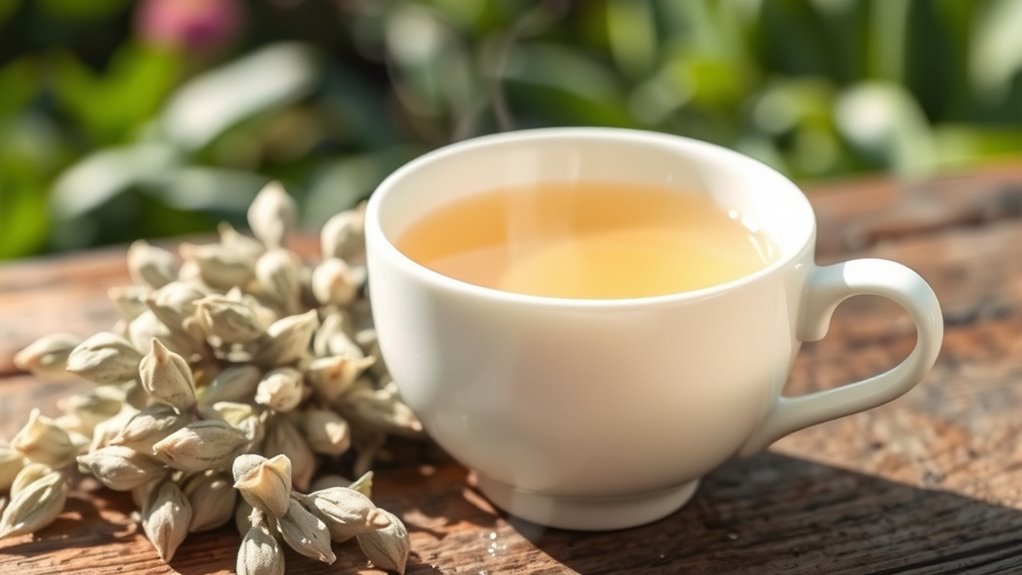

White tea is a gentle yet powerful drink packed with antioxidants and natural compounds that help protect your body from free radicals. Its minimal processing keeps essential polyphenols, like catechins, intact, supporting your immune system, reducing inflammation, and promoting better skin health. The low caffeine content provides a calm energy boost without jitters. If you keep exploring, you’ll discover even more ways white tea can enhance your overall wellness naturally.
Key Takeaways
- White tea is minimally processed, preserving antioxidants and polyphenols that combat oxidative stress and support overall health.
- Rich in catechins, white tea helps reduce inflammation and may lower the risk of chronic diseases like heart disease and cancer.
- Its antioxidants strengthen the immune system and promote healthier skin by protecting against environmental damage.
- Contains natural caffeine that provides a gentle energy boost without jitters, enhancing alertness and mental clarity.
- Regular consumption supports cardiovascular health, skin vitality, and cellular protection, serving as a natural health-enhancing beverage.
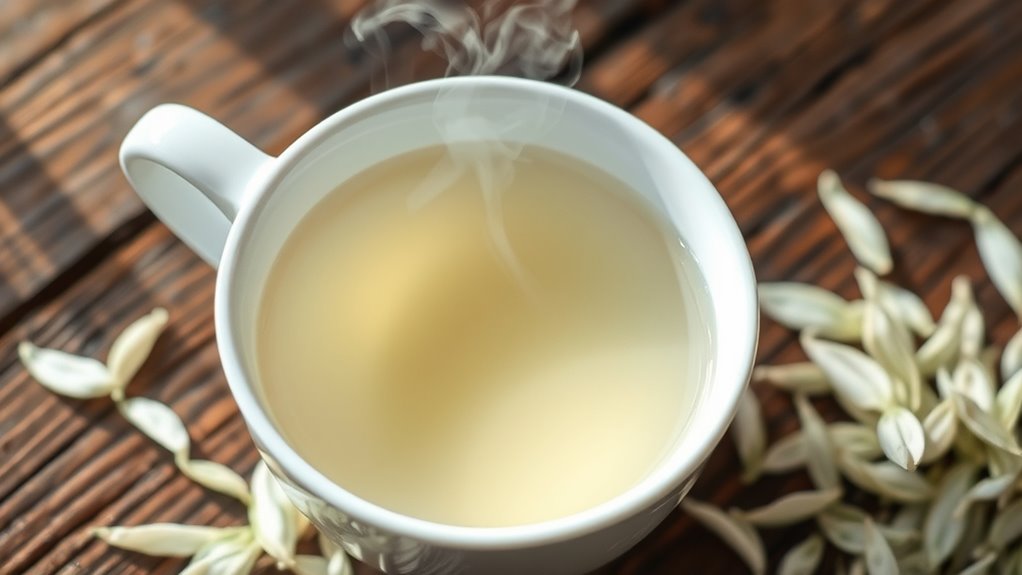
White tea is celebrated for its delicate flavor and minimal processing, which helps retain its rich concentration of antioxidants. Unlike other teas, white tea undergoes the least amount of tea fermentation, preserving its natural compounds and subtle taste. This minimal processing means you’re getting a beverage packed with antioxidant properties that can contribute positively to your health. The gentle oxidation process allows the tea leaves to maintain high levels of polyphenols, especially catechins, which are powerful antioxidants. These compounds help neutralize free radicals in your body, reducing oxidative stress and lowering your risk of chronic diseases like heart disease and certain cancers.
White tea’s minimal processing preserves antioxidants that support your health and fight free radicals naturally.
When you choose white tea, you’re opting for a beverage that maximizes antioxidant benefits without the need for extensive fermentation or artificial additives. The tea fermentation process in other teas, such as black or oolong, involves longer oxidation periods that alter the tea’s chemical profile and sometimes diminish some of its antioxidant properties. By contrast, white tea’s minimal fermentation keeps these beneficial compounds intact, making it a smart choice if you’re looking to boost your antioxidant intake naturally. As you sip white tea regularly, you may notice an improvement in your overall health, thanks to these potent antioxidants working to protect your cells from damage.
The antioxidant properties of white tea not only help in fighting oxidative stress but also support your immune system. The nutrients and antioxidants in white tea can enhance your body’s ability to fend off illnesses. Additionally, white tea contains small amounts of caffeine, giving you a gentle energy boost without the jitters or crashes associated with stronger caffeinated drinks. Its natural compounds may also promote healthier skin by reducing inflammation and preventing premature aging caused by environmental stressors.
Incorporating white tea into your daily routine is simple and effective. Because of its minimal processing, it retains a high concentration of antioxidants, making each cup a potent health booster. Brew it lightly to enjoy its subtle flavors and maximize the preservation of its beneficial compounds. Over time, this habit can contribute to better cardiovascular health, improved skin, and an overall boost to your well-being. So, next time you’re looking for a calming, healthful beverage, turn to white tea—not just for its delicate taste but for its impressive array of antioxidant properties that support your body’s defenses at the cellular level.

Taylor Digital Timer with 99 Minute 59 Second Display, Easy to Use, White Compact Design for Kitchen Cooking, Baking, and Timing Needs
MULTIFUNCTIONAL This lightweight timer can count up or count down
As an affiliate, we earn on qualifying purchases.
Frequently Asked Questions
Does White Tea Contain More Antioxidants Than Green or Black Tea?
White tea generally contains more antioxidants than green or black tea because of its minimal tea processing. The less processing, the higher the antioxidant levels you get, since many antioxidants are preserved in the delicate leaves. When you choose white tea, you’re likely consuming a beverage with richer antioxidant content, which can help protect your cells and boost your overall health.
Can White Tea Help With Weight Loss Effectively?
White tea can support your weight loss efforts by boosting your metabolism and suppressing your appetite. Its antioxidants help increase calorie burn, while its natural compounds may reduce hunger, making it easier to stick to your diet. Drinking white tea regularly can complement your healthy lifestyle, helping you shed pounds more effectively. Remember, combining it with a balanced diet and exercise yields the best results for weight management.
Is White Tea Safe for Pregnant or Breastfeeding Women?
White tea is generally safe for pregnant or breastfeeding women in moderation, but you should consult your healthcare provider first. While pregnancy safety and breastfeeding considerations suggest limiting caffeine intake, white tea contains less caffeine than other teas, making it a better choice. However, individual sensitivities vary, so it’s best to observe your body’s response and avoid excessive consumption to guarantee both your and your baby’s health.
How Does White Tea Impact Dental Health Compared to Other Teas?
White tea positively impacts your dental health by helping to reduce dental plaque and protect your enamel. Compared to other teas, it’s lower in tannins, which means it’s less likely to stain your teeth or weaken enamel. Drinking white tea regularly can support healthier gums and teeth, making it a wise choice for maintaining your oral hygiene. Just remember to avoid adding sugar for ideal dental benefits.
Are There Any Side Effects Associated With Drinking White Tea Regularly?
You might experience some side effects from drinking white tea regularly, especially if you’re sensitive to caffeine or have allergy concerns. Caffeine sensitivity can cause jitters, insomnia, or increased heart rate, while allergy concerns may lead to skin reactions or digestive issues. To enjoy white tea safely, monitor your intake, watch for allergic symptoms, and consult a healthcare professional if you notice adverse effects. Moderation is key to minimizing risks.

TempPro TM02 24H Digital Timer with Dual Kitchen Timers for Cooking, Magnetic Timer Clock with Adjustable Alarm Volume & LCD Backlit Display, Classroom Timer for Kids & Teachers(Previously ThermoPro)
【Dual Countdown Timer】Simultaneously set two alarms for separate events; This productivity timer can be programmed for durations up...
As an affiliate, we earn on qualifying purchases.
Conclusion
Now that you know the health perks of white tea, it’s clear why it’s a modern marvel. From boosting your immune system to fighting aging, this ancient elixir packs a punch. Think of it as your secret potion, much like a medieval apothecary’s treasure. So, sip on white tea regularly, and you’ll feel like you’ve stepped into a wellness fairy tale—minus the fairy dust, but with all the benefits. Cheers to your health!

MOSTRUST Digital Dual Kitchen Timer, 3 Channels Triple Countdown Timer for Cooking, Magnetic Memory-Preset Large Display Adjustable Volume, Multi Time Management, 3A Battery Included, Black
【3 Channels Countdown Timer with Stopwatch】--- 3 events can be counted down simultaneously. It can also act as...
As an affiliate, we earn on qualifying purchases.

TPNEG Digital Kitchen Timer - 4-Channel Cooking Timer with Alarm, Magnetic Back, Loud & Silent Modes, Count Up/Down, Ideal for ovens, Seniors, Kids and classrooms, Replaceable AAA Battery
[Easy to use timer]: A digital kitchen timer with a clean, intuitive design. Easy to operate and ready...
As an affiliate, we earn on qualifying purchases.