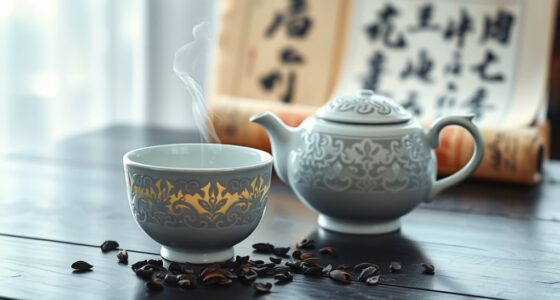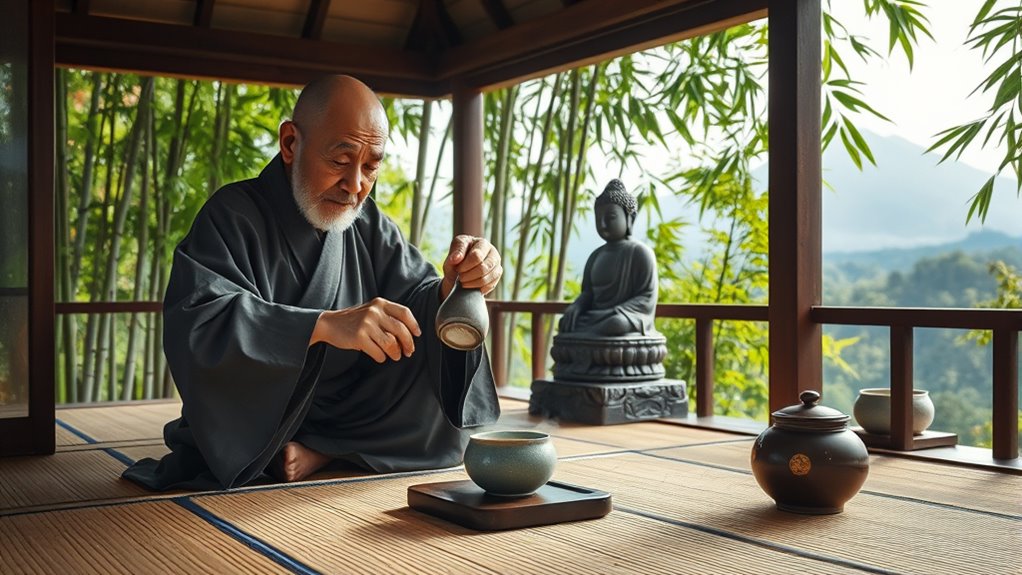
You’ll find that places like Japan’s Uji region and China’s Sichuan mountains are famous for their deep ties to tea and philosophy. Key figures like Lu Yu and Sen no Rikyū shaped how tea became a spiritual and cultural practice, emphasizing mindfulness and harmony. These sites and individuals reflect how tea served as a gateway to philosophical reflection and spiritual insight. If you keep exploring, you’ll uncover even more fascinating connections between tea traditions and philosophical ideas.
Open a free Amazon Business account
Business pricing, bulk buying and tax-exempt orders.
As an affiliate, we earn on qualifying purchases.
Key Takeaways
- Uji in Japan is renowned for matcha production and Zen Buddhist temples linked to tea and spiritual practice.
- Lu Yu, the Chinese “Tea Sage,” authored the first comprehensive guide to tea and its philosophical significance.
- Sen no Rikyū revolutionized Japanese tea ceremonies, emphasizing humility, purity, and mindfulness rooted in Zen Buddhism.
- Chinese regions like Sichuan mountains are historically connected to tea cultivation and Confucian and Taoist philosophical thought.
- Traditional tea ceremonies embody values of harmony, simplicity, and presence, reflecting deep philosophical and spiritual principles.
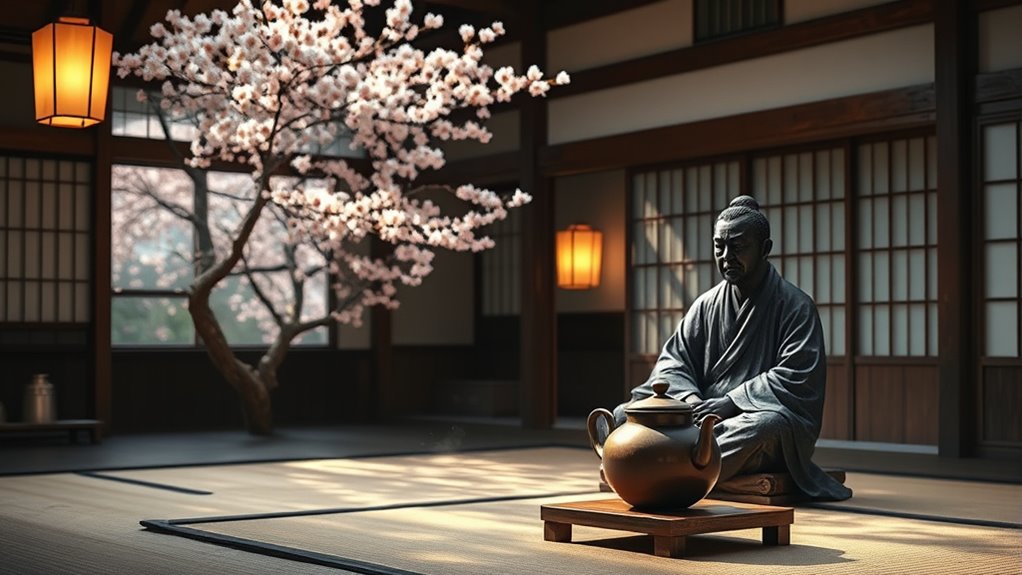
Throughout history, tea has served not only as a popular beverage but also as a catalyst for philosophical reflection and cultural exchange. You might find it fascinating how tea ceremonies, in particular, embody more than just ritual; they symbolize a way of life rooted in mindfulness, harmony, and respect. These ceremonies, practiced in places like Japan and China, serve as tangible expressions of underlying philosophical movements such as Zen Buddhism and Confucian ideals. When you participate in a tea ceremony, you’re engaging in a practice that encourages presence, simplicity, and inner peace—core tenets of these philosophies. The slow, deliberate movements in the ceremony reflect a meditative approach that fosters clarity and calmness, turning a simple act into a profound spiritual experience.
Tea ceremonies embody mindfulness and harmony, transforming simple acts into profound spiritual and philosophical experiences.
Historically, places like the Uji region in Japan and the mountains of Sichuan in China have become legendary for their associations with tea and philosophical thought. Uji, famous for its matcha, isn’t just known for its tea but also as a hub of Zen monasteries, where monks would use tea as a means to deepen their meditation and contemplation. Similarly, in Chinese history, tea was intertwined with Daoist and Confucian ideas, serving as a symbol of harmony with nature and social order. These locations became centers where tea and philosophy blend seamlessly, inspiring countless scholars and practitioners to explore deeper truths through the simplicity of a cup of tea.
You should also recognize how notable figures have shaped this relationship. The Chinese philosopher Lu Yu, often called the “Tea Sage,” wrote the first all-encompassing guide to tea preparation and appreciation, elevating tea to an art form rooted in philosophical reflection. In Japan, the influential Zen monk Sen no Rikyū revolutionized tea ceremonies, emphasizing humility, purity, and tranquility—values central to Zen philosophy. These individuals weren’t just about creating perfect tea rituals; they aimed to cultivate a mindset of mindfulness and spiritual insight that resonates through their practices.
Today, these historic places and figures continue to influence how we think about tea and philosophy. When you observe a traditional tea ceremony or read about these cultural sites, you’re witnessing centuries of philosophical thought embodied in daily ritual. The connection between tea, spiritual discipline, and cultural identity remains alive, inviting you to explore the profound ways in which a simple cup can inspire reflection, foster community, and deepen your understanding of yourself and the world around you.

ZENSO Premium Matcha Whisk Set – 10 Piece Japanese Matcha Tea Ceremony Kit | Matcha Bowl, Tea Canister, Purple Bamboo Whisk, Whisk Holder, Sifter, Scoop & Scoop Holder, Cup, Cloth, Spoon – Dark Gray
- Complete 10-Piece Matcha Set: Includes all essentials for tea ceremony
- Handmade Ceramic Pieces: Unique, handcrafted with wabi-sabi charm
- Natural Purple Bamboo Whisk: Resin-free, pure bamboo for optimal froth
As an affiliate, we earn on qualifying purchases.
As an affiliate, we earn on qualifying purchases.
Frequently Asked Questions
How Did Tea Influence the Development of Philosophical Ideas Globally?
Tea influenced the development of philosophical ideas globally by serving as a symbol of harmony, mindfulness, and cultural contemplation. When you sip tea, you engage in a ritual that encourages reflection and calmness, inspiring deeper philosophical thought. Its symbolism promotes introspection and unity across cultures, fostering conversations about balance and virtue. This shared experience of tea shapes philosophical perspectives on patience, serenity, and the interconnectedness of humanity.
Are There Specific Tea Rituals Linked to Philosophical Practices?
When you immerse yourself in tea rituals, you’ll find specific practices like tea meditation and Zen brewing that link directly to philosophical principles. These rituals aren’t just about drinking; they foster mindfulness, balance, and presence. Zen brewing, for example, emphasizes patience and harmony, turning tea preparation into a form of meditation. It’s a way to slow down and reflect, making the act both spiritual and philosophical, truly a gust of fresh air.
Which Philosophers Are Known for Their Writings on Tea?
You’ll find that philosophers like Sen no Rikyū and Bertrand Russell are known for their writings on tea. They explore tea symbolism and its role in philosophical debates about simplicity, mindfulness, and social harmony. Rikyū’s tea rituals embody Zen principles, while Russell appreciates tea’s calming effects in intellectual discourse. Their work shows how tea can serve as a lens for understanding deeper philosophical questions about life and human connection.
How Do Tea Ceremonies Reflect Cultural Philosophies?
Like a delicate dance, tea ceremonies embody cultural philosophies through their rituals and symbolism. You see tea symbolism in how each step emphasizes mindfulness, balance, and respect. These ceremonies reflect philosophical symbolism by illustrating core values like harmony and humility. By engaging in these practices, you connect deeply with cultural beliefs, transforming simple tea preparation into a meaningful, philosophical experience that fosters inner peace and social harmony.
What Are the Historical Origins of Tea in Philosophical Contexts?
You discover that the historical origins of tea in philosophical contexts trace back to ancient China, where tea symbolism embodied harmony and balance. Early Taoist and Zen teachings used tea as a metaphor for mindfulness and simplicity, emphasizing its calming qualities. By incorporating tea symbolism into rituals, you see how it became a vessel for spiritual reflection, fostering inner peace and philosophical understanding across centuries.
Conclusion
As you reflect on these world-renowned places and thinkers, remember that tea’s warmth often sparks profound ideas, blending simplicity with depth. In a world rushing by, a quiet sip can evoke centuries of philosophy and tradition. The serenity of a teahouse contrasts sharply with life’s chaos, reminding you that even in stillness, there’s wisdom. Embrace these moments, where history and harmony meet, and let tea inspire your own journey of thought.
Baby shower & registry season Picks
baby registry must-haves
As an affiliate, we earn on qualifying purchases.