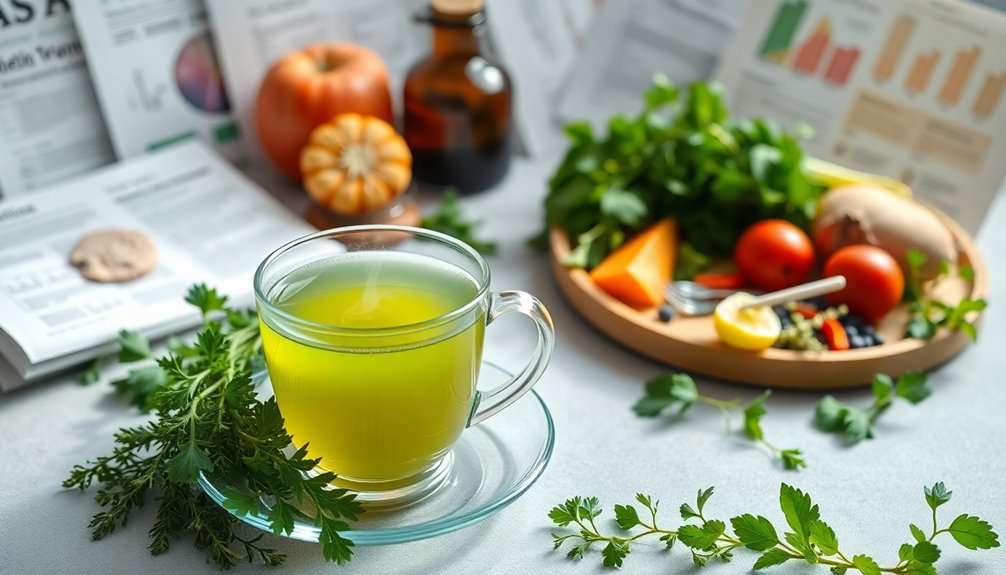

To boost your heart health daily, create a tea ritual by setting aside time each morning or afternoon to enjoy herbal infusions like hibiscus, ginger, or green tea. Use fresh, quality ingredients and steep at the right temperature, avoiding added sugars. Making this a consistent habit not only provides antioxidants that reduce inflammation but also encourages relaxation and mindfulness. Keep exploring different teas and preparation tips to maximize your well-being and discover more ways to support your heart.
Key Takeaways
- Set specific times daily, like morning or mid-afternoon, dedicated to enjoying a cup of heart-healthy tea.
- Incorporate a variety of teas, such as hibiscus or ginger, to maximize antioxidants and cardiovascular benefits.
- Use high-quality, fresh herbs or loose-leaf tea, steeped at proper temperatures to preserve antioxidants and flavor.
- Minimize added sugars and artificial sweeteners, opting for natural options like honey or lemon to enhance health benefits.
- Make tea-drinking a mindful ritual that promotes relaxation, self-care, and consistent support for heart health.

Incorporating tea into your daily routine can be a simple yet effective way to support your heart health. Tea is rich in tea antioxidants, which are compounds that combat oxidative stress and reduce inflammation—both key factors in cardiovascular disease. By making tea a regular part of your day, you harness these beneficial properties and give your heart a natural boost. Whether you prefer black, green, or herbal infusions, each type offers unique benefits that can contribute to overall well-being.
Enjoy daily tea to boost heart health with antioxidants and inflammation-fighting benefits.
Herbal infusions, in particular, are a popular choice for heart health because they often contain specific herbs known for their positive effects. For example, teas made from chamomile, hibiscus, or ginger are packed with antioxidants and other compounds that support healthy blood pressure levels and improve circulation. Drinking these herbal infusions regularly can help lower your risk of hypertension and promote better vascular function. To make this a daily habit, consider setting aside a specific time each day—perhaps in the morning or during a mid-afternoon break—to enjoy a warm cup of herbal tea. This ritual not only provides health benefits but also creates a relaxing moment to unwind and focus on self-care.
You can also experiment with different herbal infusions to find those you enjoy most. Incorporate a variety of teas into your routine to maximize their health benefits and keep things interesting. For example, hibiscus tea has been shown to help lower blood pressure, while ginger tea can improve circulation and reduce inflammation. By rotating these herbal infusions, you ensure your body receives a broad spectrum of antioxidants and other heart-supportive compounds. Remember, the key is consistency—making tea a daily habit guarantees you continually supply your body with these beneficial nutrients.
Additionally, preparing your tea thoughtfully enhances its health benefits. Use fresh, high-quality herbs or loose-leaf teas, and steep them at the right temperature to preserve their antioxidants. Avoid adding excessive sugar or artificial sweeteners, as these can negate some of your health gains. Instead, if you need a touch of sweetness, opt for a natural sweetener like honey or a slice of lemon. This mindful approach to tea preparation amplifies its positive effects and keeps your heart-healthy routine enjoyable.
Engaging in a consistent daily ritual like tea drinking can also help reinforce your commitment to heart health and self-care. Incorporating tea into your daily life isn’t just about health—it’s about creating a peaceful moment for yourself. By regularly drinking antioxidant-rich teas and herbal infusions, you support your cardiovascular system in a natural, pleasurable way. Over time, these small, consistent rituals can lead to meaningful improvements in your heart health and overall well-being.
Top picks for "daily ritual enhance"
Open Amazon search results for this keyword.
As an affiliate, we earn on qualifying purchases.
Frequently Asked Questions
Can Tea Consumption Replace Prescribed Heart Medications?
No, tea consumption can’t replace prescribed heart medications. While herbal remedies and tea can support heart health, they shouldn’t substitute your doctor’s treatment plan. Instead, see them as complementary alternative treatments that may boost your overall well-being. Always consult your healthcare provider before making any changes, especially if you’re on medication. Relying solely on tea might be risky, so follow your doctor’s advice for safe, effective heart care.
Which Types of Tea Are Best for Heart Health?
Imagine you’re a knight in shining armor—herbal varieties like hibiscus and chamomile, along with green teas, are your trusty shields against heart issues. These teas are rich in antioxidants and can boost your cardiovascular health. Green teas, in particular, contain catechins, which help lower blood pressure. Incorporate these into your daily routine for a flavorful, heart-healthy boost, but remember, they’re not a substitute for medical advice.
How Much Tea Is Safe to Drink Daily for Heart Benefits?
You can safely enjoy 3 to 4 cups of tea daily to get heart benefits, but keep an eye on tea caffeine levels to avoid jitters or sleep issues. Drinking this amount provides a good dose of tea antioxidants, which support heart health. Remember, moderation is key; too much caffeine can cause problems, so stick to your recommended limit to maximize the benefits safely.
Are There Any Risks Associated With Drinking Tea Regularly?
Sure, drinking tea every day might seem harmless, but beware of caffeine sensitivity turning you into a jittery mess or allergic reactions that make you regret that extra sip. While tea’s heart benefits shine, overdoing it can cause insomnia, headaches, or stomach issues. So, enjoy your tea, but stay alert—your body might have a secret caffeine or allergy warning you shouldn’t ignore.
Do Additives Like Sugar or Milk Affect Tea’s Heart Benefits?
Adding sugar or sweeteners impacts tea’s heart benefits by increasing calorie intake and potentially raising blood sugar levels, which isn’t ideal for heart health. Dairy effects can vary; while milk may dilute antioxidants, it also provides beneficial nutrients. To maximize heart benefits, opt for unsweetened tea and consider alternatives like plant-based milk, or enjoy your tea plain to preserve its natural health advantages.
Conclusion
By incorporating these simple tea rituals into your daily routine, you’re not just sipping a warm beverage—you’re nurturing your heart’s future. Imagine the quiet moments of reflection, the warmth spreading through your chest, and the promise of better health with each cup. But what if the true power lies in the moments you haven’t yet discovered? Keep sipping, keep exploring—your heart’s well-being might just depend on what you do next.