
Exploring case studies of tea trade and economics shows how global markets are shaped by policies, demand, and sustainability efforts. Countries like China, India, Sri Lanka, and Kenya adapt cultivation to climate conditions while managing costs and quality. Shifts in consumer preferences for organic and premium teas influence trade patterns, while tariffs and trade agreements impact pricing. If you keep exploring, you’ll uncover how economic and environmental factors intertwine to drive the dynamic tea industry worldwide.
Key Takeaways
- Examining China’s shift towards premium organic teas highlights how consumer preferences influence trade and pricing strategies.
- India’s diversification into specialty and sustainable teas demonstrates economic adaptation to global demand and certification standards.
- Sri Lanka’s response to climate-induced yield fluctuations illustrates the economic impact of environmental factors on export markets.
- Kenya’s adoption of eco-friendly practices provides insights into balancing profitability with sustainable trade policies.
- Trade policy shifts, such as tariffs and agreements, significantly affect tea market dynamics and regional economic stability.
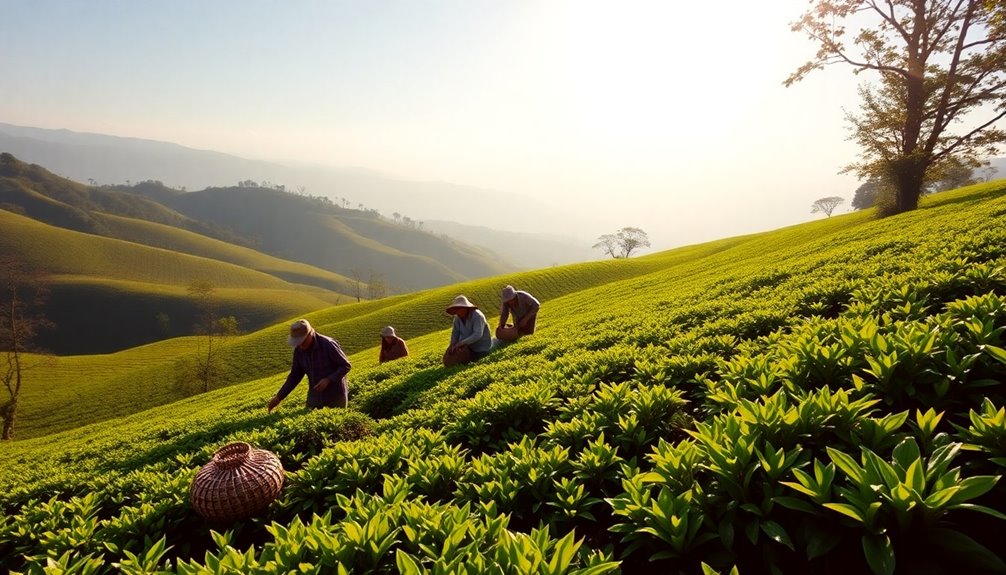
The tea trade has played a pivotal role in shaping global economies and cultural exchanges for centuries. As you explore how tea has influenced markets, you’ll see that tea cultivation is at the heart of this complex web of commerce. Countries like China, India, Sri Lanka, and Kenya have developed specialized techniques to produce high-quality leaves that meet international demand. This cultivation process isn’t just about growing tea; it’s about optimizing yields, maintaining quality, and adapting to changing climate conditions. These factors directly impact market dynamics, influencing prices, supply chains, and trade policies worldwide. When you analyze these market forces, you realize how sensitive the tea industry is to fluctuations in weather, labor costs, and global demand. For instance, a bad monsoon season can drastically reduce harvests, causing prices to spike and affecting economies that depend heavily on tea exports.
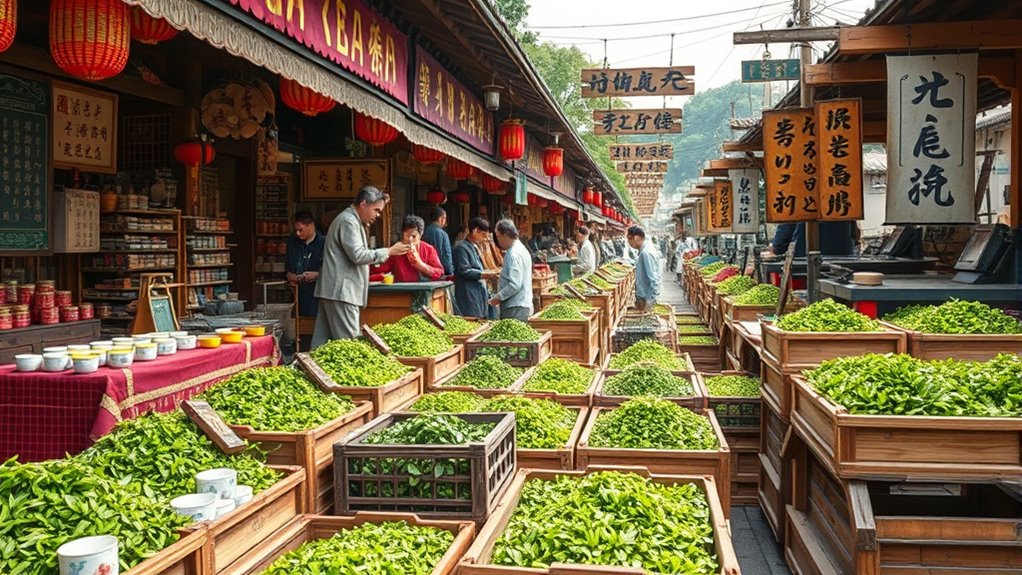
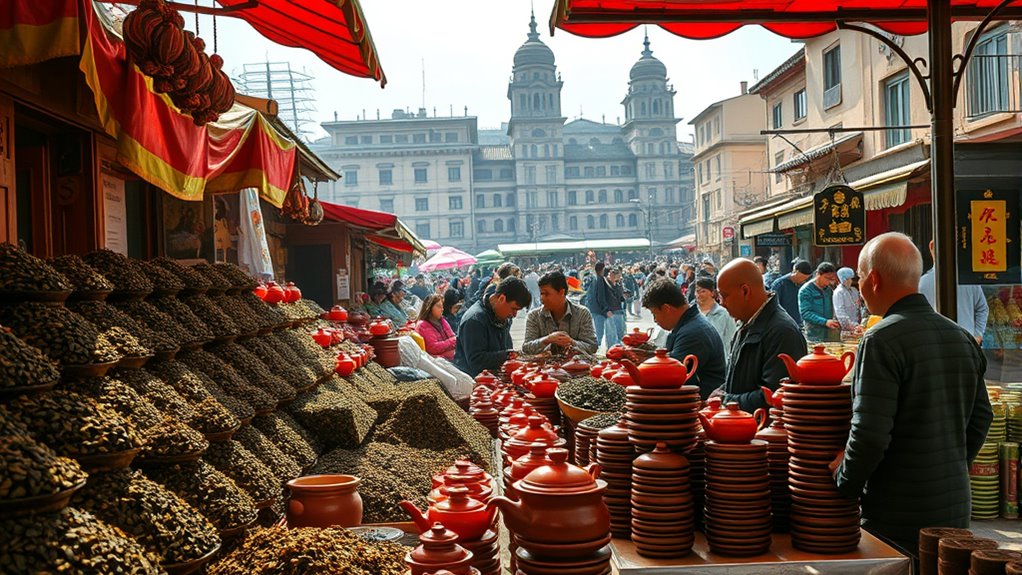
Understanding market dynamics means recognizing the interconnectedness of supply and demand. When demand for specialty teas rises in Western markets, producers respond by shifting focus toward premium products, which often require more labor-intensive cultivation and processing methods. This shift affects the entire supply chain, from farmers to exporters, and influences pricing structures on an international scale. As you follow these patterns, you’ll notice how geopolitical factors, such as trade agreements or tariffs, further shape the flow of tea across borders. For example, shifts in tariffs between China and the United States can make it more expensive to import certain teas, prompting buyers to seek alternatives or source from different regions. These decisions, in turn, reshape regional market shares and influence the economic stability of tea-producing nations.
Additionally, the evolution of consumer preferences impacts market dynamics profoundly. The rising interest in organic and ethically sourced teas pushes producers to adopt sustainable cultivation practices, which can increase costs but also create new market opportunities. This shift affects not just local farmers but also international trade policies, as countries work to meet global standards and certifications. Moreover, advancements in sustainable solar energy solutions and other renewable resources can help tea farms reduce their environmental footprint and operational costs, further influencing market competitiveness. As you explore these case studies, you’ll see that the tea industry’s market dynamics are a reflection of broader economic trends, cultural shifts, and environmental challenges. Every change in cultivation methods or market demand ripples through the entire supply chain, illustrating how tightly intertwined the economics of tea are with global markets. Ultimately, understanding these factors helps you grasp how essential tea cultivation and market dynamics are in shaping not just local economies, but the global trade landscape as a whole.
Frequently Asked Questions
How Have Modern Trade Policies Impacted Tea Export Markets?
Modern trade policies have considerably impacted your tea export markets by increasing trade tariffs and tightening export regulations. These measures raise costs and create barriers, making it harder for you to access global markets. As a result, you may face reduced competitiveness and lower profits. However, some markets benefit from preferential trade agreements, which can offset these challenges. Staying informed about policy changes helps you adapt and maintain your export success.
What Are the Environmental Effects of Large-Scale Tea Cultivation?
You might not realize it, but large-scale tea cultivation affects the environment profoundly. Deforestation impacts around 20% of tea plantations, leading to habitat loss. Soil degradation becomes a major concern as intensive farming strips nutrients and causes erosion. These practices threaten biodiversity and reduce land productivity over time. If you’re concerned about sustainability, supporting environmentally friendly tea producers can help mitigate these negative effects.
How Does Tea Pricing Influence Global Economic Stability?
You should understand that tea pricing substantially impacts global economic stability by influencing market volatility. When prices fluctuate due to factors like supply disruptions or demand changes, economies reliant on tea exports may face instability. Additionally, price elasticity determines how sensitive consumers are to price shifts; high elasticity can lead to reduced demand during price hikes, further increasing market volatility and affecting broader economic conditions worldwide.
What Role Do Smallholder Farmers Play in the Tea Economy?
Imagine you’re in a world where smallholder farmers are the unsung heroes of the tea economy. You realize they play a essential role in sustaining smallholder livelihoods and maintaining diverse farming techniques. By cultivating tea on small plots, they guarantee local employment and preserve traditional practices. Their efforts directly influence global tea supply, making them indispensable to the industry’s resilience and continuity, even amid modern challenges.
How Is Climate Change Affecting Future Tea Production?
Climate change markedly impacts future tea production by threatening crop resilience and forcing the need for climate adaptation. You’ll see unpredictable weather patterns, rising temperatures, and increased pests that can damage tea plants. To sustain production, farmers and industries must adopt climate adaptation strategies, such as developing resilient crop varieties and implementing sustainable practices. These efforts help safeguard tea crops, ensuring their future availability despite changing climate conditions.
Conclusion
As you’ve seen, the tea trade weaves a tapestry of history, economy, and culture, each thread telling a story of passion and profit. Like a delicate leaf unfurling in the breeze, the industry’s ripple effects spread far and wide. With every sip, you taste not just flavor but the intricate dance of commerce and tradition. Remember, behind each cup lies a vibrant world of trade, waiting for you to explore its endless, bubbling rhythm.